
Build a hotel pest plan before a guest spots a problem
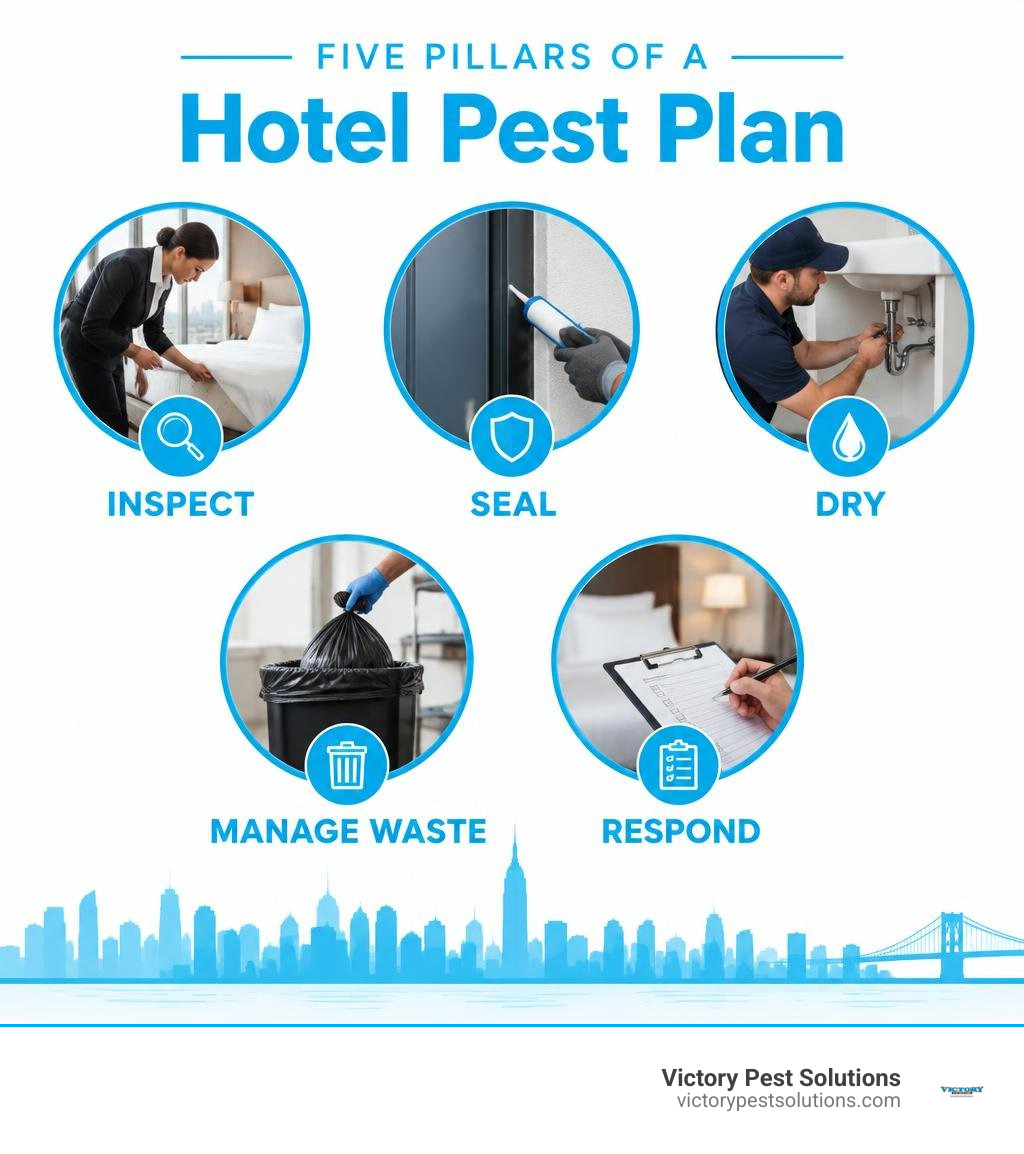
An NYC hotel pest prevention plan starts with five habits: inspect guest rooms and shared spaces, seal pest entry points, fix leaks, keep food waste contained, and log sightings for prompt follow-up. Give housekeeping a short check at every room turnover, assign maintenance the repairs, and have a licensed pest professional investigate signs of activity. A guest report should trigger an immediate room check, not a wait for the next routine visit.
This approach helps protect guests, staff, and your hotel’s reputation. It also tackles the food, water, and hiding places that let pests return.
I’m Len Oppenberg. I founded Victory Pest Solutions in 2007 after working in pest control since 2000, and this guide will show you how to turn an NYC hotel pest prevention plan into a clear daily routine.
For a deeper look at the underlying strategy, see our guide to proactive hotel pest prevention. You can also review seasonal hotel pest control and exterior hotel pest control to round out your property’s defenses.
NYC Regulatory Standards: Local Law 55, Article 151, and Health Codes
Operating a hospitality property in New York City requires strict adherence to local environmental health standards. Understanding NYC hotel pest control regulations is essential for safeguarding your guests and avoiding costly administrative penalties. Under the city’s legal framework, including ARTICLE 151 RODENTS, INSECTS, AND OTHER PESTS, property owners and managing agents are legally classified as persons in control. This classification mandates the continuous maintenance of premises free from conditions conducive to pests.
Municipal health policies place heavy emphasis on indoor air quality and allergen prevention. Pest droppings, shed exoskeletons, and dander from cockroaches and rodents represent significant indoor asthma triggers. Across the five boroughs, asthma affects over 1 million New Yorkers, making allergen mitigation a major municipal health priority. In dense urban neighborhoods, more than 50% of households report seeing cockroaches daily or rodents within recent months, demonstrating the severe baseline pressure commercial properties face.
Local Law 55 and Mandatory Integrated Pest Management
The passage of NYC Local Law 55 established clear statutory requirements for multi-unit properties and commercial hospitality facilities. The official GUIDE TO LOCAL LAW 55 OF 2018 INTEGRATED PEST MANAGEMENT PRACTICES FOR MICE, ROACH AND RAT VIOLATIONS requires property operators to eliminate pest activity by targeting root causes. Under Administrative Code §27-2017.8 and 28 RCNY §54-04, facility teams cannot rely on basic chemical sprays to address infestations. Instead, management must remediate underlying structural flaws, remove moisture sources, and physically seal building perimeters.
Local Law 55 also mandates systematic turnover inspections and proactive annual building-wide assessments. Whenever a guest room undergoes extended maintenance or a unit turnover occurs, staff must check for entry points and allergen risks. Physical debris and pest harborages must be removed using specialized High-Efficiency Particulate Air (HEPA) vacuuming equipment. By capturing minute biological particles, HEPA cleaning prevents allergens from circulating through shared HVAC systems, ensuring compliance with statutory standards.
Enforcement Agencies and Violation Classes
Multiple municipal agencies collaborate to enforce pest and sanitation codes across New York City. The Department of Housing Preservation and Development (HPD), the NYC Department of Health and Mental Hygiene (DOHMH), and the Department of Buildings conduct regular audits. Under city regulations, pest infractions are categorized by severity into distinct classes:
- Class A (Non-Hazardous): Minor maintenance issues that provide up to 90 days for documented correction.
- Class B (Hazardous): General pest conditions involving insects other than roaches, carrying a 30-day remediation timeframe.
- Class C (Immediately Hazardous): Active infestations of mice, rats, or cockroaches, which carry a strict 21-day statutory correction deadline.
Failing to resolve a Class C violation within 21 days leads to severe financial penalties and formal hearings before the Environmental Control Board. Furthermore, NYC administrative codes mandate that any pesticide applied to clear violations must be administered by a technician licensed by the New York State Department of Environmental Conservation (NYS DEC). Unlicensed chemical applications or failure to address structural defects will invalidate your certificate of correction, leaving your property vulnerable to escalating municipal sanctions.
Step-by-Step Blueprint for an NYC Hotel Pest Prevention Plan
Executing high-level hotel pest control NYC hospitality standards requires a structured, repeatable operational blueprint. Rather than reacting after an infestation becomes visible, your facility needs a defined protocol based on the city’s official Integrated Pest Management Toolkit. An effective commercial program continuously evaluates risk factors, tracks monitoring devices, and establishes clear action thresholds.
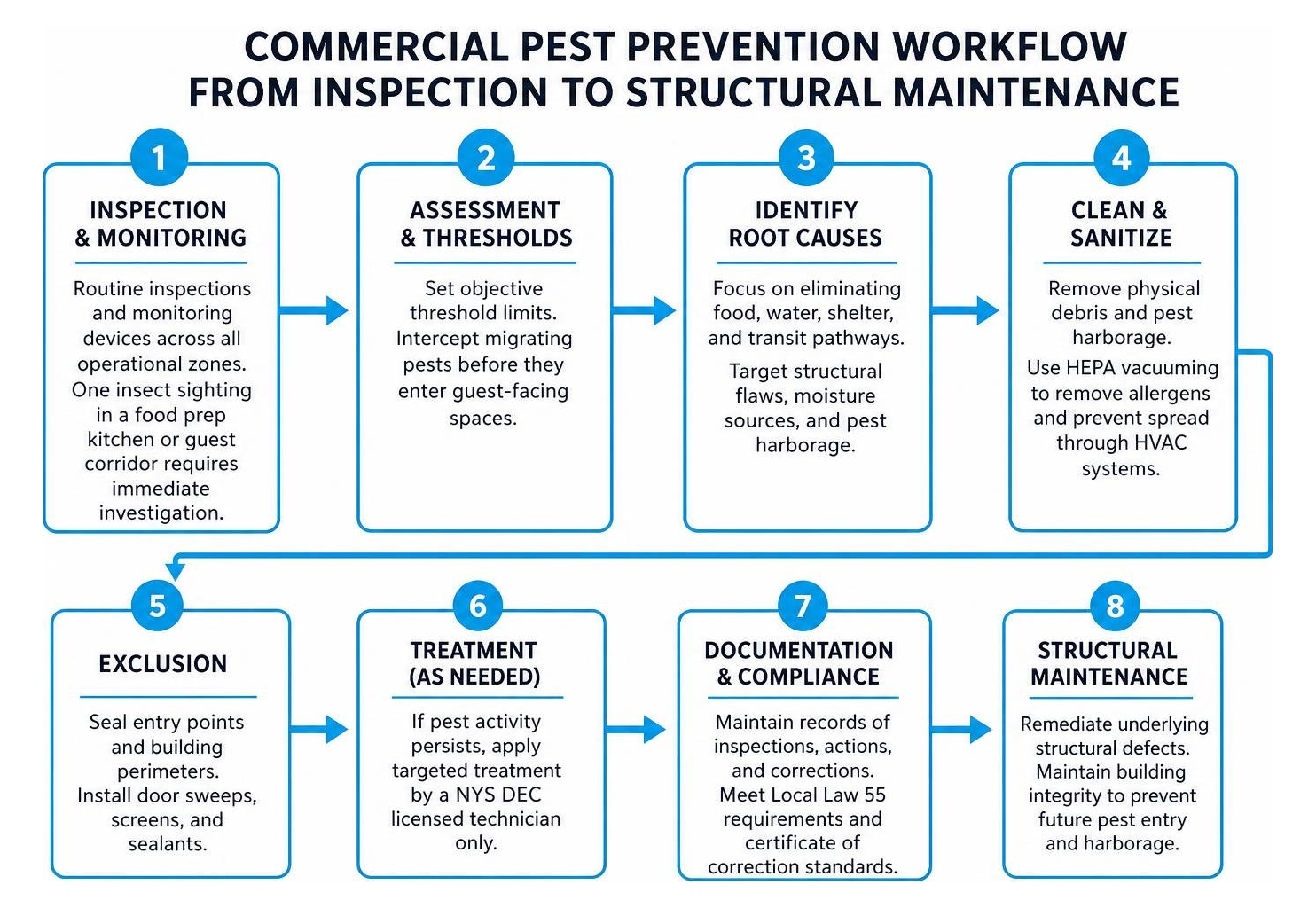
When establishing an internal action plan, facility leaders must set objective threshold limits across all operational zones. A single insect sighting in a food preparation kitchen or guest corridor demands immediate investigation, while exterior perimeters require ongoing monitoring. Routine inspections allow your team to intercept migrating pests long before they enter guest-facing spaces.
Core Components of an NYC Hotel Pest Prevention Plan
A comprehensive hotel prevention strategy focuses on eliminating the essential resources pests need to survive: food, water, shelter, and transit pathways. Properties operating in high-density urban areas like Manhattan face constant pest pressure from adjacent subway lines, utility conduits, and neighboring structures. Partnering with experienced Manhattan hotel exterminator services ensures your facility deploys proactive defenses tailored to urban challenges.
To deprive pests of harborage, your plan must integrate facility maintenance with housekeeping and culinary operations. Plumbing leaks behind guest bathroom walls or beneath commercial dishwashers must be corrected immediately to remove moisture sources. Wall voids, dropped ceilings, and utility risers must be inspected and maintained to prevent rodents from using them as highway networks. When physical necessities are eliminated, pests cannot establish sustainable breeding populations within your building.
Structural Exclusion and Room-by-Room Pest Proofing
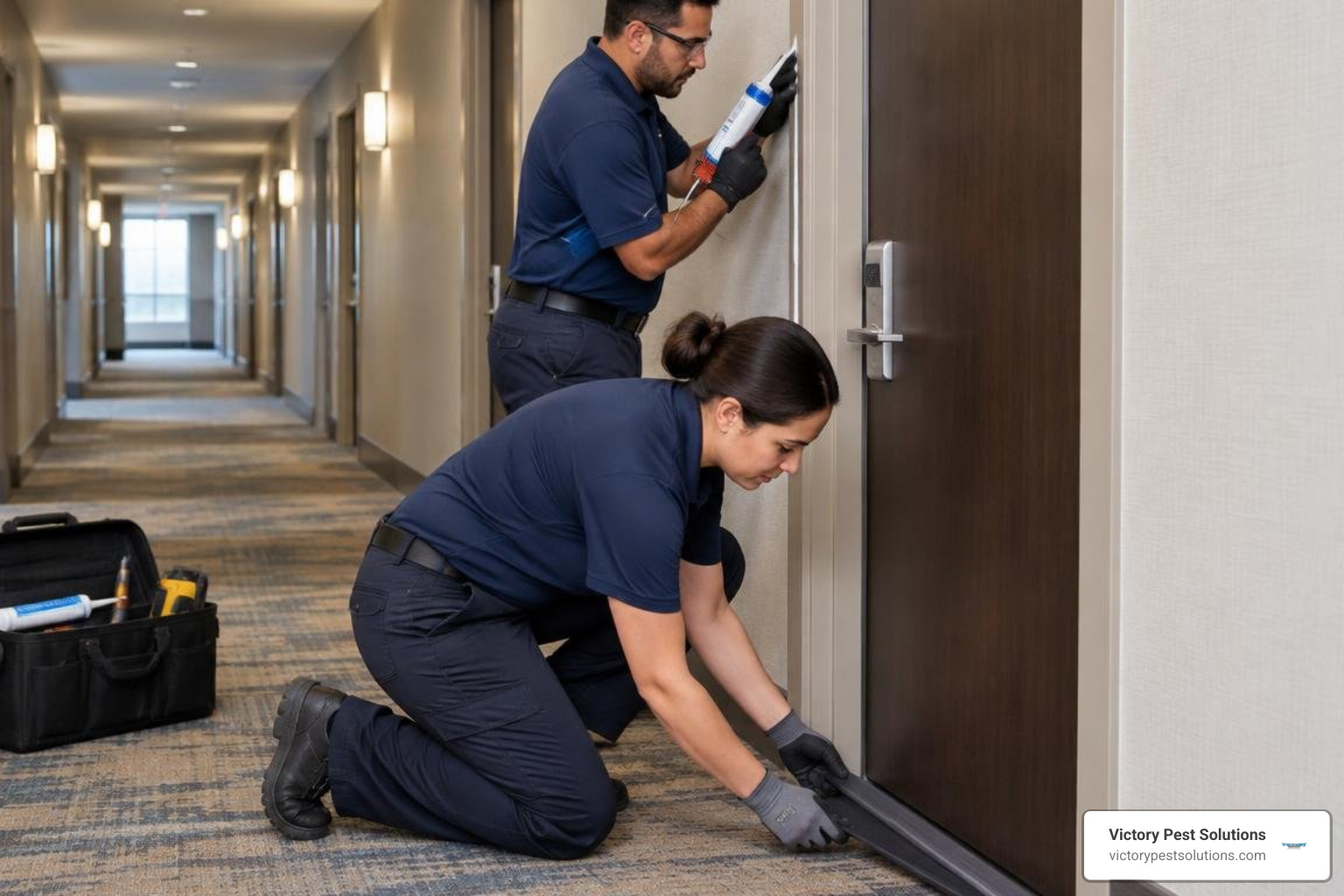
Physical barrier installation, known as hotel exclusion pest control, forms the most durable defense against pest entry. Biological research highlights why structural precision is necessary: adult cockroaches can squeeze through fissures only 1/16 of an inch wide, while mice can push beneath door gaps the width of an ordinary pencil (1/4 inch).
Every guest room, utility closet, and basement corridor requires meticulous sealing using durable, pest-resistant materials. Maintenance technicians should install heavy-duty, nylon-brush or solid-rubber door sweeps on all hallway and exterior access doors, ensuring clearances never exceed 1/4 inch. Copper mesh is strongly preferred over standard steel wool for packing around pipe penetrations, as copper will not rust or degrade over time in humid environments. Finish all penetrations with stainless steel escutcheon plates and high-grade siliconized acrylic latex sealant to block every microscopic void.
Hospitality Waste Management and Compactor Area Upkeep
Refuse handling systems represent the single largest pest attractant in any hospitality building. Establishing rigorous hotel waste management pest control protocols is critical because a single improperly stored bag of food waste can sustain hundreds of rodents and insects. Compactor rooms, chute closets, and exterior loading docks require continuous sanitary oversight to prevent odor buildup from drawing pests inside.
All hospitality trash should be bagged in heavy-duty commercial liners of at least 1.9 mil thickness to resist punctures and tears. Waste storage bins inside compactor rooms must be elevated at least 6 inches off finished floor surfaces on corrosion-resistant metal stands. Trash chutes require weekly pressure washing and enzymatic drain cleaning to eliminate grease, organic sludge, and fly breeding zones. Furthermore, curb staging of waste bags must coincide strictly with morning municipal collection schedules rather than sitting out overnight on city sidewalks.
Safe Chemical Standards vs. Prohibited Pesticides in NYC Hospitality
Modern commercial hospitality management prohibits indiscriminate chemical spraying. Navigating municipal health requirements requires consulting Pest and Pesticide Laws for Building Owners and Managers – NYC Health. Safe chemical standards protect your guests and employees from toxic exposures while eliminating indoor pests through precise, reduced-risk applications.
Prohibited Chemicals, Foggers, and Aerosol Bombs
Total release aerosol foggers and chemical “bug bombs” are strictly prohibited in professional hospitality environments. These devices disperse fine droplets across carpets, headboards, linens, and food prep surfaces, creating dangerous chemical residues without reaching pests hidden deep inside wall voids. Over-the-counter broadcast sprays also cause significant indoor air contamination, presenting serious health risks to asthmatic guests and housekeeping staff.
Additionally, municipal health codes carry severe legal penalties for using hazardous, illegal, or unregistered chemical formulations. Dangerous compounds such as Tres Pasitos, Chinese Chalk, Tempo Dust, and Sniper DDVP must never be brought onto hotel property. Using unlabeled products or applying chemicals to targets not explicitly authorized on the EPA label violates federal and state laws, exposing your business to major financial liability.
Reduced-Risk Alternatives and Targeted Applications
Professional IPM strategies prioritize targeted, low-toxicity chemical formulations placed exclusively in inaccessible harborage areas. NYS DEC-licensed technicians utilize closed-system gel baits containing advanced attractants and insect growth regulators (IGRs). These gels are applied in micro-droplets directly inside electrical junction boxes, cabinet hinges, and structural voids where guests and housekeepers will never come into physical contact with the material.
For void treatments, professional applicators utilize mineral-based options like boric acid or diatomaceous earth behind switch plates and inside hollow baseboards. When blown into wall cavities during renovations, boric acid-treated cellulose insulation provides long-lasting pest protection alongside fire resistance and thermal insulation. For rodent management, commercial properties must rely exclusively on locked, tamper-resistant bait stations anchored to concrete floors or walls, keeping baits secured away from pets and guests.
Operational Protocols: Housekeeping Inspections and Incident Workflows
A pest management plan relies directly on the daily vigilance of your front-line hospitality staff. Housekeeping and engineering professionals enter guest rooms every day, placing them in the best position to catch early warning signs. Equipping your housekeeping department to identify hotel bed bugs for treatment prevents isolated introductions from developing into multi-room operational nightmares.
Front desk agents, guest service teams, and room attendants must operate with clear, discreet communication channels. Staff should be trained to handle pest discussions professionally, avoiding public hallway conversations that could cause unnecessary alarm among nearby guests. Swift internal reporting ensures potential concerns are flagged and resolved behind the scenes.
Training Staff to Execute Your NYC Hotel Pest Prevention Plan
Regular staff training turns daily room cleaning into an efficient inspection routine. During standard guest room turnovers, housekeepers should spend 60 seconds examining critical harborage zones. Staff should check mattress seams, tufts, headboard brackets, luggage racks, and behind bedside tables for live insects, shed skins, or small dark fecal spotting.
Engineering teams must incorporate pest exclusion checks into their routine preventive maintenance schedules. Laundry personnel also play an important role by processing all bedding and linens through commercial wash and dry cycles reaching at least 120°F to neutralize any hitchhiking pests. Maintenance teams should routinely inspect luggage storage closets, utility chases, and elevator shafts to keep transit pathways secure.
Rapid Response to Guest Reports and Violation Notices
When a guest reports a pest sighting, front desk personnel must follow an immediate, structured incident workflow. Following a verified guest complaint pest response protocol protects the guest relationship while containing the physical space. The front desk should calmly apologize, offer an immediate room relocation away from the affected block, and provide complimentary luggage laundering.
Once the guest is relocated, the affected room must be placed in out-of-order quarantine along with adjacent rooms above, below, and on either side. Staff must not move furniture, vacuum with standard equipment, or attempt over-the-counter chemical treatments. Instead, management must dispatch a certified pest professional to conduct a comprehensive inspection, determine the scope of activity, and perform targeted remediation before clearing the room for guest occupancy.
Recordkeeping, Logbooks, and Municipal Audit Readiness
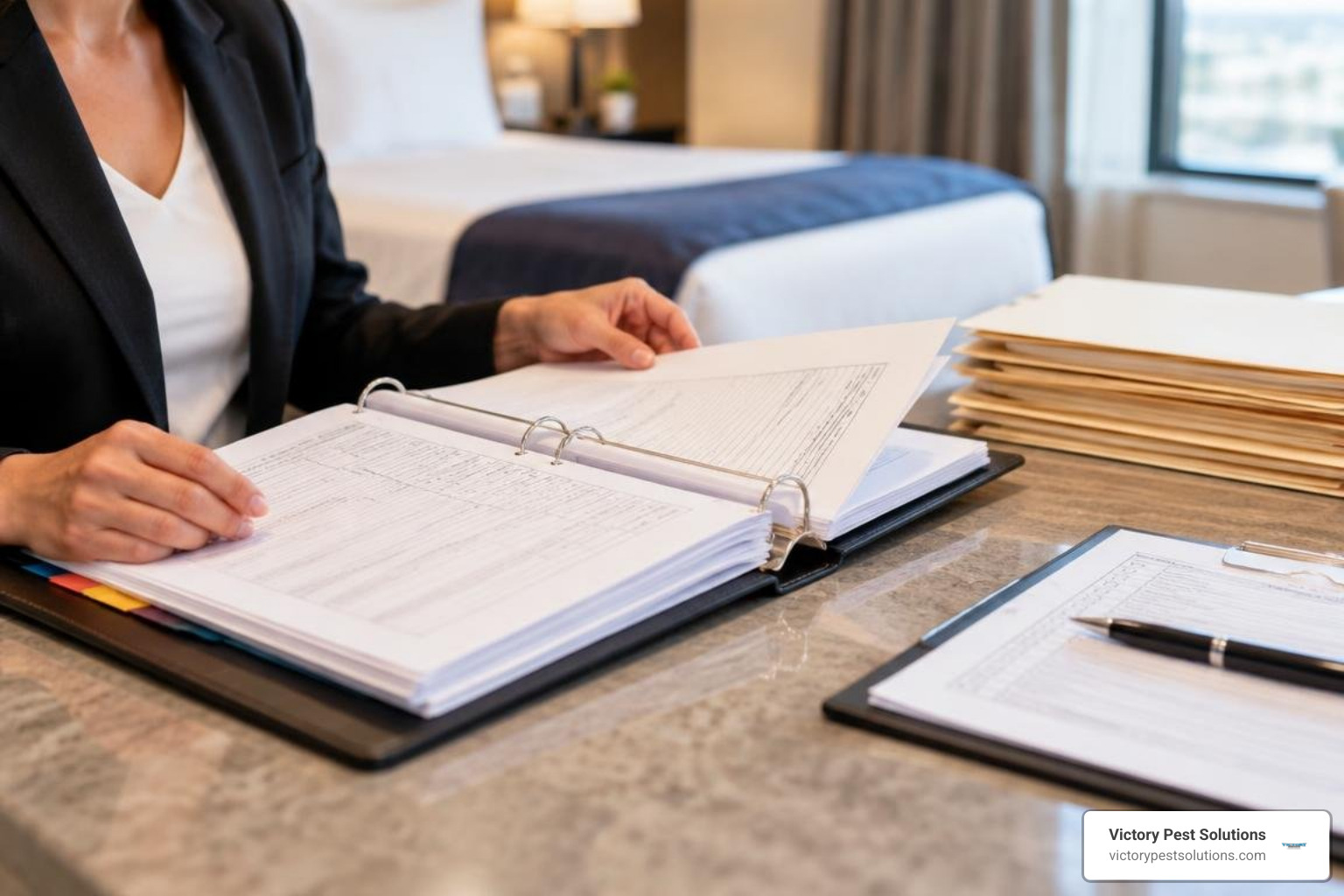
Detailed documentation serves as your hotel’s legal proof of compliance during city audits. Navigating NYC Health Department pest control rules requires maintaining an organized, centralized compliance binder on site. When city inspectors visit your facility, having accessible service records demonstrates institutional control and prevents administrative violations.
Your compliance binder should be kept in the engineering office or front management suite for immediate retrieval. Maintaining complete records protects your property during municipal inspections, insurance reviews, and corporate brand audits.
Mandatory Documentation Under NYC Health Code
NYC Health Code Article 151 and Local Law 55 establish strict documentation standards for commercial hospitality properties. Facilities must maintain a centralized compliance binder containing:
- NYS DEC Business Registration: Valid copy of the pest management provider’s state business registration certificate.
- Commercial Applicator Licenses: Current license copies for every commercial technician servicing the building.
- Safety Data Sheets (SDS): Up-to-date SDS and manufacturer labels for every chemical product applied on the premises.
- Service Tickets and Inspection Logs: Detailed records showing service dates, specific zones inspected, pest activity levels, and applied control materials.
- Facility Device Mapping: A complete floor plan schematic identifying numbered locations of all tamper-resistant bait stations, insect monitors, and mechanical traps.
Multi-Agency Inspection Preparedness
Being prepared for multi-agency inspections means staying proactive with facility upkeep. If an inspector from HPD or DOHMH issues a notice of violation, management must coordinate immediately with their licensed pest management partner. After addressing the structural cause and completing professional remediation, the property must submit an official Certification of Correction affidavit within the mandated timeline.
To maintain continuous audit readiness, facility directors should schedule quarterly internal walkthroughs modeled after municipal inspections. Routine reviews help identify deteriorating door sweeps, unsealed conduit penetrations, or compactor room maintenance needs before municipal inspectors arrive. Treating pest prevention as an ongoing operational standard keeps your property fully compliant year-round.
Frequently Asked Questions About Hotel Pest Management in NYC
How quickly must an NYC hotel correct a Class C pest violation?
An NYC hotel must correct a Class C immediately hazardous violation for mice, rats, or cockroaches within 21 days of notice service. Management must eliminate the underlying structural defects, conduct non-chemical and licensed chemical remediation, and file a verified Certification of Correction form with the issuing municipal department before the statutory deadline expires.
What structural gap sizes allow pests to enter guest rooms?
Adult German cockroaches can pass through structural openings as narrow as 1/16 of an inch, while mice can squeeze through gaps of just 1/4 inch (about the width of a standard pencil). All door sweeps, pipe penetrations, window frames, and baseboard junctions must be sealed with durable materials like copper mesh, silicone sealant, and escutcheon plates to maintain openings below these critical thresholds.
Can hotel staff apply over-the-counter pest sprays or foggers?
No. New York State and NYC administrative codes require that all commercial pesticide applications be performed exclusively by an NYS DEC-licensed pest control applicator. Furthermore, total release foggers and aerosol bombs are strictly prohibited due to severe indoor air contamination risks and their inability to resolve the root structural causes of infestations.
Partnering with Licensed Commercial Specialists to Safeguard Your Property
Maintaining a pest-free hotel in New York City requires dedicated effort, structural precision, and rapid professional support. At Victory Pest Solutions, we provide comprehensive commercial pest management designed specifically for the high-volume demands of the hospitality industry. Backed by 24/7 commercial emergency responsiveness and customized Integrated Pest Management strategies, our licensed specialists eliminate pests at the source while keeping your facility fully compliant with NYC Health Codes and Local Law 55. Explore our customized hotel pest control services to protect your guest experience, preserve five-star reviews, and safeguard your brand’s reputation.