
In-Depth Guide to Seasonal Hotel Pest Control
When Pests Check In, Guests Check Out
Seasonal hotel pest control is the practice of using timed, proactive strategies to prevent and manage pest activity in hospitality properties throughout the year — matching your prevention efforts to the specific threats each season brings.
Quick answer — what does a strong seasonal hotel pest control program cover?
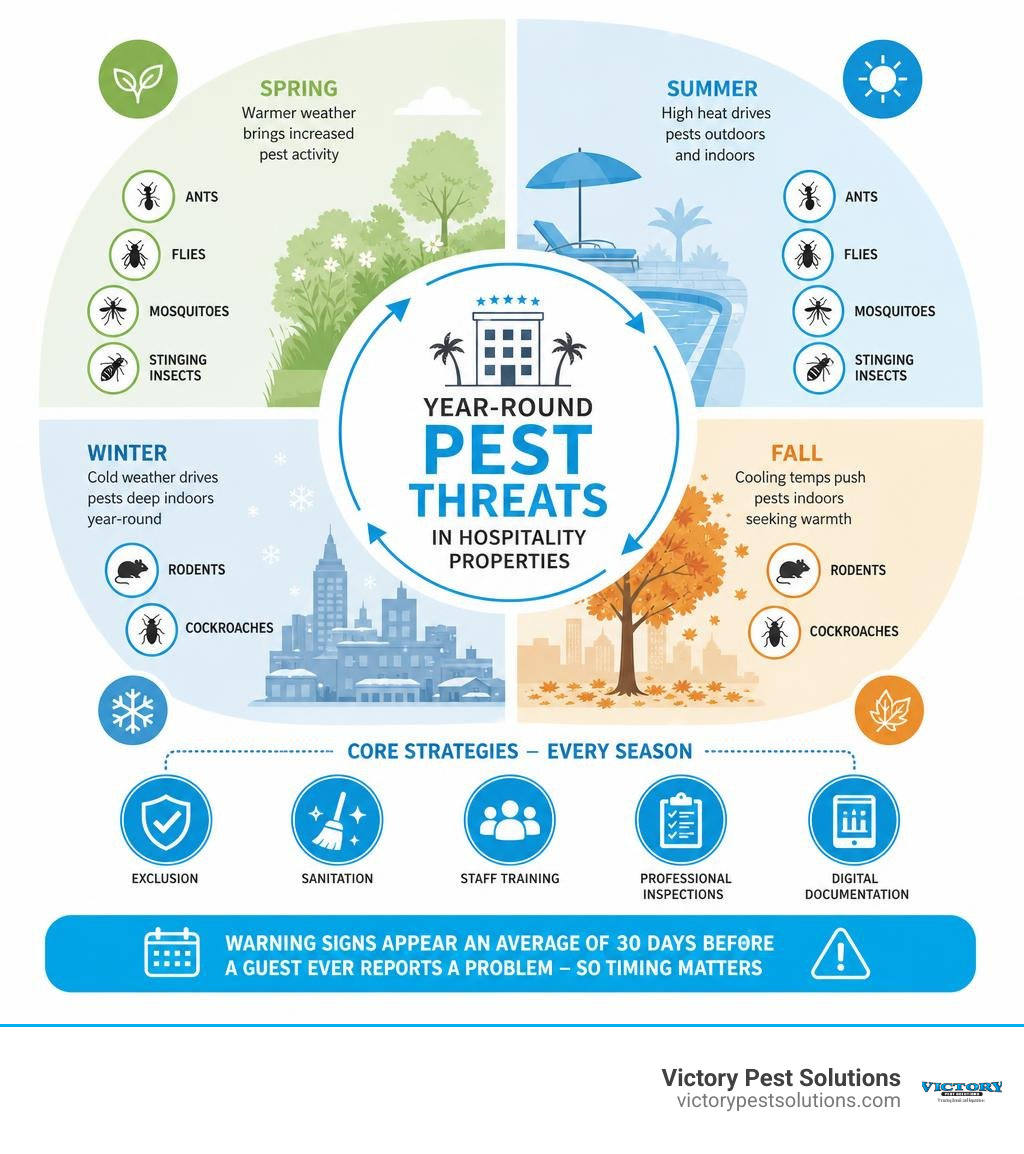
- Spring/Summer: Mosquitoes, flies, ants, and stinging insects targeting outdoor dining and pool areas
- Fall/Winter: Rodents and cockroaches moving indoors as temperatures drop
- Year-round: Bed bugs, carried in by guests regardless of season
- Core strategies: Exclusion, sanitation, staff training, professional inspections, and digital documentation
- Key rule: Warning signs appear an average of 30 days before a guest ever reports a problem — so timing matters
For NYC hotels in particular, the stakes are high. A single bed bug incident costs an average of $23,560 in remediation and legal costs. And 61% of travelers say they won’t stay even one night if they spot a pest. In a city where competition for bookings is fierce and online reviews carry enormous weight, one bad incident can do lasting damage.
Pests don’t follow your booking calendar. They follow food, warmth, moisture, and foot traffic — all of which hotels provide in abundance. That’s what makes a seasonal, documented approach so much more effective than calling for help only after a guest complains.
I’m Len Oppenberg, founder of Victory Pest Solutions, and I spent years before starting this company specializing in pest control for high-urgency commercial facilities — experience that directly shaped how I approach seasonal hotel pest control for hospitality clients today. In this guide, I’ll walk you through exactly what NYC hotels need to do, season by season, to stay ahead of pest pressure before it reaches your guests.
Why Seasonal Hotel Pest Control is Critical for NYC Hospitality
In the hospitality industry, reputation is your most valuable currency. As Warren Buffett famously observed, it takes 20 years to build a reputation and five minutes to ruin it. In the digital age of July 2026, those five minutes have shrunk to the few seconds it takes a guest to upload a video to TikTok or post a scathing review on TripAdvisor.
When a guest spots a pest in a Manhattan luxury suite, the consequences are immediate and devastating. Industry data shows that 61% of travelers refuse to stay even a single night if they spot pests, and 69% will pack their bags immediately and demand a full refund if that pest happens to be a bed bug.

The financial impact goes far beyond a single night’s refunded room rate:
- Remediation and Litigation Costs: A single bed bug incident costs hotels an average of $23,560 in remediation and litigation.
- The Multi-Year Toll: The average hotel faces 7.1 bed bug incidents over a five-year period, resulting in a staggering cumulative cost of $167,276.
- The Review Penalty: A single negative review citing pests can cause a 20% to 30% drop in occupancy. When social media posts gain traction, up to 38% of multi-room infestations eventually produce local or industry news coverage.
Because of the density of our buildings and the sheer volume of international and domestic travelers, Manhattan Hotels Face Higher Pest Risks than properties in almost any other market. When you operate in high-density areas across New York City, Brooklyn, Queens, the Bronx, Staten Island, or suburban travel hubs like Nassau County, Westchester County, and Orange County, a reactive “spray-on-demand” approach simply will not cut it. You must understand how How Hotel Reviews Can Be Damaged by Pest Problems and implement a proactive, documented system to protect your bottom line.
Mapping the Calendar: Year-Round Pest Pressures in New York City
Pests are highly sensitive to environmental changes. As the seasons shift in New York City, pest behaviors, breeding cycles, and migration patterns change. To run a successful hotel, your maintenance and housekeeping schedules must align with these biological shifts.
By understanding Seasonal Pest Problems in Manhattan Hotels, you can transition from a defensive posture to an offensive one, addressing vulnerabilities before pests can exploit them.
Spring and Summer Challenges in Seasonal Hotel Pest Control
Summer in New York City brings warm nights, bustling rooftop bars, and packed outdoor dining spaces. Unfortunately, it also brings peak pest activity. The very amenities that draw guests to your outdoor spaces – bistro lighting, lush landscaping, pool decks, and outdoor dining – are powerful attractants for summer pests.
- Mosquitoes: These are not just nuisances; they are major health hazards. Mosquitoes require standing water to breed, and even a tiny amount – such as water collecting in an upside-down bottle cap, a clogged drain, or a decorative flowerpot – can become a breeding ground. For general public-health guidance on reducing mosquito exposure, review the CDC’s mosquito prevention recommendations.
- Stinging Insects: Wasps, hornets, and yellow jackets are highly attracted to sweet foods, cocktails, and floral landscaping. They frequently build nests under eaves, balconies, and outdoor bar structures, posing a direct threat to guests.
- Flies: House flies, blow flies, and fruit flies thrive in warm weather. They carry bacteria like Salmonella and E. coli, and a single fly buzzing around an outdoor dining table can instantly ruin a high-end culinary experience.
- Ants and Carpenter Ants: Ants form rapid trails seeking out food debris, while carpenter ants can cause structural damage to wooden decking, pergolas, and outdoor furniture.
- Spotted Lanternflies: From May through September, these invasive pests swarm outdoor structures, leaving behind a sticky honeydew residue that attracts stinging insects and causes mold on outdoor furniture.
To keep these pests at bay, hotel operators must focus heavily on Hotel Waste Management Pest Control. This includes keeping outdoor trash cans tightly sealed, clearing plates immediately after guests finish dining, and aggressively managing standing water around downspouts and landscaping.
Fall and Winter Shifts in Seasonal Hotel Pest Control
When the temperature drops in New York, pests don’t disappear – they look for a warm place to spend the winter. Your heated, food-rich hotel becomes the ultimate target.
- Rodents (Mice and Rats): As fall approaches, rodents actively seek indoor shelter. Mice can squeeze through gaps as small as a dime, and rats only need an opening the size of a quarter. Once inside, they gnaw through wiring, ruin drywall, and contaminate food supplies.
- Cockroaches: German cockroaches and American cockroaches (often called “water bugs” in NYC) thrive in the warm, humid environments found near commercial kitchen appliances, laundry rooms, and boiler rooms. Because German cockroaches are not highly affected by outdoor seasonality, they will breed rapidly indoors all winter long if left unchecked.
Winter is the ideal time to focus on physical exclusion and deep sanitation. By sealing physical gaps and keeping utility lines secure, you can prevent these pests from ever establishing a foothold. Utilizing professional Rodent Control Hotels NYC services during the colder months ensures that your property remains secure when pest pressure moves indoors.
High-Risk Zones and Proactive IPM Strategies
An effective seasonal hotel pest control program relies on Integrated Pest Management (IPM). IPM is a proactive, science-based approach that focuses on long-term prevention by combining sanitation, physical exclusion, regular monitoring, and staff education. Chemical treatments are used selectively and targeted only where active pests are identified, rather than relying on blind, sweeping chemical applications.
To implement IPM successfully, you must treat your hotel as a collection of distinct ecosystems, each with its own specific risk profile.
| Hotel Zone | Primary Pest Threats | Key Prevention & Sanitation Measures | Exclusion & Monitoring Actions |
|---|---|---|---|
| Guest Rooms | Bed bugs, carpet beetles | Frequent vacuuming (including drapes, behind headboards, and under furniture); mattress encasements. | Regular visual inspections during room turns; rotating canine scent detection. |
| Kitchens & Bars | Cockroaches, rodents, flies, ants | Daily deep cleaning; removing grease buildup; clearing drains; storing food in sealed, elevated containers. | Installing fly lights (ILTs); sealing cracks around pipes; maintaining door sweeps. |
| Laundry Rooms | Bed bugs, cockroaches | Keeping clean and dirty linens strictly separated; drying linens on high heat; regular lint removal. | Inspecting incoming laundry bins; sealing utility wall penetrations. |
| Dumpsters & Loading Docks | Rodents, flies, stinging insects | Regular dumpster washing; keeping lids tightly closed; positioning waste bins away from guest entrances. | Installing heavy-duty door sweeps; maintaining gravel barriers around the perimeter. |
Guest Rooms and Bed Bug Prevention
Bed bugs do not care about the cleanliness of your hotel or how many stars are on your lobby plaque. They are hitchhikers, brought in on guest luggage, clothing, and second-hand furniture. Because they can breed year-round, guest rooms require constant, proactive vigilance.
Housekeeping staff are your primary line of defense. They should be trained to look for Signs of Bed Bugs in Hotel Rooms during every single room turn. This includes checking mattress seams, headboards, decorative pillows, and the folds of drapes for live insects, cast skins, or tiny ink-like fecal spots.
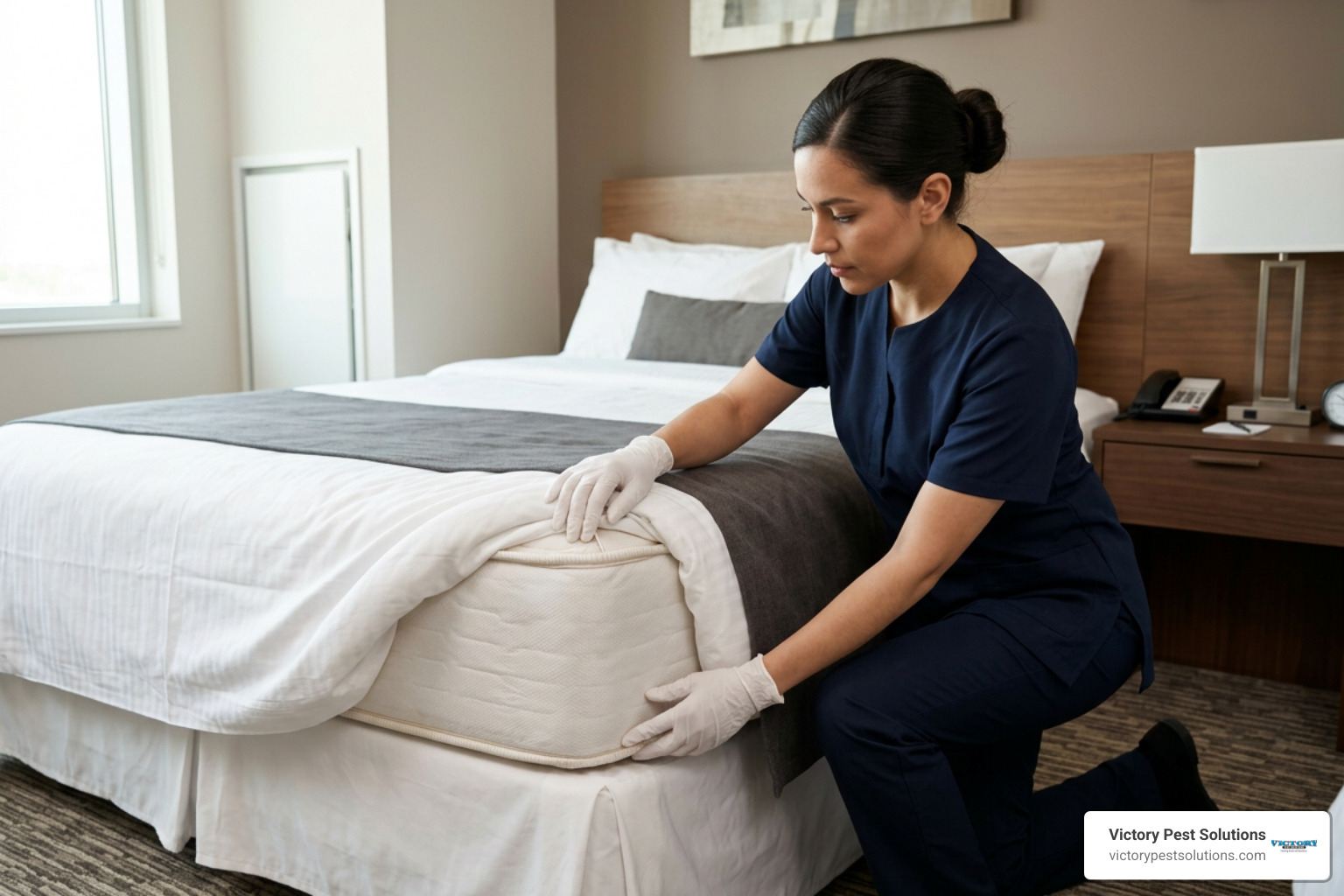
To protect your property, we recommend a multi-layered approach to NYC Hotels Prevent Bed Bug Infestations:
- Encase Mattresses: Install high-quality, escape-proof encasements on all mattresses and box springs to eliminate hiding spots.
- Isolate Linens: Housekeeping should keep dirty linens completely separate from clean sheets during service, transporting them in sealed bags to prevent cross-contamination.
- Rotate Inspections: Implement a rotating inspection schedule where a portion of guest rooms are thoroughly inspected by professional technicians—or highly accurate canine scent detection teams—every month.
Food Service Areas and Waste Management
Whether it’s a fine-dining restaurant in Manhattan or a breakfast bar in Yonkers, food service areas are high-risk zones. Small flies (like fruit flies and drain flies) can breed rapidly in organic buildup inside drains and under beverage stations.
To prevent infestations, hotels must focus on robust Hotel Proofing Pest Control protocols. This includes sealing gaps around plumbing lines, installing air curtains over kitchen exterior doors, and utilizing bioremediation services. Bioremediation uses natural, live bacteria to eat away the fats, oils, and grease that accumulate in drains, eliminating the primary breeding ground for drain flies and cockroaches.
The 4-Hour Rapid Response Protocol
Even with the best preventative measures, pests can occasionally find a way in. When a guest reports a pest sighting, how your staff responds in the first few hours will determine whether the incident remains a quietly resolved operational detail or turns into a public relations crisis.
Every hotel needs a strict, rapid-response protocol that can be executed in under four hours:
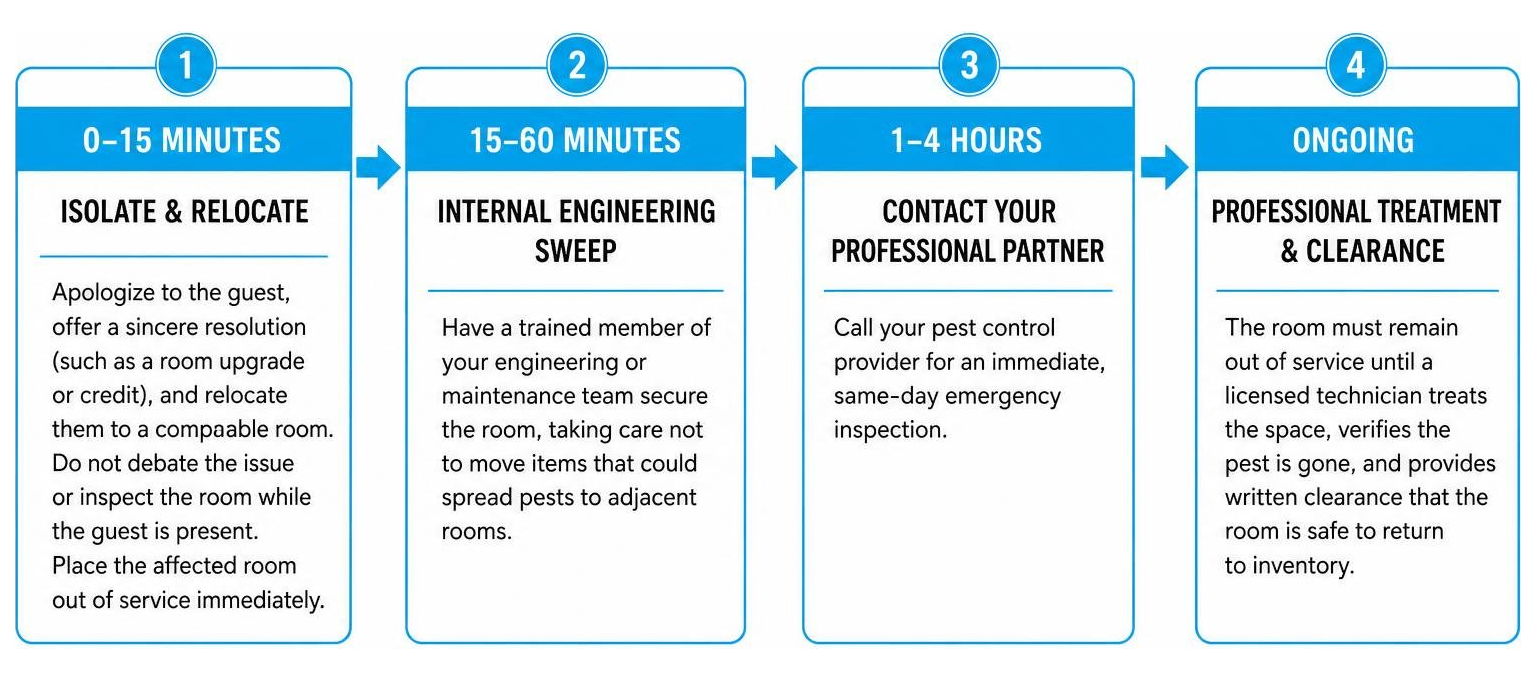
- Isolate & Relocate (0–15 Minutes): Immediately apologize to the guest, offer a sincere resolution (such as a room upgrade or credit), and relocate them to a comparable room. Do not debate the issue or attempt to inspect the room while the guest is present. Place the affected room out of service immediately.
- Internal Engineering Sweep (15–60 Minutes): Have a trained member of your engineering or maintenance team secure the room, taking care not to move items that could spread pests to adjacent rooms.
- Contact Your Professional Partner (1–4 Hours): Call your pest control provider for an immediate, same-day emergency inspection.
- Professional Treatment & Clearance: The room must remain out of service until a licensed technician treats the space, verifies the pest is gone, and provides written clearance that the room is safe to return to inventory.
Implementing this protocol is Your Key to Hotel Success, protecting your brand from negative reviews and giving your staff the confidence to handle high-stress situations professionally.
Frequently Asked Questions About Hotel Pest Prevention
Managing pest control in a busy hotel environment requires balancing guest comfort, operational flow, and regulatory compliance. Here are answers to the most common questions hotel managers ask about maintaining a pest-free property.
How often should an NYC hotel schedule professional pest inspections?
For hotels in highly congested urban environments like Manhattan, Brooklyn, or Queens, we recommend monthly professional pest inspections for all food service areas, kitchens, bars, and waste disposal zones. Guest floors, laundry rooms, mechanical spaces, and the building’s exterior perimeter should be inspected at least quarterly.
Properties with a history of pest activity within the past 12 months should maintain monthly service across all areas to ensure early warning signs are caught before they reach guest rooms. Partnering with a dedicated Manhattan Hotel Exterminator Services provider ensures that your property receives the consistent, high-frequency monitoring necessary to stay compliant with local health department codes.
For hotels located in suburban hubs or historic districts, specialized local support is also essential. We recommend utilizing tailored programs such as Hotel Pest Control Middletown NY or coordinating with our regional specialists who understand the unique pest pressures of Nassau County, Westchester County, and surrounding areas.
What should hotel staff do immediately if a guest reports bed bugs?
If a guest reports bed bugs, the priority is guest satisfaction and containment. Relocate the guest to a new room immediately. Once the guest is comfortable, lock down the reported room and the adjacent rooms (left, right, above, and below).
Do not drag bedding or luggage through the hallways unprotected, as this can spread the infestation. Keep all linens sealed in dissolvable laundry bags and wash them on high heat. Before returning the rooms to service, ensure a professional technician inspects the space. Using professional Hotel Carpet Pest Control NY and deep-cleaning protocols is critical to ensuring no lingering pests remain in fibers or baseboards.
How does digital documentation protect a hotel from liability?
A pest incident without documentation is a major legal and financial liability. A pest incident with detailed digital documentation is simply a managed operational event.
Because 83% of hotel pest complaints involve issues that had documented warning signs at least 30 days before the guest reported them, having a clear paper trail is your best defense against litigation. Digital documentation tracks bait station activity, housekeeping logs, and vendor service records. If a guest attempts to sue or demand an unreasonable settlement, you can prove that your hotel maintains a proactive, legally defensible IPM program that meets or exceeds industry standards for Common Pest Problems in Manhattan Hotels.
Securing Your Property with Victory Pest Solutions
At Victory Pest Solutions, we understand that hotel pest control is not a cookie-cutter service. Your property has its own unique layout, historic architectural quirks, and operational demands. We specialize in providing discreet, highly effective pest management solutions tailored specifically for the hospitality industry in New York City, Manhattan, Brooklyn, Queens, the Bronx, Staten Island, Nassau County, Westchester County, Rockland County, Orange County, Middletown, Yonkers, and White Plains.
We don’t just show up to spray when there’s an issue. We partner with your management, housekeeping, and engineering teams to establish a proactive, year-round shield. Our services include:
- 24/7 Rapid Response Support: Because pest emergencies don’t wait for business hours.
- Proactive Prevention Programs: Custom-tailored IPM programs designed to stop pests before they reach your guest rooms.
- Comprehensive Staff Training: Educating your team on early warning signs to prevent minor issues from becoming major reviews.
- Detailed Digital Documentation: Providing audit-ready, legally defensible records of every inspection, bait station check, and treatment.
Don’t let seasonal pests threaten your occupancy rates, damage your hard-earned reputation, or expose your business to costly litigation. Protect your brand with Victory Pest Solutions and experience the peace of mind that comes with having a dedicated, professional partner in your corner. Contact us today to schedule your comprehensive seasonal pest risk assessment.