
How to Identify and Treat Hotel Bed Bugs Fast by Using Simple Steps
Why Hotel Bed Bugs Are a Threat Across NYC Accommodations
To identify and treat hotel bed bugs fast, stage your luggage in the bathroom, inspect mattress seams and headboards with a flashlight for rust-colored stains or live insects, and immediately report active signs to hotel management to secure a non-adjacent room. Seal exposed belongings in plastic bags and run washable fabrics through a high-heat dryer cycle (exceeding 120°F) for at least 30 minutes to eliminate hitchhikers.
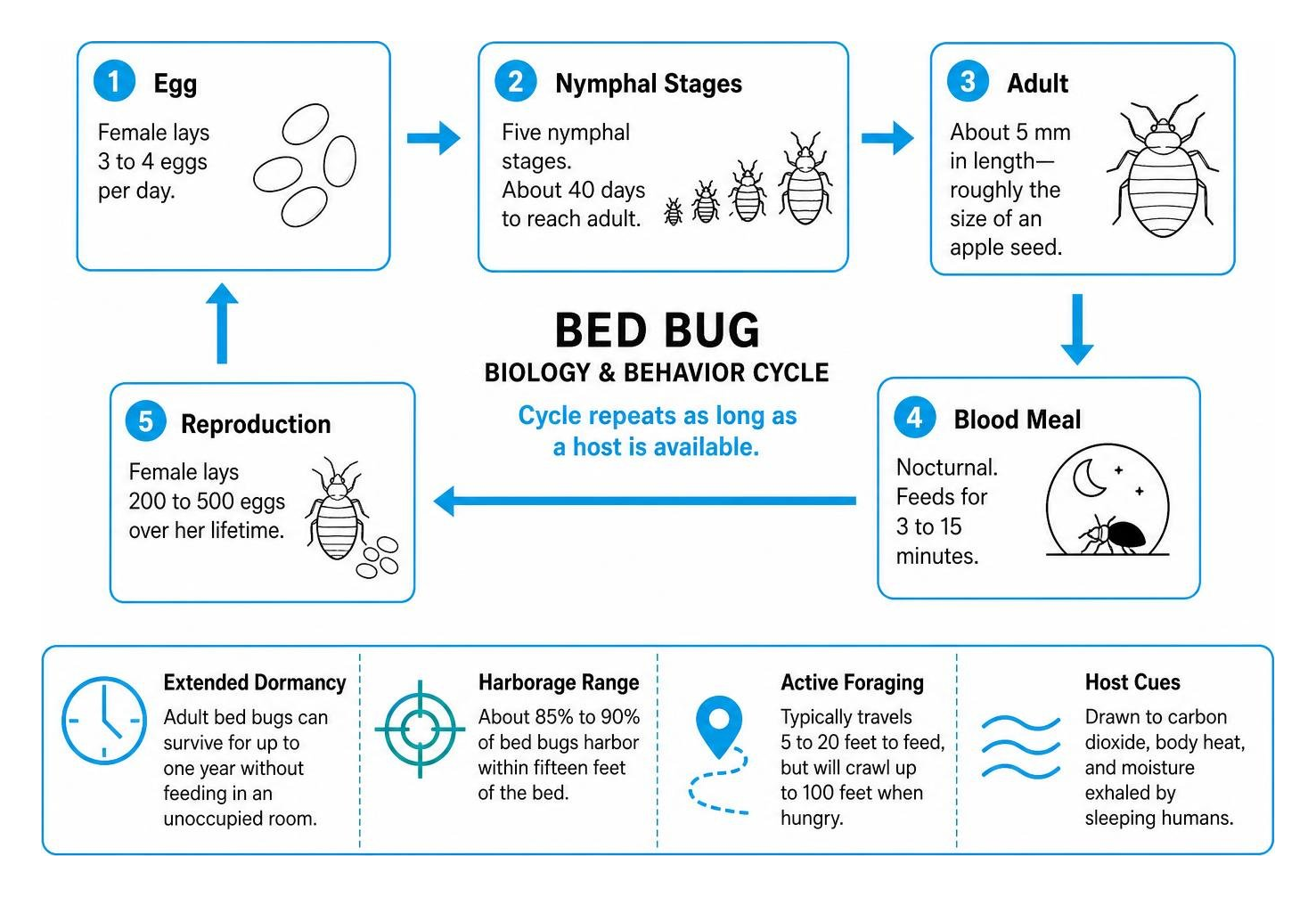
Bed bugs (Cimex lectularius) are small, flat, wingless insects measuring approximately 5 millimeters in length—roughly the size of an apple seed. They are nocturnal parasites drawn to the carbon dioxide, body heat, and moisture exhaled by sleeping humans. Because they rely on host cues to feed, about 85% to 90% of bed bugs harbor within fifteen feet of the bed.
Our Manhattan hotel bed bugs guide highlights how their biological resilience makes them uniquely difficult to manage:
- Extended Dormancy: Adult bed bugs can survive for up to one year without feeding in an unoccupied room, allowing populations to wait out vacancy periods between guest bookings.
- Rapid Reproduction: An average female lays 200 to 500 eggs over her lifetime at a rate of three to four per day.
- Fast Life Cycle: It takes only about 40 days to progress from egg to reproductive adult across five nymphal stages.
- Active Foraging: While bugs typically travel 5 to 20 feet from their hiding spots to take a 3-to-15-minute blood meal, hungry pests will crawl up to 100 feet across rooms.
High Guest Turnover and Shared Wall Voids in Manhattan Hotels
New York City hosts millions of travelers each year, creating an environment where luggage moves constantly through transit hubs, taxis, and lobbies. This continuous turnover represents one of the most common pest problems in Manhattan hotels.
When an introduction occurs, bed bugs do not always stay confined to a single mattress. They exploit structural conduits, slipping through electrical outlets, baseboard gaps, pipe chases, and shared wall voids to reach adjacent rooms. Housekeeping carts, shared laundry chutes, and vacuum cleaners can inadvertently transport hitchhiking bugs between floors if strict operational protocols are not maintained. Industry data shows bed bug activity has climbed steadily across urban hospitality markets, making routine monitoring essential for facility operators.
Why Cleanliness and Luxury Ratings Do Not Stop Pests
A common travel myth is that bed bugs only afflict budget motels or unhygienic spaces. Entomological research, including extension data in Bed Bugs and What to Do about Them, confirms that bed bugs do not care about dirt, grime, or luxury ratings.
Because they feed exclusively on blood, five-star luxury suites in Midtown Manhattan are just as susceptible as economical lodging. Pristine housekeeping keeps surfaces sanitary, but it cannot prevent a guest from carrying a hitchhiking bug into a room inside designer luggage.
Step-by-Step 5-Minute Room Inspection Protocol
Conducting a deliberate five-minute check upon arrival prevents you from unpacking inside an infested space. Do not place your bags on the bed, armchairs, or carpeted floors when you first unlock the door.
Safe Initial Staging in Bathrooms and Tiled Surfaces
The safest place for your luggage upon entering any hotel room is the bathroom tile floor or inside the bathtub. Bed bugs struggle to navigate slick, hard porcelain and ceramic surfaces, and they rarely harbor in bathrooms because these areas are far from sleeping hosts.
If the bathroom is compact, place your bags on a hard-surface entryway floor or inspect a folding metal luggage rack. Ensure the luggage rack straps and joint hinges show no signs of resting insects before setting your suitcase on top. Keep bags zipped shut while you inspect the sleeping quarters.
Critical Checklist for Linens, Seams, and Headboards
Grab your smartphone, turn on the flashlight, and look for the established signs of bed bugs in hotel rooms:
- Bed Linens and Pillows: Pull back the comforter, duvet, and top sheets. Scan the pillowcases and fitted sheet for small, rust-colored blood smears or tiny dark droppings.
- Mattress Seams and Piping: Strip back the fitted sheet at the head of the bed. Run your finger or a plastic card along the perimeter piping, seams, and tufting. Look for live reddish-brown insects, cast nymphal skins, and 1mm pearly-white eggs nestled in the fabric folds.
- Box Spring and Frame: Lift the corners of the mattress. Check the plastic corner guards, staple lines beneath the box spring, and the joints of the bed frame.
- Detachable Headboards: Many hotel headboards are mounted directly to the wall. Shine your light behind the headboard and into screw holes and mounting brackets, which serve as prime daytime harborages.
- Perimeter Furniture and Baseboards: Inspect the seams of nearby upholstered armchairs, nightstand drawers, behind framed artwork, and along baseboard crevices within a few feet of the bed.
- Scent Identification: Large, established infestations often produce an unusual, sickly sweet, musty odor often likened to coriander or overripe berries.
How to Handle Active Infestations and Protect Your Belongings
Finding evidence of pests requires prompt action to safeguard your personal items and notify management so the room can be isolated.
| Feature | Bed Bug Bites | Mosquito Bites |
|---|---|---|
| Visual Appearance | Small, raised red welts (2–5 mm), sometimes forming blisters | Puffy, soft, round pink-to-red bumps |
| Pattern & Distribution | Clustered in straight rows or zigzag lines (“breakfast, lunch, dinner”) | Random, isolated bumps scattered over exposed skin |
| Onset of Symptoms | Often delayed by 1 to 3 days after the initial feeding | Immediate itching and swelling within minutes |
| Location on Body | Upper torso, neck, shoulders, arms, and along ankles/veins | Any exposed skin reachable in open air |
| Resolution Time | 1 to 2 weeks; itching can be persistent | Resolves within a few days |
Immediate Steps to Take When You Find Hotel Bed Bugs
If your visual inspection turns up live insects, fecal marks, or eggs, execute our structured guest complaint pest response 3 steps framework:
- Capture Clear Photo and Video Proof: Take detailed photos and videos of the insects, fecal marks, and mattress tags with your smartphone before touching anything.
- Alert Front Desk Management Immediately: Inform the front desk calmly and show them your visual evidence. Request an immediate room transfer.
- Demand Safe Room Separation: Ensure your replacement room is not directly adjacent to, above, or below the infested room, as pests readily traverse shared utility conduits. If the hotel is fully booked, request a full refund and relocate to an alternate property.
- Quarantine Contaminated Belongings: Seal any exposed clothing or personal gear inside heavy-duty plastic garbage bags before transporting them to your new room.
Managing Bites, Guest Rights, and Hotel Management Response
Medical guidance published in Doctors Share How To Check For Bed Bugs When Staying At A Hotel points out that bed bug bites often present in distinct linear tracks, colloquially known as “breakfast, lunch, and dinner” patterns.
While bed bugs do not transmit infectious human pathogens, their bites can cause intense itching, inflammation, and localized swelling. Treat mild reactions with over-the-counter hydrocortisone creams, calamine lotion, or oral antihistamines to reduce itching. Avoid scratching the welts to prevent secondary bacterial skin infections.
Hotels owe their guests a legal duty of care to provide clean, habitable, and pest-free accommodations. When guests encounter an active infestation, reputable hotel operators will:
- Immediately offer a non-adjacent replacement room or process a prompt reservation refund.
- Provide complimentary laundry services using commercial high-heat dryers for all exposed clothing.
- Remove the affected room and adjoining units from service until an evaluation is completed.
- Assist with documented medical or property replacement claims resulting from severe exposure.
Professional Eradication and Home Prevention Strategies
Preventing pests from entering your residence requires strict hygiene protocols when returning from any trip.
Post-Travel Protocols to Prevent Bringing Hotel Bed Bugs Home
To keep travel hitchhikers out of your home, follow this return checklist:
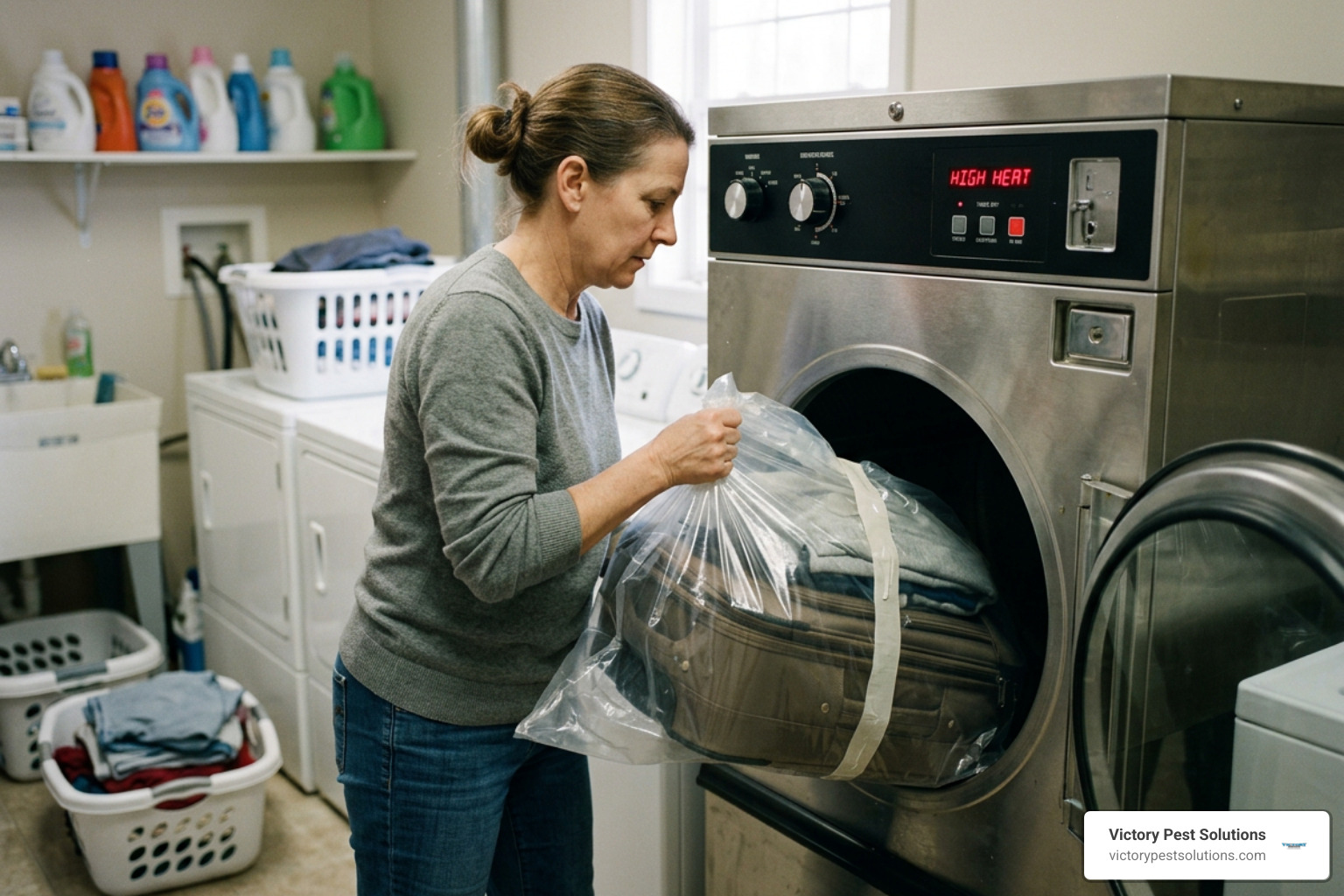
- [ ] Unpack Outside Sleeping Quarters: Unpack your suitcases in the garage, entryway, or laundry room on hard flooring rather than on bedroom carpets or beds.
- [ ] Execute High-Heat Drying: Place all washable fabrics directly into the clothes dryer for at least 30 minutes on high heat. Sustained temperatures exceeding 120°F (49°C) eliminate adults, nymphs, and eggs.
- [ ] Launder at High Temperatures: Wash the clothes using hot water (ideally 140°F / 60°C) after the initial heat-kill cycle.
- [ ] Inspect and Vacuum Suitcases: Vacuum your luggage thoroughly inside and out, paying attention to seams, zippers, internal pockets, and wheel housings. Immediately seal the vacuum debris in a plastic bag and discard it in an outdoor bin.
- [ ] Isolate Luggage Storage: Store empty suitcases in sealed plastic storage bags or bins away from bedrooms.
- [ ] Monitor for 14 to 28 Days: Keep an eye out for bites or staining on your home mattress seams over the next two to four weeks.
Commercial Hospitality Extermination and IPM Standards in NYC
In commercial hospitality settings, eliminating bed bugs requires a systematic Integrated Pest Management (IPM) approach. Leading properties understand that NYC hotels prevent bed bug infestations by moving beyond surface cleaning to structured professional interventions.
A certified bedbug exterminator NYC inspection removal control program includes:
- Canine Scent Detection: Specially trained bed bug detection dogs identify live insects and viable eggs behind walls, baseboards, and headboards with high accuracy.
- HEPA Mechanical Extraction: Specialized HEPA vacuums remove live clusters, nymphs, and loose cast skins from mattress seams and structural crevices without spreading allergens.
- Targeted Residual Applications: Licensed technicians apply approved, low-toxicity residual formulations strictly to harborages, perimeter cracks, and wall voids—never across sleeping surfaces.
- Thermal Remediation: Whole-room heat treatments raise ambient temperatures above lethal thresholds to treat furniture, structural voids, and electronics in a single service.
- Secure Encasements: Commercial-grade, zippered mattress and box spring encasements trap any remaining pests and simplify ongoing visual inspections.
Frequently Asked Questions About Hotel Bed Bugs
How long can bed bugs survive in a hotel room without feeding?
Adult bed bugs can survive up to a full year without a blood meal under cool conditions, and several months at standard room temperatures. In an unoccupied hotel suite, pests will enter a low-metabolic state, remaining hidden in wall voids or baseboards until carbon dioxide and body heat signal the arrival of a new guest.
Can you bring bed bugs home from a hotel after a single night?
Yes. A single overnight stay provides ample time for bugs to crawl into open luggage, shoe linings, or clothing left on the floor or bed. If a single fertilized female hitches a ride in your suitcase, she can begin laying eggs immediately, creating a home infestation within weeks.
Are hotel bed bug bites dangerous to human health?
Bed bugs are not known to transmit vector-borne infectious diseases to humans. However, their bites can cause severe allergic reactions, swelling, and sleep disruption. Excessive scratching can break the skin, creating open sores vulnerable to secondary bacterial infections that require medical attention.
Protecting Your Travel and Hospitality Operations
Catching bed bugs early comes down to simple habits: isolate your luggage on hard surfaces, run a quick five-minute inspection of the mattress and headboard, and use high-heat drying on your clothes when you return home. For hotel operators across New York City and Manhattan, maintaining a clean reputation requires continuous vigilance, thorough staff training, and fast professional intervention when pests are suspected.
If your commercial property requires proactive pest management or immediate assistance, partner with Victory Pest Solutions professional hotel pest control for 24/7 commercial pest support and integrated extermination services.