
How to Resolve Guest Pest Complaints in 3 Steps
When a Guest Complaint Pest Response Can Make or Break Your Hotel
A proper guest complaint pest response can be the difference between a contained incident and a full-blown reputation crisis — especially for Manhattan hotels operating under the constant pressure of online reviews and social media.
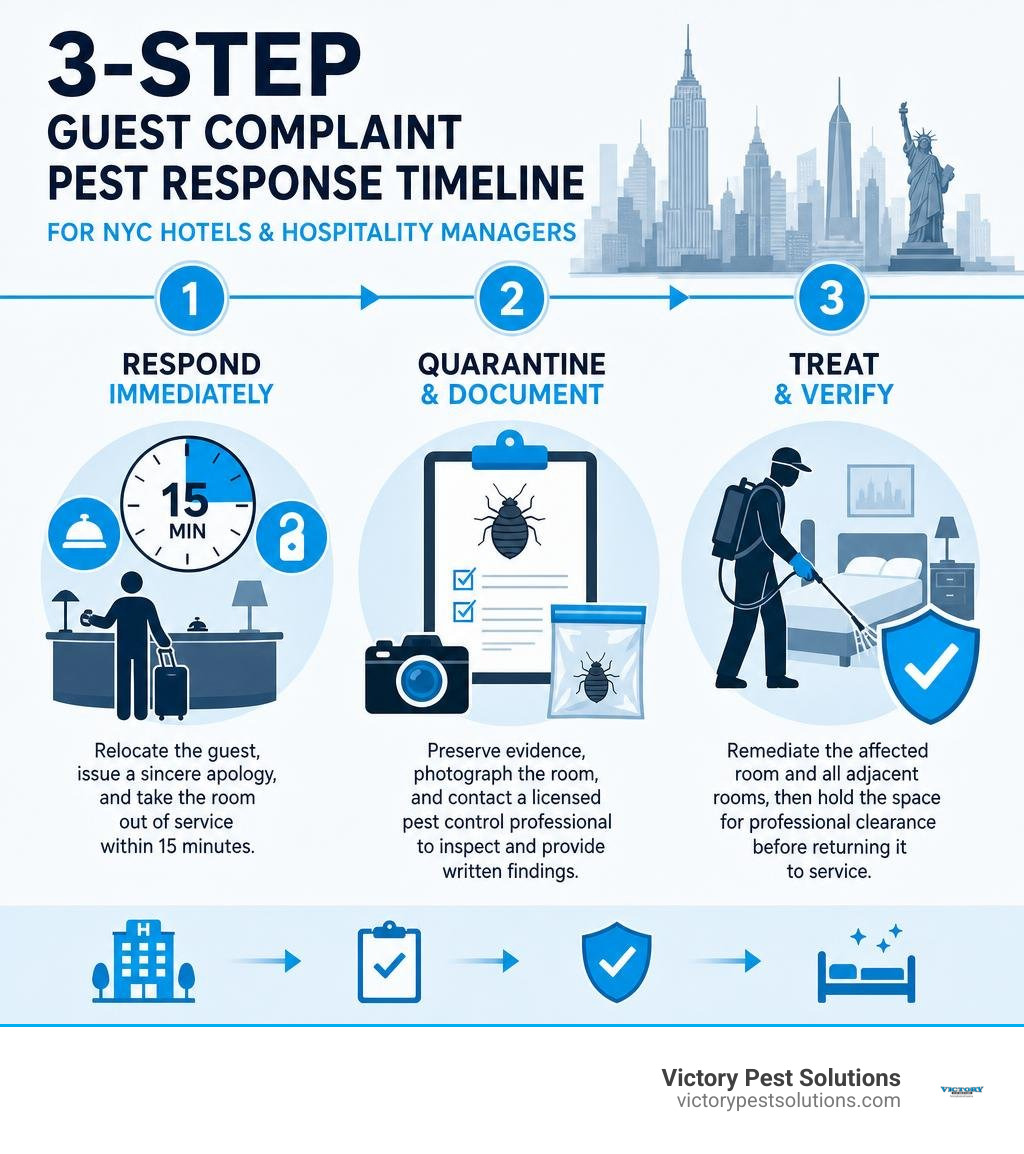
Here is how to resolve a guest pest complaint in 3 steps:
- Respond immediately — Relocate the guest, issue a sincere apology, and take the room out of service within 15 minutes.
- Quarantine and document — Preserve evidence, photograph the room, and contact a licensed pest control professional to inspect and provide written findings.
- Treat and verify — Remediate the affected room and all adjacent rooms, then hold the space for professional clearance before returning it to service.
A single pest complaint can spiral fast. A bed bug video posted to TikTok once reached 2.1 million views in days, dropping one hotel’s Google rating from 4.2 to 3.6 in a single week. And research shows that 94% of bed bug sightings in a guest room produce an immediate negative review. For NYC and Manhattan hotels — where occupancy and reputation are tightly linked — there is almost no margin for a slow or poorly handled response.
What makes this even harder is that most infestations do not come out of nowhere. In fact, 83% of hotel pest complaints involve issues that had documented warning signs at least 30 days before a guest ever reported them. That means the real problem is often a gap in the prevention and documentation system, not just bad luck.
I’m Len Oppenberg, founder of Victory Pest Solutions, and my background managing pest response in healthcare facilities — where an unresolved pest issue can shut down an operating room — shaped the urgent, structured approach to guest complaint pest response that I bring to Manhattan’s hospitality sector. Let’s walk through exactly what to do.
Step 1: Execute an Immediate Guest Complaint Pest Response Protocol
When a guest approaches the front desk with a pest complaint, the ticking clock begins. You have a very narrow window — often less than 15 minutes — to control the narrative, de-escalate the guest’s anxiety, and prevent them from pulling out their phone to record a viral video.
The worst thing a staff member can do is act defensive, minimize the report, or demand that the guest “prove” they saw a bug. Instead, your team must execute a highly structured, empathetic protocol immediately.
First, listen without interrupting. Sincere, active listening immediately lowers the guest’s defensive walls. Apologize for the distress the situation has caused, regardless of whether the pest presence has been verified yet. Your staff should be trained on a clear, professional script: “I am so incredibly sorry you experienced this. We take cleanliness and guest comfort very seriously, and we are going to address this immediately.”
Next, isolate and relocate. Immediately move the guest to a new room. To prevent any potential cross-contamination, relocate them to a room on a completely different floor, ideally one serviced by a different housekeeping team. Under no circumstances should they be placed in an adjacent room.
Once the guest is relocated, offer practical, immediate solutions to protect their peace of mind. Offer to professionally bag, wash, and dry their clothing on high heat (at least 120°F for 20 to 30 minutes) to eliminate any potential hitchhiking pests or eggs. Provide them with high-quality plastic bags for their other belongings and, if they are traveling for business, offer a temporary wardrobe allowance or complimentary laundry service.
For more detailed operational strategies on managing these delicate initial interactions, you can review the guide on How to handle guest complaints about bugs.
Handling Minor Pest Sightings and Refund Demands
Not all pest complaints involve bed bugs. In Manhattan’s dense urban environment, seasonal transitions or wet weather can occasionally drive a single German cockroach, an American cockroach, or a stray scout ant indoors.
When a guest demands a full refund for a minor, isolated pest sighting, hotel managers must balance financial prudence with reputation management. A single insect sighting does not automatically constitute a habitability failure under standard hospitality guidelines.
If your property maintains a rigorous, documented preventative pest control contract, you have a strong foundation. Politely explain to the guest that the property is treated regularly by professionals, and that seasonal shifts can occasionally cause a solitary insect to seek moisture indoors.
Instead of an immediate full refund, offer reasonable, tiered compensation:
- A complimentary meal at your hotel restaurant.
- A waiver of resort or parking fees.
- Loyalty program points or a discount on a future stay.
- An immediate room change combined with a partial credit for the night of the sighting.
If the guest remains highly combative, protecting your digital reputation is often worth more than a single night’s room rate. To understand the long-term cost of letting these disputes escalate, read about How Hotel Reviews Can Be Damaged by Pest Problems.
De-escalating a Bed Bug Crisis to Protect Your Reputation
If the complaint involves bed bug bites or live bed bug sightings, the stakes are dramatically higher. Bed bugs trigger a unique level of psychological distress and physical discomfort.
To de-escalate a bed bug crisis, your staff must act as calm, confident guides. Reassure the guest by sharing scientific facts: bed bugs do not transmit infectious diseases, according to the CDC. While their bites can be incredibly itchy and uncomfortable, they are not a medical emergency.
Walk the guest through your exact action plan so they feel cared for. Explain that you are calling in a licensed exterminator immediately to inspect the room, and that you will handle all the heavy lifting regarding their luggage and clothing.
By taking charge of the situation with clinical professionalism, you transform a terrifying experience into a highly managed event, dramatically reducing the likelihood of a lawsuit or a scathing online review. To help your front-of-house team identify these issues before guests do, familiarize them with the Signs of Bed Bugs in Hotel Rooms.
Step 2: Quarantine, Evidence Collection, and Determining Pest Origin
Once the guest has been safely relocated, the affected room must be placed under strict quarantine. Lock the room down digitally in your property management system so no front desk agent can accidentally check a guest into it.
Do not allow housekeeping staff to enter the room to clean, strip the sheets, or vacuum. Moving linens, dragging suitcases, or using a standard vacuum cleaner can disperse bed bugs or roaches into the hallways, service elevators, and adjacent rooms. Leave everything exactly as the guest left it until a professional inspection can occur.
For a deeper look into the legal implications of bed bug incidents and how properties build their defenses, see the legal breakdown on Can You File a Claim for Bed Bug Bites?.
Documenting the Incident to Mitigate Legal and Financial Risks
In the hospitality industry, a pest incident without documentation is a massive liability. Under premises liability law, hotels have a strict duty of care to provide safe, habitable accommodations. To win a negligence lawsuit, a guest must prove “actual or constructive notice” — meaning the hotel knew or should have known about the pest issue through reasonable inspection and failed to act.
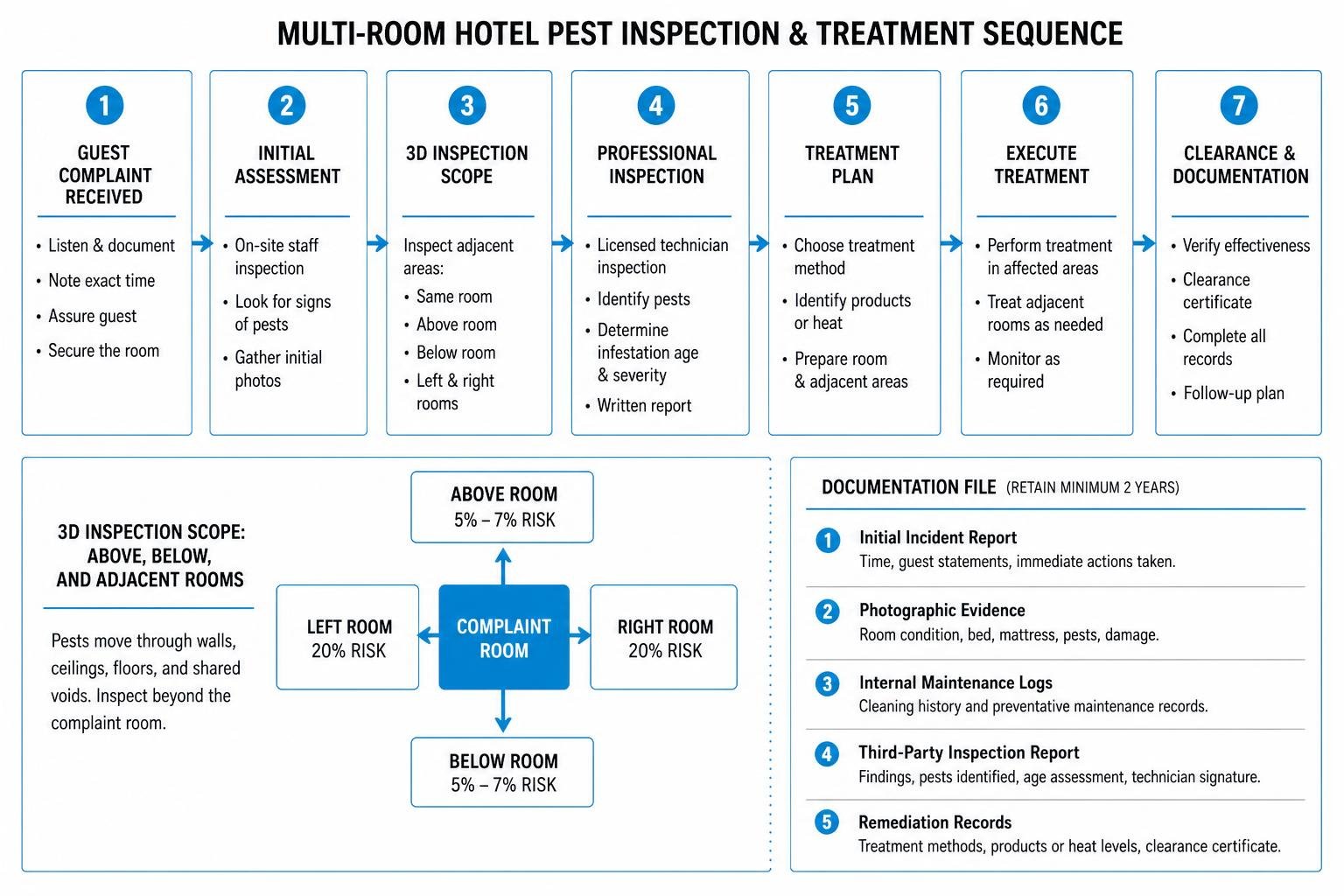
To protect your property from fraudulent claims and demonstrate that you met your legal duty of care, you must compile a comprehensive, time-stamped documentation file. This file should contain:
- The Initial Incident Report: Detail the exact time the complaint was received, the guest’s specific words, and the immediate actions taken by your staff.
- Photographic Evidence: Take high-resolution, clear photos of the room’s condition, the bed sheets, the mattress seams, and any visible insects or physical damage.
- Internal Maintenance Logs: Provide records showing the room’s cleaning history and any preventative maintenance performed prior to the guest’s arrival.
- Third-Party Inspection Report: Secure a signed, written report from your licensed pest control partner detailing their findings, the specific pests identified (if any), and their professional assessment of the infestation’s age.
- Remediation Records: Document the exact treatment methods used, the chemicals or heat levels applied, and the official clearance certificate signed by the pest control technician.
Maintaining these records on-site for a minimum of two years is not just smart business; it is often a regulatory necessity. For more on local compliance, consult our guide on NYC Hotel Pest Control Regulations.
Determining If the Infestation Originated from the Guest or the Property
One of the most challenging aspects of a pest complaint is determining who actually brought the pests into the room. Guests frequently transport bed bugs, cockroaches, and silverfish across state lines inside cardboard moving boxes, backpacks, and luxury luggage.
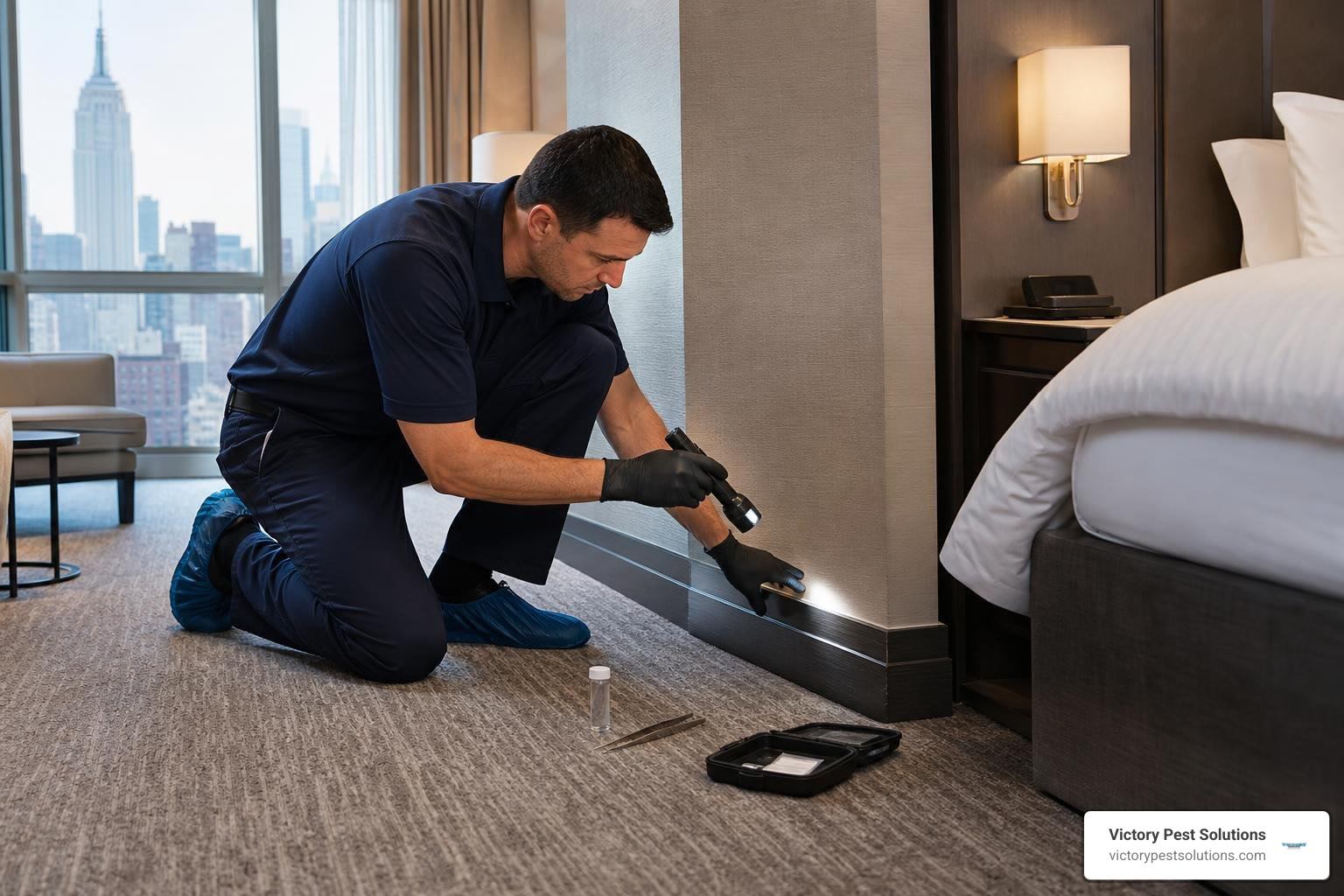
A professional exterminator can often determine the origin and age of an infestation. For example, if an inspector finds only a single adult bed bug or a few freshly laid eggs, it is highly likely the pest was introduced within the last 24 to 48 hours — pointing directly to the guest’s own travel gear. Conversely, if the inspector discovers extensive fecal spotting, cast skins, and multiple life stages of bed bugs hidden deep behind the headboard, the infestation has likely been active for weeks.
In some cases, guests may unknowingly bring pests in and then attempt to blame the property to secure a free vacation or financial payout. To see a real-world example of how professional pest inspections protect property managers from fraudulent guest claims, read the case study on What Happens If a Guest Causes an Infestation?.
Step 3: Professional Remediation and Multi-Room Inspection Protocols
Never attempt a DIY pest treatment in a commercial lodging environment. Applying over-the-counter bug sprays or foggers is a major legal risk, violates pesticide application laws, and often makes the problem worse.
Pyrethroid-based store sprays can cause bed bugs or cockroaches to scatter deep into wall voids, spreading the infestation to neighboring rooms. Professional remediation requires a highly coordinated, systematic approach.
To ensure your property is fully protected, rely on expert Manhattan Hotel Exterminator Services to handle the inspection and treatment process safely and legally.
The 3D Inspection Scope: Above, Below, and Adjacent Rooms
Pests do not respect room numbers or drywall boundaries. When a pest infestation is confirmed in a guest room, treating only that single space is a recipe for long-term failure. You must execute a “3D inspection scope.”
Research shows that rooms sharing a common wall with an infested room have a 20% chance of also being infested. Rooms directly above and directly below the infested room have a 5% to 7% chance of horizontal and vertical transmission.
Therefore, your pest control partner must immediately inspect:
- The target room where the pest was reported.
- The rooms directly to the left and right.
- The room directly above.
- The room directly below.
- The new room to which the complaining guest was relocated (to ensure no hitchhikers were transferred during the move).
Keeping this multi-room perimeter secure is the only way to prevent a localized issue from spreading throughout an entire guest floor. To establish a routine that catches these patterns early, read about how NYC Hotels Schedule Pest Inspections.
Executing a Professional Guest Complaint Pest Response Treatment Plan
A modern, professional treatment plan relies on the principles of Integrated Pest Management (IPM). Rather than blindly spraying chemicals, an IPM approach combines physical exclusion, sanitation, targeted chemical rotation, and non-chemical treatments.
For bed bugs, thermal (heat) treatments are highly effective. Raising the ambient temperature of the room to over 120°F kills all life stages of bed bugs, including highly resistant eggs, in a single treatment cycle.
For cockroaches and rodents, the focus shifts to sealing entry points, removing water sources (like wet drains), and rotating active chemical baits every 8 to 12 cycles to prevent pesticide resistance.
Once treatment is complete, the room must remain on a strict clearance hold for at least 72 hours. Do not return the room to your active inventory until your pest control partner conducts a follow-up inspection and signs a formal clearance certificate. To learn more about implementing these advanced protocols, read our Integrated Pest Management Manhattan Guide.
Proactive Prevention: Building a Digital Wall Against Future Infestations
The absolute best guest complaint pest response is preventing the complaint from ever happening. By building a proactive defense system, you can catch pest activity long before a guest ever notices it.
Key preventative measures include:
- Mattress and Box Spring Encasements: Install high-quality, certified bed bug proof encasements on every bed. This deprives bed bugs of their primary hiding spots and makes visual inspections incredibly fast and simple.
- Luggage Racks: Keep guest suitcases off carpeted floors and away from bed skirts by providing elevated metal or wood luggage racks in every room.
- Staff Training: Train your housekeeping, maintenance, and front desk staff to spot the early warning signs of pests during daily room turn-down service. Housekeepers should routinely check mattress seams, headboard mounts, and electrical outlets.
- Exclusion and Proofing: Seal cracks, crevices, and gaps around baseboards, plumbing lines, and entry doors to deny pests easy access to your building’s interior.
To see how top NYC lodging properties maintain their pristine reputations, read our guide on how NYC Hotels Prevent Bed Bug Infestations.
Rebuilding Trust After a Viral Guest Complaint Pest Response Incident
If a pest incident does escape your property’s walls and gain traction on social media, don’t panic. Deleting negative comments or ignoring the situation will only fuel public distrust and make the crisis worse.
Instead, execute a transparent, proactive communication strategy. Reply directly to the negative review or social media post with a clear “Remediation Update.”
Acknowledge the incident, apologize sincerely, and share concrete proof of your resolution. Post a redacted copy of the professional clearance certificate provided by your pest control partner, along with a description of the high-heat treatments and preventative measures you have implemented.
By demonstrating that you take guest safety seriously and act with absolute transparency, you can rebuild trust and protect your long-term occupancy rates. For a step-by-step playbook on navigating a public relations crisis, read about Rebuilding Trust After a Bedbug Hotel Story Goes Viral.
Frequently Asked Questions About Hospitality Pest Incidents
What are the immediate steps to take when a guest reports bed bugs?
Immediately apologize and listen to the guest without defensiveness. Relocate them to a clean room on a different floor. Offer to professionally wash and dry their clothes on high heat, provide plastic bags for their belongings, and immediately quarantine the affected room by locking it in your property management system. Call a licensed commercial exterminator to inspect the room within 24 hours.
Does a single cockroach sighting justify a full refund?
Generally, no. A single insect sighting does not constitute a habitability failure under standard lodging guidelines, especially in dense urban environments or during seasonal transitions. Offer the guest an immediate room change, a partial room credit, or complimentary amenities rather than a full refund, provided your property has documented proof of a regular, professional preventative pest control program.
What role do booking platforms play in mediating pest disputes?
Booking platforms like Airbnb and VRBO take pest complaints very seriously. A credible bed bug or severe roach report can result in the immediate suspension of your property listing. To reinstate your listing and defend your business, you must submit official, third-party documentation from a licensed pest control company proving that a thorough inspection was conducted and the property is completely clear of pests.
Partner with Manhattan’s Premier Hospitality Exterminators
When a pest issue threatens your hotel’s reputation, you cannot afford to wait for standard business hours. You need a commercial pest control partner who understands the high stakes of NYC hospitality and provides rapid, professional support.
At Victory Pest Solutions, we provide 24/7 rapid response and proactive prevention programs tailored specifically for hotels, restaurants, and commercial properties across New York City, Manhattan, Brooklyn, Queens, the Bronx, Staten Island, and Long Island.
Our team of highly trained, licensed professionals uses the latest Integrated Pest Management techniques to eliminate pests quickly, discreetly, and permanently, providing you with the legally defensible documentation you need to protect your brand.
Don’t let a single guest complaint damage your hard-earned reputation. Contact Victory Pest Solutions today to schedule a proactive commercial inspection and secure your property’s future at Industries: Hotel Pest Control.