
Guide to Exterior Hotel Pest Control Services
Why Hotel Pest Control Starts Outside
Exterior hotel pest control starts with a simple goal: stop pests before they reach guest areas. Inspect doors, utility openings, loading docks, waste areas, and landscaping for signs of rodents, cockroaches, and flies. Seal gaps, fix worn door sweeps, keep waste areas clean, and track activity at exterior monitoring stations. If activity rises, investigate the cause rather than relying on routine treatments alone.
This matters in busy New York hotels, where deliveries, open doors, and food waste can give pests a path indoors. A perimeter check can reveal those risks while there is still time to fix them.
I’m Len Oppenberg, founder of Victory Pest Solutions. My work in commercial pest control since 2000 informs how I approach exterior hotel pest control: find entry points, reduce what attracts pests, and use monitoring to guide the next step.
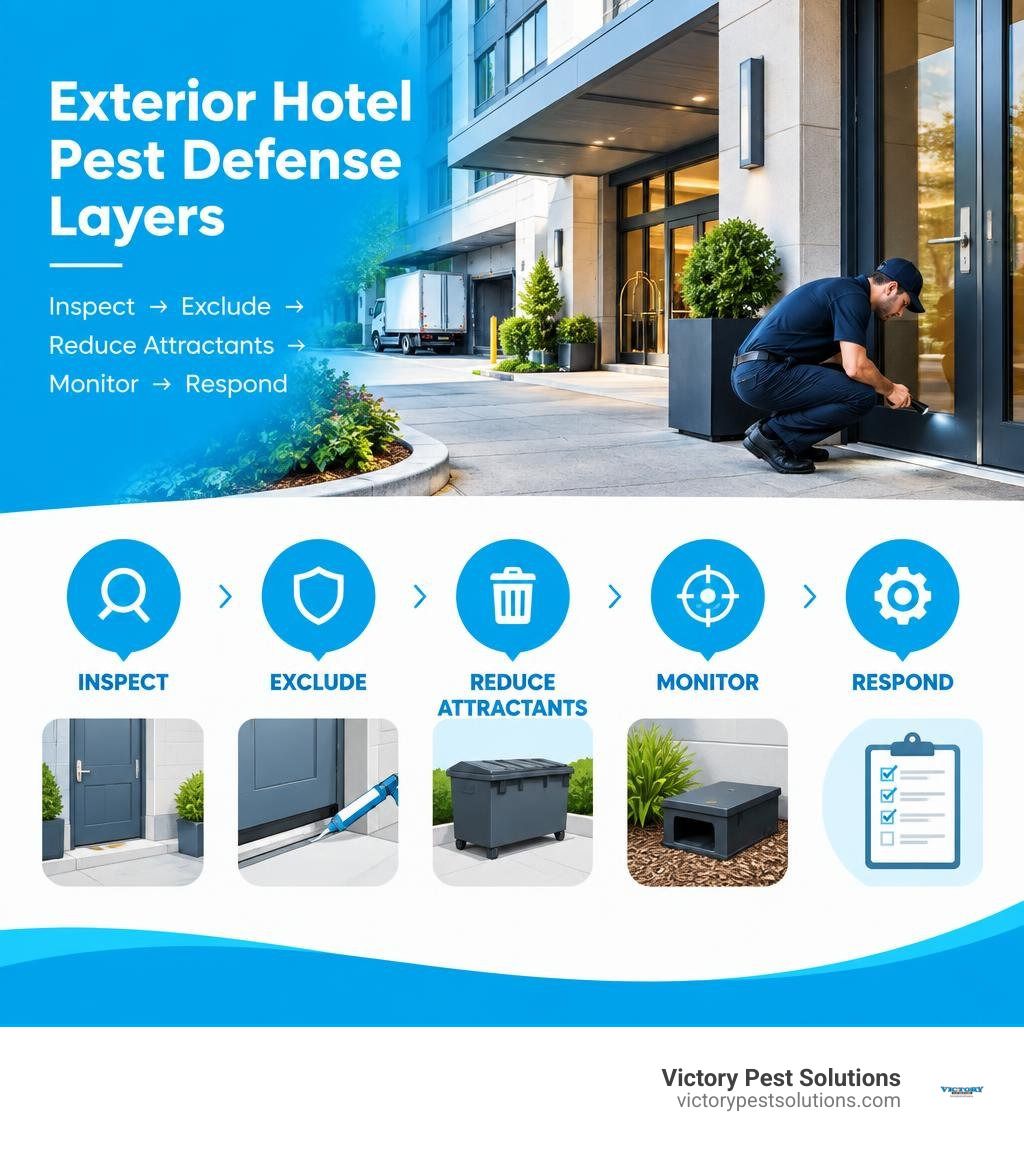
Core Foundations of Exterior Hotel Pest Control: How Outer Perimeters Protect Guest Rooms
When guests book a room at a boutique establishment in Queens or a luxury high-rise in Manhattan, they expect pristine comfort. What they never see is the constant biological pressure testing the outer envelope of the building. Urban centers present unique ecological environments where high population density, historic architecture, and extensive subterranean transit networks create intense pest pressure.
A pest sighting can quickly affect a hotel’s guest experience and reputation. Rodents, cockroaches, bed bugs and flies are especially concerning in hospitality environments because guests may encounter them in rooms, dining areas, lobbies or other shared spaces. Preventing pest activity before it reaches these areas helps hotels protect sanitary conditions and reduce the risk of pest-related guest complaints and negative reviews.
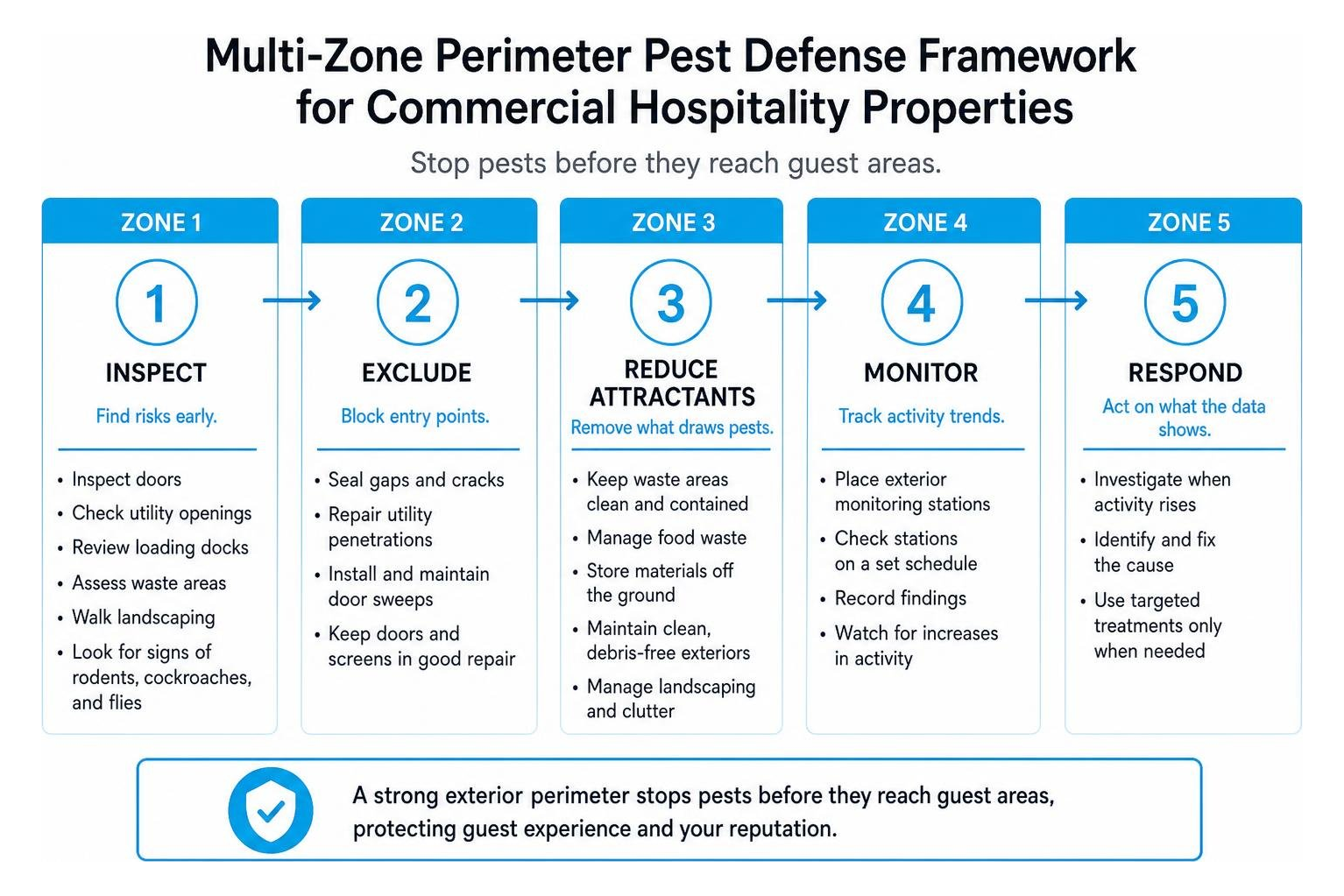
Many hotel pest problems are associated with conditions that can be identified around the building exterior, including gaps around doors and utility penetrations, poorly managed waste areas, standing water and landscaping that provides pest harborage. A strong exterior pest management program helps identify and correct these conditions before rodents and insects move farther into the property.
Why Exterior Hotel Pest Control Differs from Interior IPM Protocols
Interior Integrated Pest Management (IPM) focuses on detection, isolation, sanitation, and targeted, minimal treatments within guest rooms, dining spaces, and service corridors. Once pests are indoors, technicians must carefully balance treatment methods around guest safety, regulatory limits, and immediate containment.
Exterior management serves as an interceptive defense system. The exterior strategy relies on:
- Environmental Interception: Managing physical attractants like exterior lighting, dumpster odors, and irrigation runoff before pests migrate toward structural walls.
- Structural Fortification: Physically barring pests from finding gaps around utility penetrations, dock levelers, and air vents.
- Targeted Perimeter Trapping: Utilizing tamper-resistant bait stations and interceptor traps along property boundaries.
- Chemical Resistance Management: Selecting treatment methods and products based on pest activity, site conditions and product labeling can help reduce unnecessary pesticide use. An Integrated Pest Management approach combines monitoring, sanitation, exclusion and targeted treatments rather than relying repeatedly on a single control method.
Understanding these operational differences ensures effective hotel cockroach control in NYC while maintaining strict environmental standards.
Structural Exclusion and Landscaping Tactics in Exterior Hotel Pest Control
Pests are opportunists. A young Norway rat can squeeze through an opening no larger than a quarter (half an inch), while mice can slip through gaps the size of a dime (a quarter of an inch). German and American cockroaches require mere millimeters to breach exterior masonry.
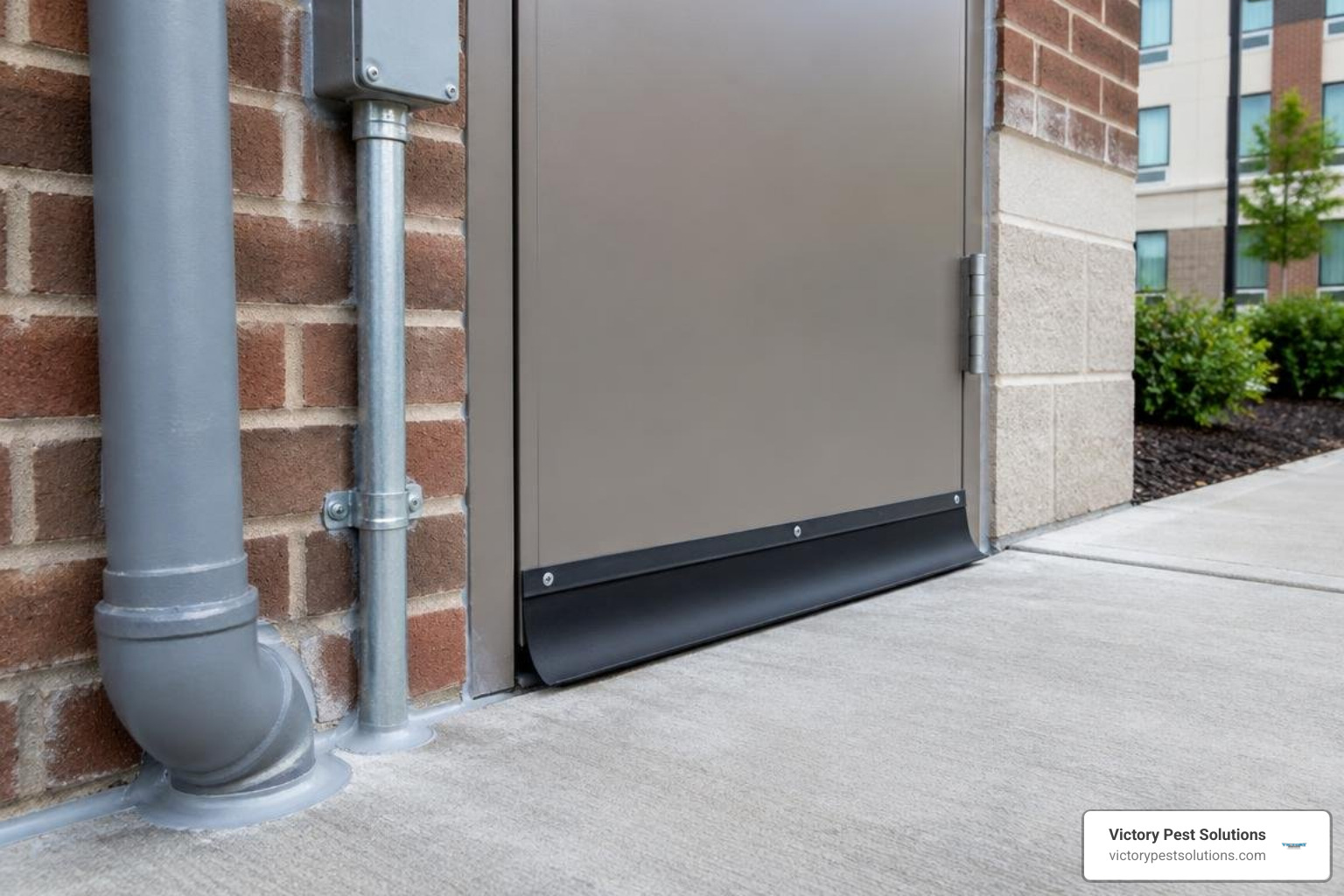
Structural exclusion seals off these physical pathways before pests access wall voids and mechanical chases. Key physical modifications include:
- Heavy-Duty Brush and Rubber Door Sweeps: Install industrial-grade sweeps along all exterior-facing personnel doors, fire exits, and loading bays. If daylight is visible beneath a closed doorway, pests can easily walk inside.
- Masonry Sealing and Escutcheon Plates: Seal gaps around exterior plumbing, gas, electrical lines, and HVAC conduit using copper mesh (which rodents cannot chew through) paired with elastomeric silicone sealants.
- Vegetation Clearance Zones: Maintain an 18-to-24-inch gravel or crushed-stone buffer between building foundations and landscaping beds. Trim tree canopies and shrubbery at least two feet away from facade surfaces to eliminate aerial bridges for roof rats and foraging ants.
- Moisture Abatement: Ensure all air-conditioning condensate lines, roof gutters, and irrigation heads direct moisture away from foundation bases, depriving pests of necessary water sources.
Strategic Perimeter Defense: Baiting, Lighting, and Waste Management
Securing the exterior requires managing artificial vectors that draw pests from surrounding city blocks. Improper lighting, mismanaged refuse, and unmonitored dock areas invite pests onto hotel grounds.
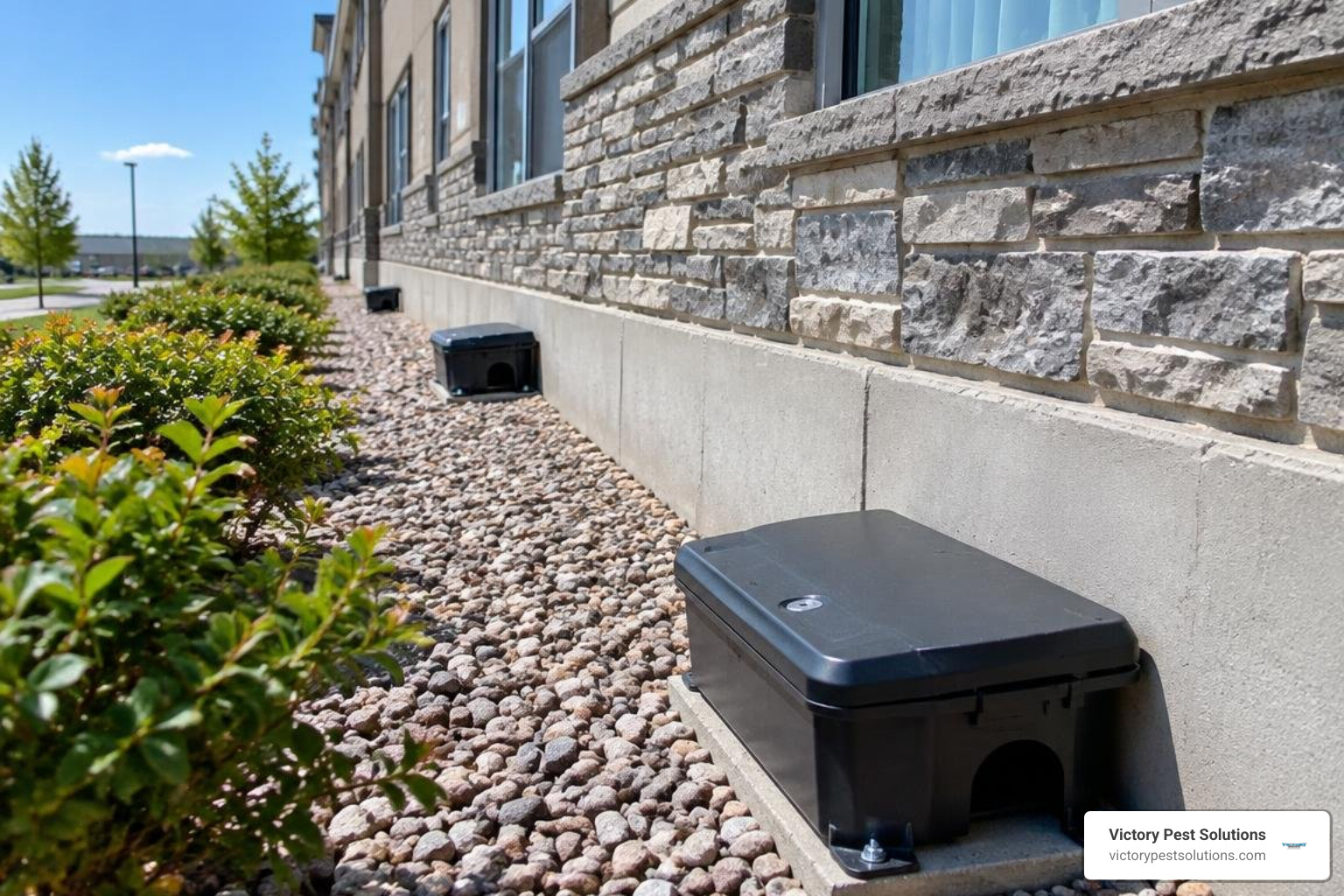
Rodent Bait Station Networks and Trend Data Monitoring
A successful hotel rodent prevention program relies on a continuous ring of tamper-resistant exterior bait stations anchored directly to concrete slabs or foundation footings. These stations protect non-target wildlife, pets, and unauthorized individuals while providing essential data on pest activity.
Technicians log feeding markers, species identification, and bait consumption rates during every inspection cycle. Spikes in exterior bait consumption serve as a direct early warning system, signaling rodent population growth in the surrounding block weeks before those rodents attempt to enter interior basements or dry-storage pantries.
Exterior monitoring is an important part of a proactive hotel pest management program because it can help identify pest activity and potential entry points before problems move farther into the property. Regular inspection of exterior areas, doors, utility penetrations, landscaping and other vulnerable locations can help hotel management address conditions that may attract or allow pests indoors.
Commercial Waste Management and Fly Attractant Mitigation
Waste disposal areas represent the highest attractant zone on any hospitality property. Kitchen grease, discarded banquet food, and wet trash generate scent plumes that attract flies, wasps, rats, and roaches from blocks away.
- Compactor and Dumpster Hygiene: Enforce closed-lid policies. Keep dumpsters on poured concrete pads rather than dirt or asphalt, and regularly power-wash pads using enzymatic digesters to eliminate grease buildup.
- Dock Drain Maintenance: Clean and sanitize loading dock trench drains weekly. Organic slime in outdoor drains provides breeding media for phorid and drain flies.
- Exterior Lighting Management: Swap standard mercury-vapor or bright white incandescent exterior security bulbs for high-pressure sodium vapor or warm-spectrum LED fixtures (below 3000K). Warm lighting spectrums emit wavelengths far less attractive to nocturnal flying insects.
Inspection Schedules, Regulatory Compliance, and Avoiding Costly Mistakes
Hospitality properties require tailored inspection frequencies based on their layout, volume, and location. High-density urban hotels face different pest pressures than sprawling suburban properties with extensive landscaping.
| Property Type | Inspection Frequency | High-Risk Zones | Primary Target Vectors |
|---|---|---|---|
| Urban High-Rises (e.g., Manhattan, Brooklyn) | Bi-Weekly to Weekly | Loading bays, trash compactors, basement chases | Norway rats, American cockroaches, filth flies |
| Boutique Hotels (Historic structures) | Bi-Weekly | Masonry gaps, courtyard dining, cellar doors | Mice, German roaches, pavement ants |
| Sprawling Suburban Properties (e.g., Westchester, Orange County) | Monthly (Bi-Weekly in Summer) | Perimeter fence lines, retention ponds, landscape mulch | Rodents, ticks, mosquitoes, stinging insects |
Maintaining these schedules requires adjusting protocols for local seasons. Following a detailed seasonal hotel pest control NYC guide ensures your team is prepared for autumn rodent migrations when temperatures drop, as well as spring insect emergence.
Health Code Standards and IPM Documentation Requirements
Commercial hospitality operations must maintain transparent, audit-ready pest management records to comply with municipal health department guidelines and avoid costly violations. Strict adherence to NYC hotel pest control regulations requires properties to maintain digital logs documenting:
- Service dates and technician information.
- Locations of exterior bait stations, traps and monitoring devices.
- Pesticide application records and product information when pesticides are used.
- Notes identifying structural deficiencies such as unsealed openings, damaged weather stripping, standing water or sanitation concerns.
- Recommendations provided to hotel management or engineering teams.
Hotels should work with a licensed pest management provider to ensure pest control services and pesticide applications comply with applicable New York City pest and pesticide requirements as well as applicable New York State requirements.
Frequently Asked Questions About Commercial Hospitality Pest Defense
How often should a hotel inspect exterior bait stations and entry barriers?
High-density urban properties and hotels with full-service commercial kitchens should have their exterior bait stations, loading docks, and exterior barriers inspected every two weeks. Lower-density properties can maintain a monthly schedule, provided that engineering teams conduct daily visual checks of waste compactors and delivery doors.
What exterior factors cause sudden indoor cockroach or rodent spikes?
Sudden indoor spikes are usually triggered by three exterior events: seasonal temperature drops that drive pests indoors for warmth, nearby municipal utility or construction work that disturbs subterranean pest nests, and broken dumpster seals or compactor door gaskets that create strong scent trails.
How does proactive perimeter defense protect online guest reviews?
By eliminating pest populations along the property perimeter, pests are stopped before entering lobbies, restaurants, and guest rooms. Protecting your perimeter prevents the negative guest experiences that lead to damaging reviews, as outlined in our analysis on how hotel reviews can be damaged by pest problems.
Elevating Hospitality Defense with Proactive Perimeter Protection
Exterior hotel pest control is the foundation of a clean, welcoming guest environment. By sealing building envelopes, managing lighting and waste areas, and tracking perimeter monitoring stations, hotel operators can address pest risks before they reach guest rooms.
Victory Pest Solutions provides complete commercial pest management for hospitality properties across New York City, Manhattan, the Bronx, Queens, Brooklyn, Staten Island, and the surrounding counties, including Nassau, Westchester, Rockland, and Orange County. Our certified technicians offer 24/7 commercial support and structured IPM programs to keep your property fully protected and audit-ready.
Contact our team today to schedule an exterior property assessment and strengthen your hotel’s pest defense with our dedicated hospitality pest management services.