
How to Eliminate Hotel Cockroach Infestation in 5 Steps
Why Hotel Cockroach Control in NYC Is One of the Hardest Pest Challenges in Hospitality
Hotel cockroach control in NYC is one of the most urgent pest challenges any hospitality property manager will face. A single cockroach sighting in a guest room or restaurant can trigger a one-star review, a health department violation, and a wave of cancellations — all within 24 hours.
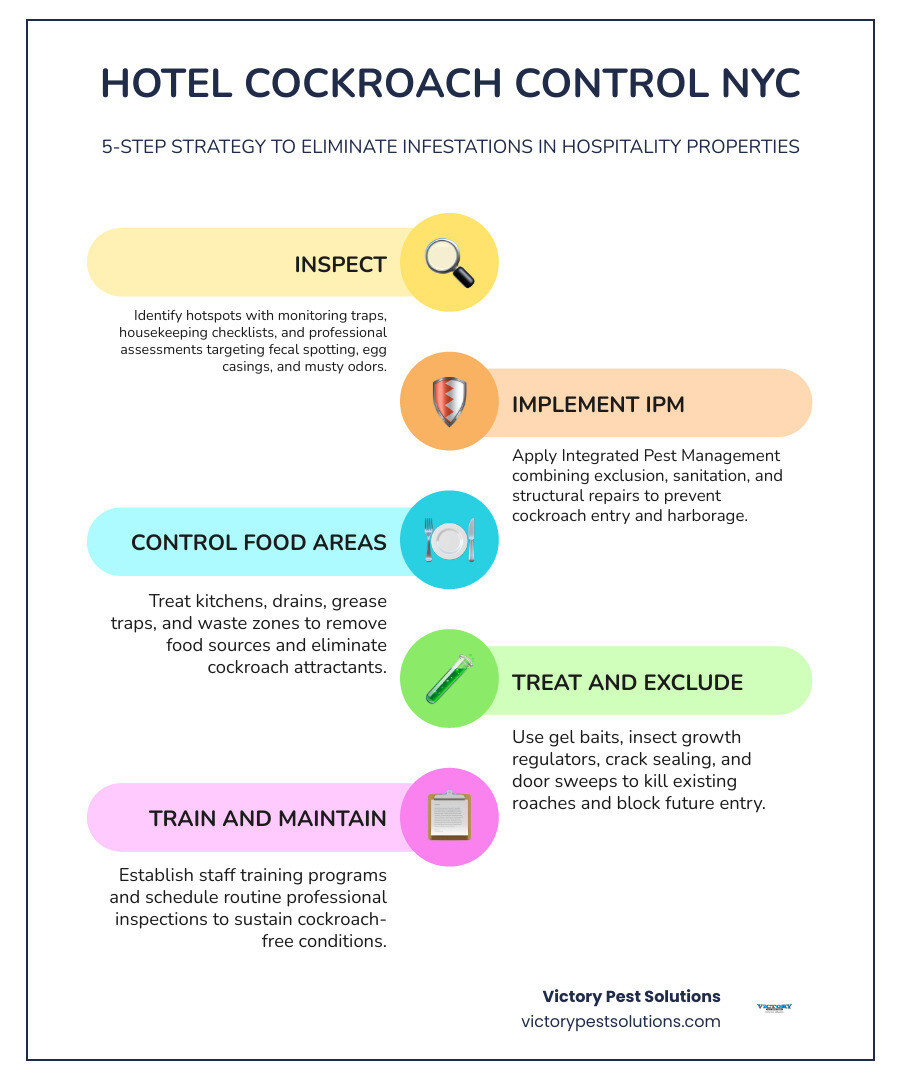
Here is a quick overview of how NYC hotels can eliminate cockroach infestations:
- Inspect – Identify hotspots using monitoring traps, housekeeping checklists, and professional assessments
- Implement IPM – Apply Integrated Pest Management combining exclusion, sanitation, and structural repairs
- Control food areas – Treat kitchens, drains, grease traps, and waste zones to remove food sources
- Treat and exclude – Use gel baits, insect growth regulators, crack sealing, and door sweeps
- Train and maintain – Establish staff training programs and schedule routine professional inspections
New York City’s hospitality properties face pest pressure unlike almost anywhere else in the country. Dense urban infrastructure, constant international tourism traffic, shared building systems, and neighboring food businesses all create conditions where cockroaches can move in fast and multiply faster. German cockroaches alone can produce hundreds of offspring in just a few months, meaning a small problem in a hotel kitchen can become a full-scale infestation before a single guest complaint is filed.
As of July 2026, guest expectations around cleanliness are higher than ever. Online review platforms give travelers immediate power to publicly document what they find in their rooms. For hotel facility managers, that means cockroach prevention is no longer just a housekeeping concern — it is a core part of protecting the property’s brand and bottom line.
I’m Len Oppenberg, founder of Victory Pest Solutions, and I’ve spent over two decades in commercial pest management — including specialized work in high-stakes environments where hotel cockroach control in NYC demands both speed and precision. That experience is the foundation of every strategy covered in this guide.
Basic hotel cockroach control NYC vocab:
Why NYC Hotels Face Unique Cockroach Pressures
Operating a hotel in New York City means managing a micro-city within a massive, interconnected macro-city. Pests do not respect property lines, and in dense urban environments, they treat entire city blocks as single, giant structures. If a neighboring restaurant, retail space, or subway corridor has a pest issue, those cockroaches can easily migrate through shared basements, utility corridors, and wall voids straight into your lobby.
Furthermore, hotels are transit hubs. Hundreds of guests arrive daily from airports, train stations, and rideshares, carrying luggage that may have sat in infested cargo holds or other hotels. When you combine this high traffic volume with the massive amount of food waste generated by hotel kitchens, restaurants, room service, and guest room trash cans, you get a perfect storm.
Leaving cockroach issues unaddressed is not just a cosmetic or reputational issue; there are severe cockroach health risks and diseases associated with these pests. They carry bacteria like Salmonella and E. coli, contaminate food surfaces, and shed allergens that can trigger severe asthma attacks in sensitive guests.
Common Cockroach Species in Manhattan Lodging
To defeat your enemy, you must first know who they are. In Manhattan lodging and hospitality facilities, we primarily encounter three types of cockroaches:
- German Cockroaches: These are the most common and troublesome pests in the hospitality industry. They are small, light brown, and reproduce at an alarming rate. A single female and her offspring can produce tens of thousands of roaches in a single year. They prefer warm, humid areas close to food and moisture, making hotel kitchens, bathrooms, laundry rooms, and guest room mini-fridges their favorite nesting habits.
- American Cockroaches: Often referred to by locals as “waterbugs,” these are much larger, reddish-brown roaches that can fly. They typically live in sewers, steam tunnels, and basements, migrating upward into hotel ground floors and restaurants through drains, pipe chases, and utility lines.
- Oriental Cockroaches: Dark, glossy, and slow-moving, these roaches thrive in damp, cool environments like crawlspaces, basements, and trash rooms. They are highly dependent on water and often enter buildings at ground level or below.
Hidden Vulnerabilities and Seasonal Shifts in NYC Hotels
Cockroaches are masters of hide-and-seek. In a hotel, they find refuge in structural blind spots that housekeeping rarely touches. Laundry facilities with warm, damp commercial dryers, deep pipe chases behind bathroom walls, elevator mechanical rooms, and wall voids behind headboards are prime real estate.
Seasonal shifts also play a major role in pest behavior. During the hot, humid summer months, cockroach populations swell outdoors and in NYC’s subway systems. When winter arrives, or when active nearby construction and demolition projects displace pest populations, they seek shelter indoors. This makes structural exclusion vital.
To keep them out, we must understand the physical barriers they hate. There are 5 things cockroaches hate—including clean, dry environments, certain natural scents, and sealed entryways—which we use to our advantage when designing commercial exclusion plans.
The Legal and Reputational Stakes of Hotel Cockroach Control NYC
A single pest sighting can go viral before your front desk staff even has a chance to offer an apology. A guest who spots a cockroach crawling across their nightstand is highly likely to take a photo, post it on social media, and write a scathing review on TripAdvisor or Google. This brand damage can cost a hotel tens of thousands of dollars in lost bookings, far outweighing the cost of proactive, professional pest management.
Beyond the immediate loss of revenue, hotels often face costly demands for guest compensation, including full room refunds, dry cleaning costs, and even legal claims.
NYC Health Department Regulations and Compliance
The legal ramifications are just as severe. The New York City Department of Health and Mental Hygiene (DOHMH) maintains incredibly strict sanitary standards for lodging and food service establishments. Under nyc hotel pest control regulations, commercial properties must maintain pest-free environments.
During routine health inspections, any evidence of cockroach activity—whether it is live insects, dead bodies, egg casings, or fecal spotting—can result in heavy fines, downgraded letter grades, or immediate closure of hotel restaurants and kitchens. To protect your business, facility managers must strictly adhere to nyc health department pest control rules and maintain detailed documentation of all professional pest control activities.
Managing Guest Complaints and Protecting Brand Reputation
If a guest does report a cockroach in their room, your staff must be trained to handle the situation with empathy, speed, and discretion. The worst thing a staff member can do is dismiss the complaint or show lack of concern.
We recommend implementing a strict, immediate protocol:
- Acknowledge and Apologize: Listen to the guest, apologize sincerely, and assure them that the issue is being taken seriously.
- Relocate Immediately: Move the guest to a new room on a different floor, ideally away from the affected vertical line.
- Contain the Area: Lock down the affected room immediately. Do not assign it to another guest until it has been inspected and cleared by a licensed pest control professional.
- Inspect Surrounding Rooms: Cockroaches travel through wall voids. If Room 402 has an issue, we must also inspect Rooms 401, 403, 302, and 502.
- Compensate Fairly: Offer appropriate compensation, such as a waived room charge, free meals, or loyalty points, to rebuild goodwill.
The 5-Step Strategy to Eliminate Hotel Cockroach Infestations
Eliminating a cockroach infestation in a hotel requires a systematic, scientifically backed approach. Relying on reactive, spot-treatment spray cans is a recipe for failure; it simply drives the pests deeper into the walls.
To achieve long-term success, we use a proactive Integrated Pest Management (IPM) framework. The table below highlights why this approach is superior to old-school, reactive pest control:
| Feature | Reactive Pest Control | Proactive Integrated Pest Management (IPM) |
|---|---|---|
| Primary Focus | Killing pests after they appear | Preventing pests through sanitation and exclusion |
| Chemical Use | Heavy, routine broadcast spraying | Targeted, low-impact baits and dusts only when needed |
| Long-Term Cost | High (due to recurring infestations and damage) | Low (proactive maintenance prevents major outbreaks) |
| Reputation Protection | Weak (pest sightings still occur frequently) | Strong (pests are stopped before guests see them) |
| Regulatory Compliance | Poor (often violates modern health codes) | Excellent (meets all NYC DOHMH standards) |
Step 1: Comprehensive Inspection and Early Detection
You cannot treat what you cannot see. The first step in our elimination strategy is a deep, thorough inspection of the property. Our technicians look for subtle signs of cockroach activity that untrained eyes often miss:
- Fecal Spotting: Small, black pepper-like specks left on surfaces, particularly in corners, hinges, and drawer tracks.
- Egg Casings (Oothecae): Empty or intact brown, purse-shaped casings that hold dozens of cockroach eggs.
- Musty Odor: A distinct, oily, and unpleasant scent that grows stronger as the infestation size increases.
We provide hotel housekeeping teams with checklists so they can inspect high-risk areas—like behind headboards, inside closet corners, and around bathroom plumbing fixtures—during their daily room cleanings. We also place discreet sticky monitoring traps in dark corners to track pest activity and identify exactly where the roaches are nesting.
Step 2: Implementing Integrated Pest Management (IPM) for Hotel Cockroach Control NYC
Once we have mapped out the pest activity, we implement a strict Integrated Pest Management program. Following the EPA Integrated Pest Management Guidelines, IPM focuses on altering the physical environment to make it uninhabitable for pests.
Instead of relying solely on chemical treatments, we combine physical exclusion, deep cleaning, and minor structural repairs. This approach is particularly critical in hotel dining areas, where chemical exposure must be minimized. Our specialized integrated pest management nyc restaurants protocols ensure that food prep areas remain pest-free without compromising food safety or violating health department codes.
Step 3: Strict Kitchen, Restaurant, and Waste Management
Hotel kitchens, room service prep areas, and waste management facilities are cockroach magnets. To cut off their food and water supply, we implement rigid sanitation standards.
This includes:
- Deep Drain Treatments: Cockroaches love organic buildup inside drains. We use biological drain cleaners to break down slime and grease.
- Grease Trap Maintenance: Regular cleaning of grease traps prevents grease accumulation, which is a major food source.
- Proper Food Storage: All food items must be stored in airtight, insect-proof plastic containers off the floor.
- Strict Trash Protocols: Trash cans must have tight-fitting lids and be emptied, washed, and sanitized at the end of every shift.
Our targeted approach for cockroach control commercial kitchens nyc is designed to prevent the common issues that lead to nyc restaurant health inspection pest failures, keeping your food and beverage operations fully compliant.
Step 4: Targeted Professional Treatments and Exclusion
When physical treatments are required, we use highly targeted, low-impact methods. We apply professional-grade gel baits in cracks and crevices where cockroaches live. The roaches eat the bait, return to their nests, and spread the active ingredient to the rest of the colony.
We also utilize Insect Growth Regulators (IGRs), which disrupt the reproductive cycle of cockroaches, preventing young nymphs from reaching adulthood and breeding.
Simultaneously, we perform structural exclusion. We seal cracks in walls, gaps around pipes, and install heavy-duty door sweeps on exterior doors and utility rooms. If you have ever wondered, “can pest control get rid of roaches” permanently, the answer is yes—but only when targeted treatments are paired with professional exclusion. Our comprehensive cockroach control services in nyc combine both to deliver lasting results.
Step 5: Ongoing Staff Training and Routine Inspections
The final step is establishing a culture of pest awareness within your hotel. We help hotels integrate pest prevention training into their onboarding programs for housekeeping, maintenance, and kitchen staff.
We also set up digital maintenance logs where staff can immediately report structural defects, like a loose wall tile or a leaking pipe, before pests can exploit them. Finally, we schedule routine, professional inspections to catch potential issues early. For properties seeking maximum protection, our commercial cockroach control services provide the ongoing monitoring, documentation, and rapid-response support needed to keep your facility pest-free year-round.
Frequently Asked Questions About NYC Hotel Pest Management
To help you better protect your property, we have compiled answers to some of the most common questions hotel managers ask about commercial pest control.
How often should NYC hotels schedule professional cockroach inspections?
For NYC hotels, we recommend scheduling professional pest inspections at least once a month. High-risk zones like commercial kitchens, laundry rooms, and loading docks should be inspected even more frequently. During seasonal transitions, or if there is active construction nearby, we often increase the frequency of our visits to counter the increased pest pressure.
What should a hotel do if a cockroach problem persists after treatment?
If cockroaches persist after treatment, it is usually due to one of three things: chemical resistance, hidden sanitation issues, or structural entry points that were missed. In these cases, we conduct a comprehensive structural audit, switch to different chemical classes to manage bait resistance, and work closely with your kitchen and housekeeping staff to eliminate alternative food and water sources.
Why is professional hotel cockroach control NYC necessary for compliance?
The NYC Department of Health requires commercial lodging facilities to maintain a pest-free environment. Attempting DIY pest control or relying on unlicensed staff not only fails to solve the problem, but it also violates local laws. Professional pest management provides the licensed technicians, approved materials, and detailed service documentation required to prove compliance during health inspections. You can learn more about our commercial capabilities by exploring our nyc pest management services commercial page.
Partner with NYC’s Hospitality Pest Experts
At Victory Pest Solutions, we understand that in the hospitality industry, your reputation is everything. We provide 24/7 support, proactive prevention programs, and rapid-response emergency services designed specifically for hotels, resorts, and restaurants across New York City.
Our team of highly trained, licensed technicians understands the unique structural and regulatory challenges of NYC hospitality properties. We don’t just treat symptoms; we deliver long-term, customized pest management solutions that protect your guests, your staff, and your brand.
If you want to strengthen your hotel’s pest prevention efforts or need immediate help resolving a recurring issue, contact us today to schedule an inspection. Discover how we can protect your property by visiting our hotel pest control nyc hospitality page.