
Complete Guide to IPM – Integrated Pest Management for NYC Restaurants
Restaurants throughout New York City face ongoing pressure to maintain sanitary conditions, avoid pest infestations, and pass strict health inspections. In commercial kitchens across Manhattan, Brooklyn, Queens, the Bronx, and Staten Island, pests can quickly become a serious issue if prevention measures are inconsistent.
That is why many restaurants now rely on Integrated Pest Management NYC restaurant programs to reduce long-term pest risks while improving sanitation and compliance.
Integrated Pest Management, commonly called IPM, is a proactive approach focused on prevention, monitoring, sanitation, structural maintenance, and targeted treatments. Instead of reacting after pests become a problem, IPM helps restaurants eliminate the conditions that attract infestations in the first place.
For NYC restaurants, this approach has become one of the most effective long-term pest prevention strategies available.
What Is Integrated Pest Management (IPM)?
Integrated Pest Management is a structured pest prevention system designed to reduce infestations through monitoring, sanitation, maintenance, and environmental control.
Unlike traditional reactive pest control methods that focus heavily on repeated chemical treatments, Integrated Pest Management NYC restaurants strategies focus on long-term prevention.
The primary goals of IPM include:
- Preventing infestations before they begin
- Reducing food, water, and shelter sources
- Monitoring pest activity consistently
- Identifying structural vulnerabilities
- Using targeted treatments only when necessary
This prevention-focused strategy is especially important for restaurants operating in high-risk urban environments like New York City.
Why NYC Restaurants Need Integrated Pest Management
Restaurants in New York City face unique pest pressures due to dense infrastructure, constant food activity, and aging buildings.
High-risk conditions often include:
- Shared commercial walls
- Limited kitchen space
- Heavy trash accumulation
- Constant deliveries and foot traffic
- Older plumbing and utility systems
Restaurants in Manhattan and Brooklyn are especially vulnerable because pests can easily travel between neighboring businesses.
Integrated Pest Management NYC restaurants programs help businesses stay proactive and reduce the likelihood of violations before inspectors identify problems.
The Core Components of an Effective IPM Program
Successful IPM programs combine several prevention methods working together to reduce pest activity long-term.
Inspection and Monitoring
Routine inspections are one of the most important parts of any Integrated Pest Management NYC restaurants strategy.
Restaurants should regularly inspect:
- Food storage areas
- Under and behind equipment
- Drains and plumbing areas
- Trash and dumpster zones
- Basements and utility spaces
- Dry goods and delivery areas
Monitoring devices and scheduled inspections help identify pest activity before infestations grow.
Sanitation and Cleaning
Poor sanitation is one of the leading causes of pest activity in commercial kitchens.
IPM sanitation practices include:
- Cleaning food debris daily
- Removing grease buildup
- Sanitizing prep stations
- Deep cleaning behind appliances
- Keeping floors dry and clean
- Maintaining organized storage areas
Consistent sanitation reduces food sources that attract rodents, cockroaches, flies, and ants.
Sealing Entry Points
Pests often enter restaurants through tiny openings and hidden structural gaps.
Important prevention steps include:
- Sealing wall cracks
- Closing pipe penetrations
- Repairing damaged doors
- Installing door sweeps
- Screening vents and drains
- Closing foundation gaps
Restaurants throughout Queens and the Bronx often deal with older buildings where these vulnerabilities are more common.
Moisture and Drain Management
Moisture is one of the biggest pest attractants in NYC commercial kitchens.
IPM programs focus heavily on:
- Fixing plumbing leaks
- Eliminating standing water
- Maintaining floor drains
- Controlling humidity levels
- Cleaning grease traps regularly
Reducing moisture helps limit cockroach and fly activity throughout kitchens and storage areas.
Proper Food and Waste Storage
Accessible food sources increase infestation risks significantly.
Restaurants should always:
- Store food in sealed containers
- Rotate inventory properly
- Remove trash consistently
- Clean dumpster areas regularly
- Avoid overnight food exposure
- Keep dry storage organized
Integrated Pest Management NYC restaurants strategies prioritize eliminating easy food access for pests.
Effective Integrated Pest Management programs combine sanitation, monitoring, structural maintenance, moisture control, and targeted treatments to reduce long-term pest risks in NYC restaurants.
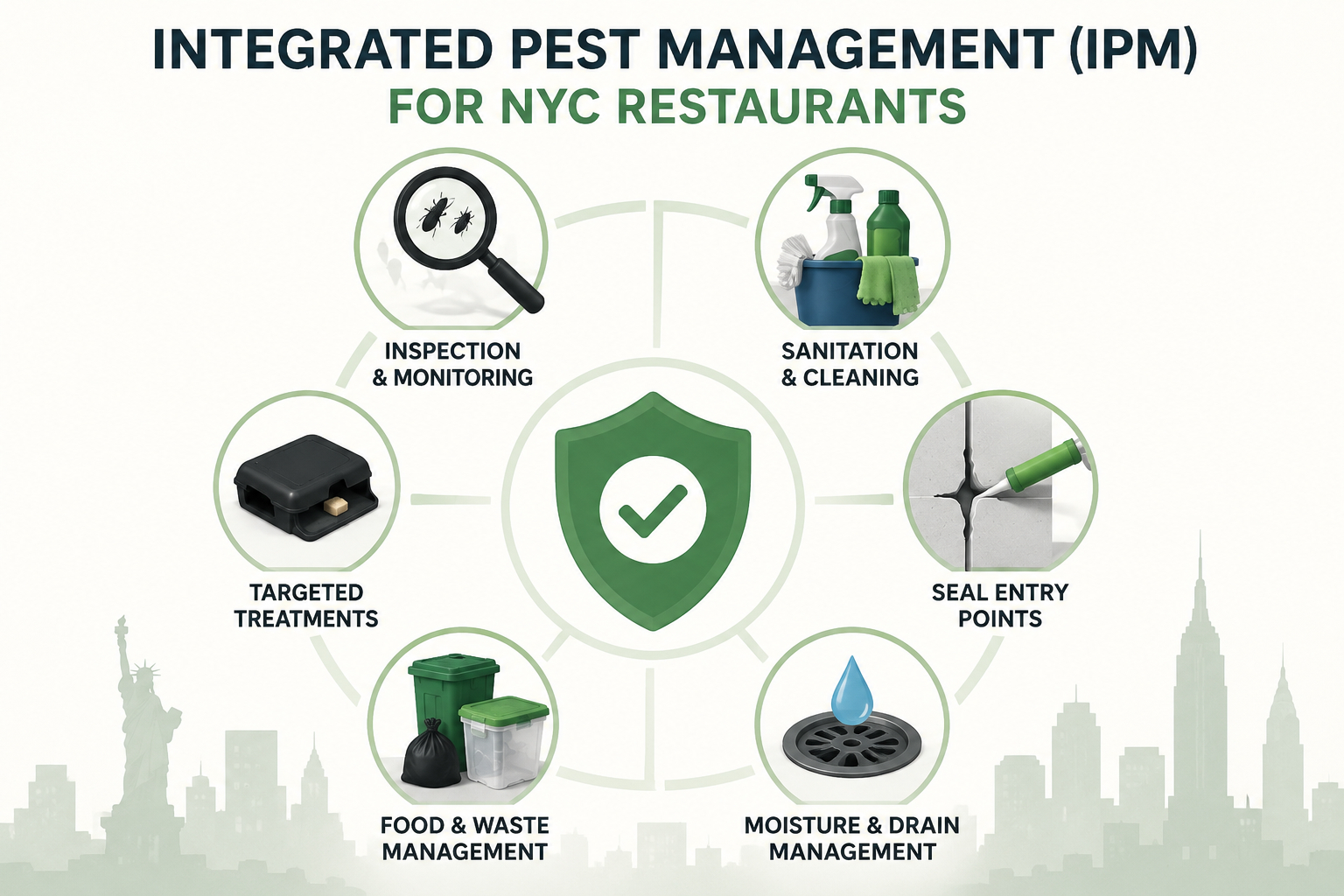
A proactive IPM strategy helps commercial kitchens identify pest risks early while improving sanitation, compliance, and long-term restaurant pest prevention.
Recommended IPM Checklist for NYC Restaurants
Restaurant owners should implement consistent daily and weekly prevention routines.
Daily Checklist
- Wipe down prep surfaces
- Sweep and mop floors
- Remove food debris
- Empty trash containers
- Inspect drains and sinks
Weekly Checklist
- Deep clean under equipment
- Inspect storage rooms
- Check for leaks or moisture
- Examine wall gaps and cracks
- Monitor pest activity signs
Routine prevention is one of the most effective ways to maintain compliance.
High-Risk Areas That Require Routine Monitoring
Certain restaurant areas are more vulnerable to infestations than others.
Common High-Risk Areas Include
- Kitchen drains
- Grease traps
- Basements
- Utility rooms
- Dry storage shelves
- Behind refrigeration equipment
- Dumpster and waste areas
Restaurants with older plumbing systems or poor ventilation often face higher long-term pest pressure.
Benefits of Integrated Pest Management for NYC Restaurants
An effective IPM program offers more than just pest reduction.
Major Benefits Include
- Fewer pest sightings
- Reduced health inspection risks
- Improved sanitation standards
- Long-term prevention strategies
- Lower infestation recurrence
- Better customer confidence
- Reduced emergency treatments
Integrated Pest Management NYC restaurants plans help businesses maintain cleaner, safer environments year-round.
Targeted Pest Treatments Within IPM Programs
Unlike traditional pest control methods that rely heavily on repeated spraying, IPM uses targeted treatments only when necessary.
Treatment methods may include:
- Monitoring traps
- Baiting systems
- Crack and crevice applications
- Limited chemical treatments
- Drain treatments for flies
The goal is to eliminate active pests while minimizing unnecessary exposure in food service environments.
How IPM Helps NYC Restaurants Avoid Health Violations
Health inspectors do not only look for visible pests. They also evaluate the conditions that contribute to infestations.
An effective Integrated Pest Management NYC restaurants strategy helps businesses:
- Reduce pest sightings
- Maintain cleaner kitchens
- Improve sanitation consistency
- Identify risks before inspections
- Document preventive measures
According to the New York City Department of Health and Mental Hygiene, pest activity and unsanitary conditions are among the most common contributors to restaurant violations.
Restaurants looking to better understand how pests lead to violations can also review our NYC restaurant health inspection failures caused by pests guide.
Common Pests Addressed Through IPM Programs
Integrated Pest Management NYC restaurants programs are designed to control multiple pest threats at once.
Common Restaurant Pests Include
- Rodents
- Cockroaches
- Fruit flies
- Drain flies
- Ants
- Stored product pests
By focusing on prevention, restaurants reduce the likelihood of recurring infestations.
To dive deeper into individual pest types, explore NYC Restaurant Guide: Cockroach Control in Commercial Kitchens, and Signs of a Rodent Infestation in NYC Restaurants.
Why Professional Restaurant Pest Control NYC Services are Vital
IPM programs are most effective when managed by experienced commercial pest professionals.
Professional services help provide:
- Scheduled inspections
- Customized treatment plans
- Monitoring and reporting
- Compliance documentation
- Long-term prevention strategies
Restaurants throughout Staten Island, Manhattan, and Brooklyn rely on professional restaurant pest control NYC services to maintain effective Integrated Pest Management programs.
NYC Health & Pest Compliance Resources
Restaurant owners should stay informed about local health inspection standards and sanitation requirements.
You can review official pest-related inspection guidelines through the New York City Department of Health and Mental Hygiene to better understand how sanitation and pest prevention impact restaurant compliance.
Understanding these standards helps support a stronger Integrated Pest Management NYC restaurants strategy.
Frequently Asked Questions
What does IPM mean in pest control?
IPM stands for Integrated Pest Management, a prevention-focused pest control strategy designed to reduce infestations long-term.
Is IPM required for NYC restaurants?
While not always specifically required, many restaurants use IPM programs to help maintain sanitation and inspection compliance.
Does IPM reduce chemical use?
Yes. IPM focuses on prevention, monitoring, and targeted treatments instead of excessive chemical applications.
What pests does IPM help prevent?
IPM programs help control rodents, cockroaches, flies, ants, and other common commercial kitchen pests.
How often should restaurants inspect for pests?
Daily monitoring and scheduled professional inspections are strongly recommended. Explore more about scheduling in our NYC Restaurant Pest Control Schedule: How Often is Enough? guide.
Protect Your NYC Restaurant with a Proactive IPM Strategy
Pest infestations can quickly damage a restaurant’s reputation, trigger violations, and disrupt operations. Most often, when a violation is triggered, it results in a failed inspection. Knowing what to do when your restaurant fails an inspection due to pests is essential.
Implementing Integrated Pest Management, NYC restaurant programs provide a smarter and more proactive approach to safety and long-term pest prevention.
Victory Pest Solutions provides customized restaurant pest control NYC services and IPM programs for commercial kitchens, hospitality businesses, and food service operations across Manhattan, Brooklyn, Queens, the Bronx, and Staten Island.
Protect your restaurant, maintain compliance, and stay inspection-ready with a prevention-focused pest management strategy built specifically for New York City businesses.
Contact Victory Pest Solutions to implement safe and effective restaurant pest control services throughout Manhattan, Brooklyn, Queens, the Bronx, and Staten Island.