
All About Hiring Qualified Hotel Pest Technicians
What to Look for in Experienced Hotel Pest Technicians
Experienced hotel pest technicians do more than treat a room after a complaint. Look for appropriate pesticide applicator credentials, hotel experience, and a clear integrated pest management (IPM) plan. A qualified team should inspect guest rooms and kitchens, track pest activity, work with housekeeping and maintenance to fix the causes, and document each step. They should also know how to respond quickly without disrupting guests.
That approach matters when a bed bug report could take a room out of service or a kitchen pest could put food safety at risk. The right technician helps a hotel catch problems early, use treatments only where needed, and protect the guest experience.
I’m Len Oppenberg, founder of Victory Pest Solutions. I’ve worked in pest control since 2000, including urgent service for health care facilities and hands-on restaurant work; that background shapes what I look for in experienced hotel pest technicians.
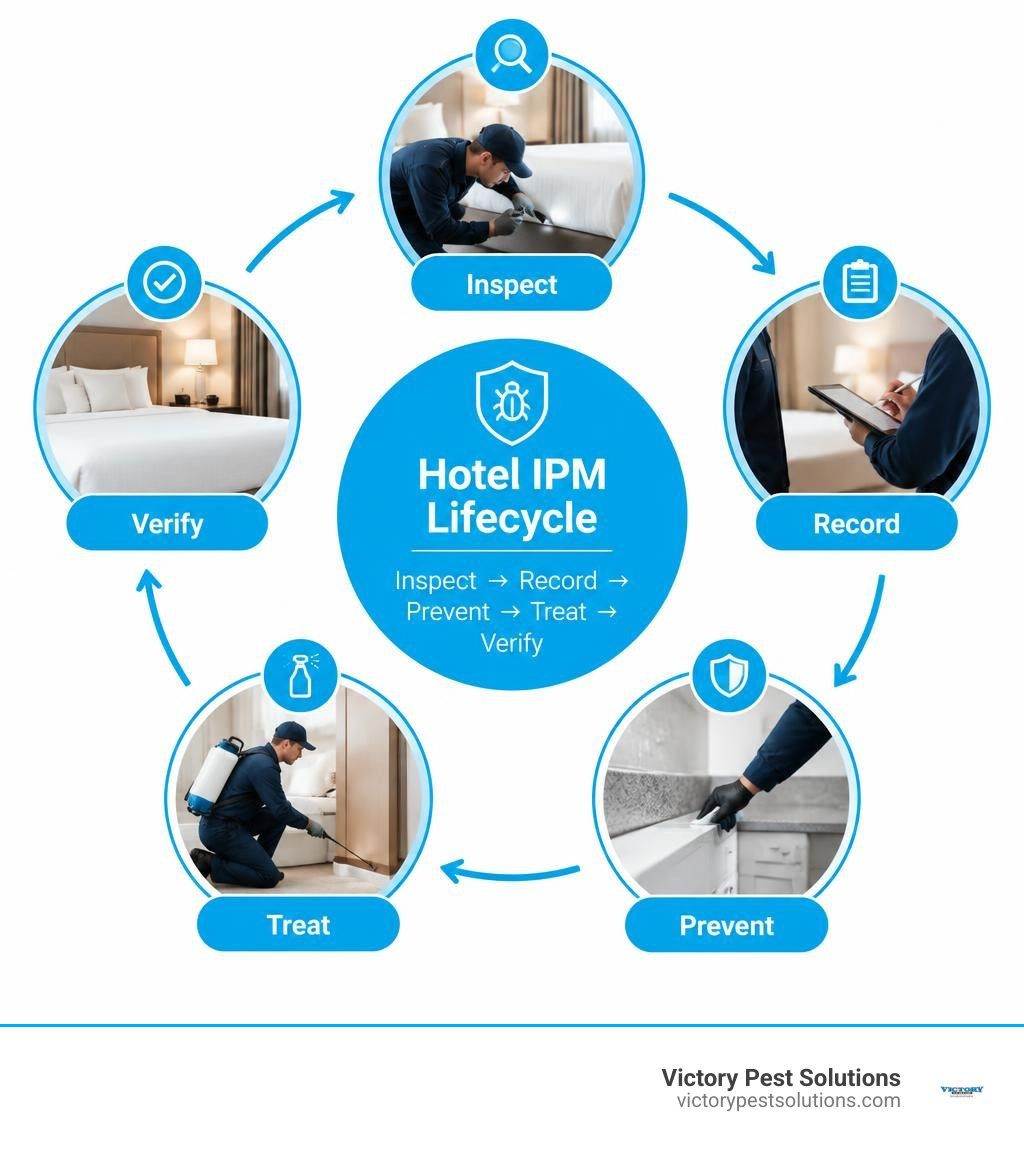
For a closer look at how these principles apply across a property, see our overview of hotel property pest management, our approach to proactive hotel pest prevention, and our hospitality pest management services.
Core Qualifications of Experienced Hotel Pest Technicians
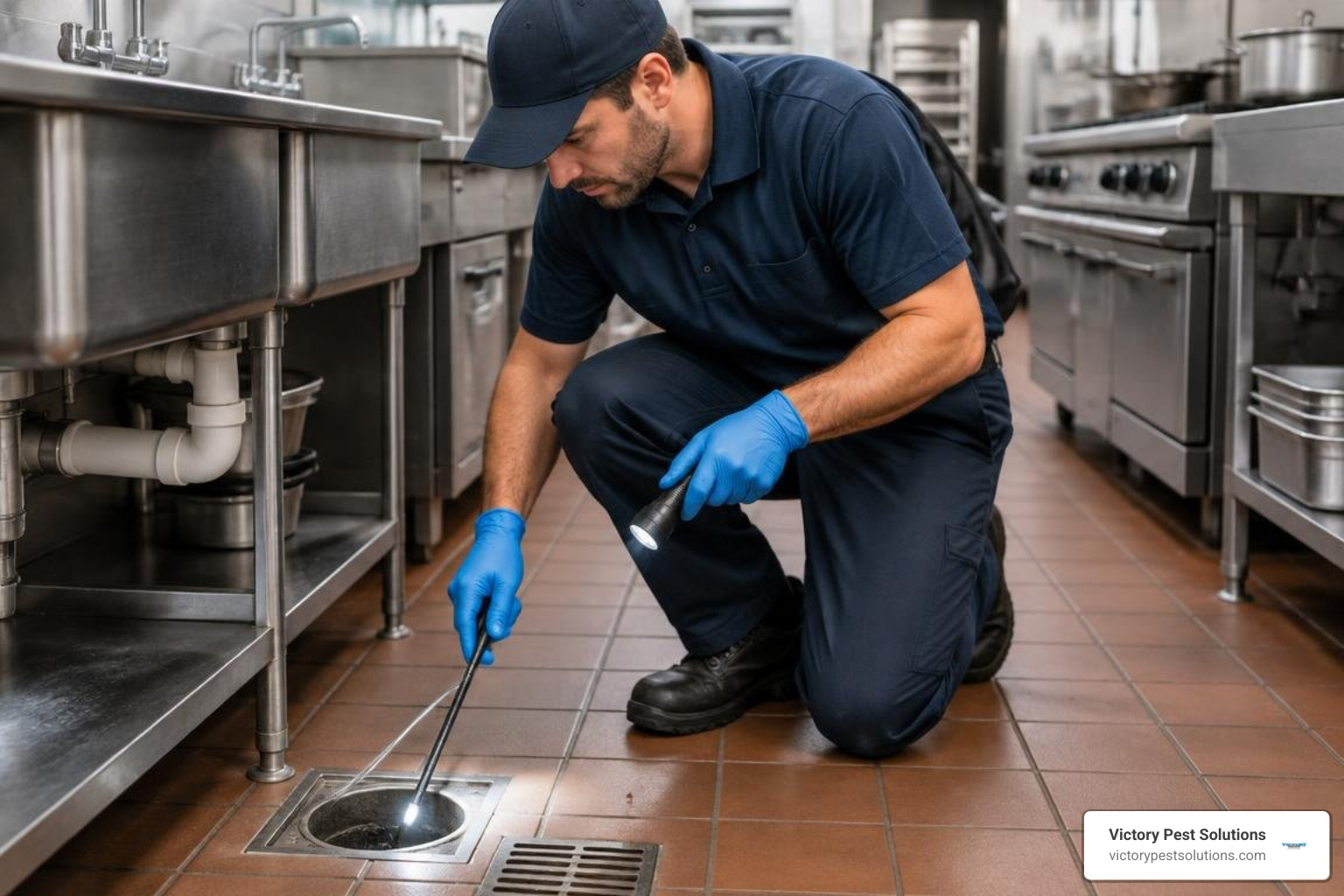
In high-density hospitality hubs across New York City—from boutique properties in Soho to midtown Manhattan flagships—pest control is not an entry-level maintenance chore. It is an exacting science. A generic contractor might approach an issue with a standard spray tank, but hospitality demands far deeper diagnostic capability.
Public health pest management requires technical mastery over insect biology, vector control dynamics, and local municipal health codes. Understanding state standards and NYC hotel pest control regulations is mandatory to keep commercial lodging properties compliant and operational.
| Competency Area | General Exterminator | Certified Hospitality Pest Manager |
|---|---|---|
| Primary Methodology | Reactive spray applications | Proactive Integrated Pest Management (IPM) |
| Industry Knowledge | Residential & light commercial | High-occupancy hospitality workflows & food prep audits |
| Chemical Strategy | Broad-spectrum insecticides | Precision targeted baits, equipment injection, non-chemical controls |
| Audit Compliance | Basic service invoices | Comprehensive digital logs (HACCP, ISO 22000, Green Star) |
| Departmental Integration | Minimal; speaks only to facility contact | Structured training with housekeeping, maintenance, and F&B teams |
| Discretion & Timing | Standard business hours | 24/7 covert operational response without guest impact |
Essential Certifications and Technical Backgrounds
Top-tier pest specialists in the hospitality sector often hold formal academic backgrounds in agricultural sciences, entomology, or plant protection. These foundational disciplines provide deep insight into pest reproduction cycles, harborage preferences, and pesticide resistance mechanics.
To operate within luxury environments, technicians must master critical compliance frameworks:
- HACCP (Hazard Analysis Critical Control Point): Essential for inspecting hotel dining rooms, banquet kitchens, and room service staging areas where chemical contamination must be strictly avoided.
- ISO 22000 & ISO 9001: Frameworks that integrate food safety management and quality assurance into daily pest monitoring.
- WHO Public Health Standards: Guidelines for vector management targeting public health risks such as mosquitoes, flies, bed bugs, and rodents.
Preparing Luxury Hotels for Audits and Standards
High-end properties frequently undergo intensive sustainability and food safety evaluations to secure accreditations like Travelife Gold or Green Star ratings. An unqualified technician who relies heavily on unrecorded chemical applications can immediately jeopardize these audits.
Experienced managers build continuous compliance directly into daily operations by:
- Maintaining precise, digital trend logs of all trap catches and bait station checks.
- Documenting safety data sheets (SDS) and lot numbers for all approved materials.
- Establishing clear physical barriers and structural exclusion notes for engineering teams.
- Reducing synthetic chemical footprints through preventative sanitation and mechanical exclusion.
Partnering with certified experts ensures your facility stays audit-ready every day of the year through systematic proactive hotel pest prevention.
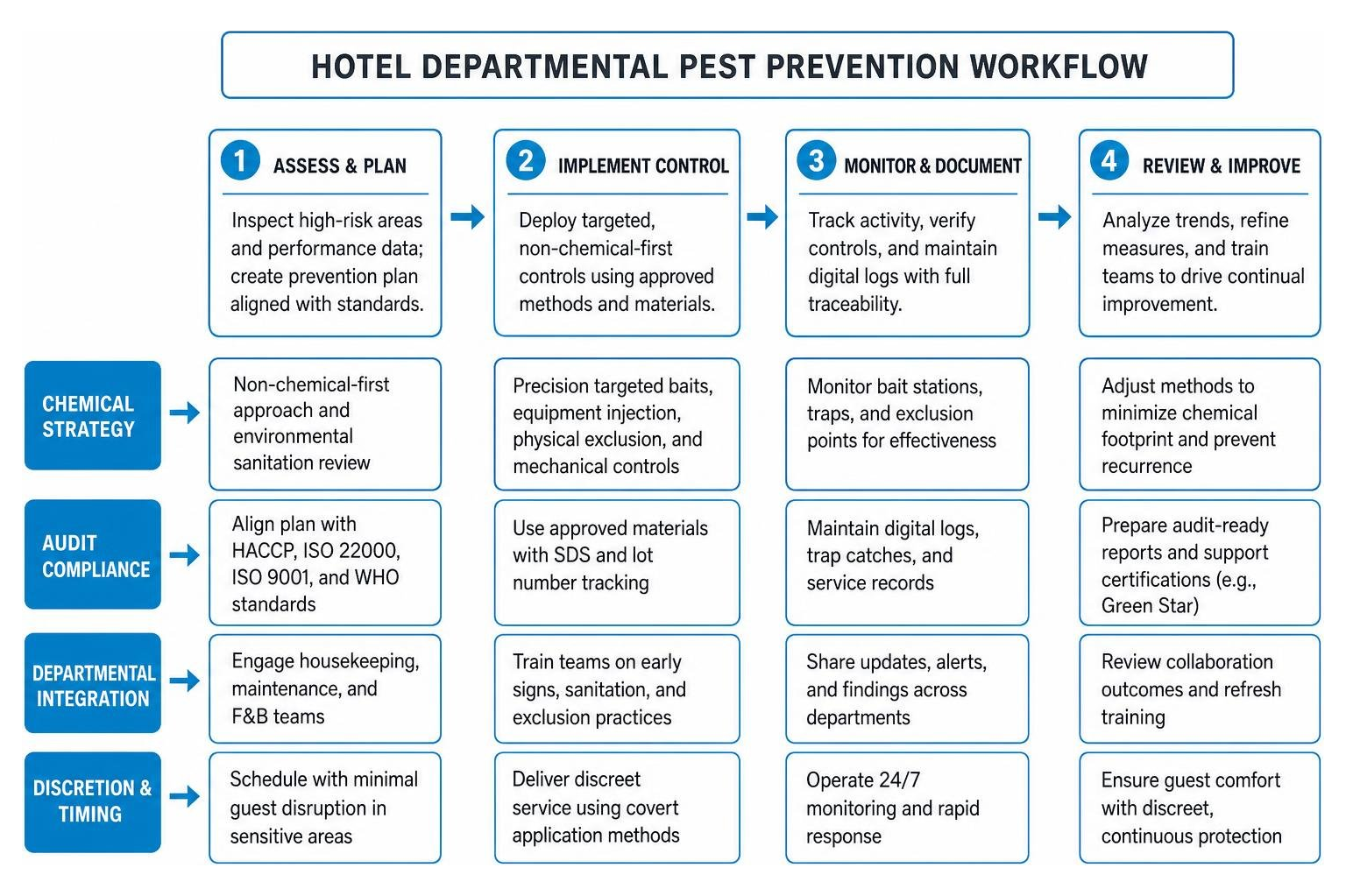
Operational Integration in High-End Hospitality Management
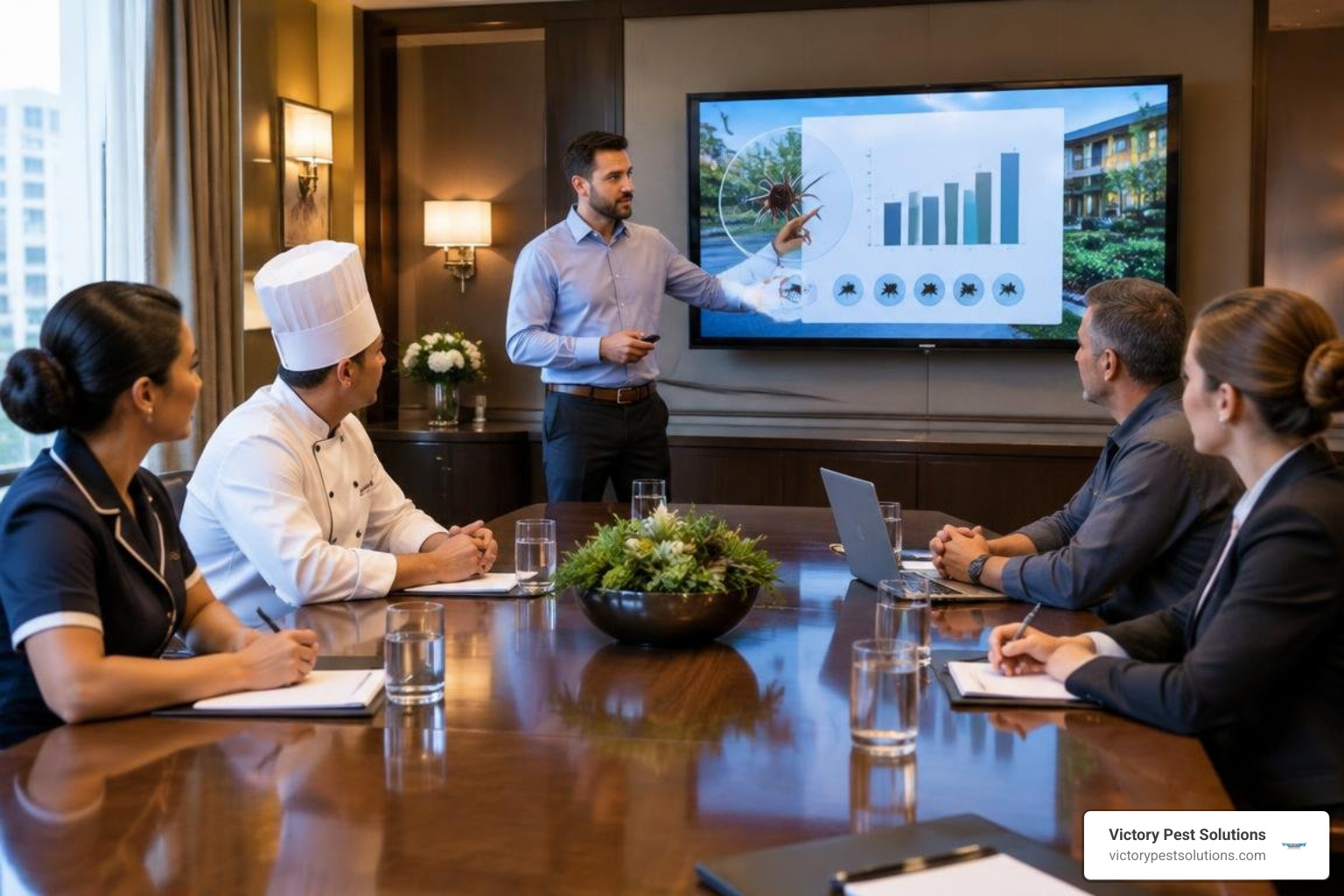
In a 500-room luxury hotel, pest management cannot function in a silo. A technician can inspect a suite thoroughly, but if housekeeping does not recognize early signs of bed bug activity, or if stewarding leaves organic matter behind cooking lines, the property remains vulnerable.
True operational success requires seamless coordination with every major department, ensuring that comprehensive hotel waste management pest control protocols are executed across all loading docks, compactors, and service corridors.
How Experienced Hotel Pest Technicians Coordinate Across Departments
Experienced technicians act as technical advisors across three core hotel departments:
- Housekeeping: Coordinating strip-down schedules for laundry, monitoring linen staging areas, and executing routine mattress seam inspections to detect pests long before a guest notices anything unusual.
- Food & Beverage / Stewarding: Establishing deep-cleaning cadences under heavy kitchen appliances, eliminating standing water around dish pits, and setting up bar drain sanitation routines.
- Engineering & Maintenance: Conducting joint walks to identify structural gaps, unsealed pipe penetrations, and faulty door sweeps, deploying structural hotel proofing pest control measures to deny pests entry.
Staff Training and Proactive Complaint Resolution
Turning daily staff routines into an active early-warning system is the most cost-effective way to protect a hotel. When room attendants and culinary teams understand what to look for, minor issues are reported and addressed immediately.
Hospitality managers rely on structured guest complaint pest response steps to isolate affected rooms discreetly and resolve reports without creating panic on the floor.
The U.S. Environmental Protection Agency’s guide to Integrated Pest Management in Buildings supports a prevention-first approach built on monitoring, documentation, and staff participation. Hotels can use trap-count trends and regular staff education to turn recurring maintenance tickets into actionable prevention steps and reduce pest-sighting risks over time.
Advanced Eradication Strategies for Luxury Properties
Luxury environments require discreet interventions. Guests should never see a service trap, detect chemical odors, or cross paths with pest management gear in public hallways. Seasoned technicians utilize advanced discreet luxury hotel pest control methods that isolate and eliminate pests silently behind the scenes.
Overusing synthetic chemical sprays can cause pests to scatter into adjacent walls and create chemical resistance. Modern hospitality protocols focus on non-chemical cultural controls, physical exclusion, and targeted precision applications.
Advanced IPM Strategies Used by Experienced Hotel Pest Technicians
- Precision Equipment Injection: Applying micro-doses of targeted gel baits directly into the internal voids of commercial kitchen motors and hollow stainless steel legs where crawling insects harbor.
- Comprehensive Bed Bug Protocols: Implementing systematic visual checks and targeted thermal interventions outlined in our Manhattan hotel bed bugs guide.
- Specialized Kitchen Drainage Remediation: Utilizing bio-enzymatic foam cleaners to break down organic buildup inside beverage lines and floor drains, a vital element of hotel cockroach control in NYC.
- Exterior Perimeter Defense: Establishing secure multi-zone baiting and tamper-resistant trapping along alleyways, basements, and compactor pads via an aggressive hotel rodent prevention program.
Safeguarding Brand Reputation and Guest Loyalty
In modern hospitality, guest perceptions are broadcast instantly. A single photo of a pest uploaded to a travel review platform can cause lasting commercial harm, depress average daily rates (ADR), and damage relationships with corporate travel planners.
The compounding financial hotel review damage from pest problems far exceeds the investment required for a rigorous, ongoing preventative program. Certified technicians protect room inventory, preserve revPAR, and safeguard brand equity.
Frequently Asked Questions About Hotel Pest Management
What qualifications set hotel pest specialists apart from general exterminators?
Hotel pest specialists carry commercial certifications focused on public health and food safety, including HACCP, ISO 22000, and state-certified commercial pesticide applicator licenses. Unlike general exterminators who rely on basic scheduled chemical sprays, hospitality specialists are trained in Integrated Pest Management (IPM), cross-departmental staff training, and discreet, non-disruptive treatments tailored to high-occupancy guest environments.
How frequently should NYC hotels schedule commercial pest inspections?
High-risk areas like main production kitchens, banquet pantries, employee dining rooms, and waste compactors require weekly or bi-weekly inspections. Guest rooms, laundry facilities, and common lounges should be evaluated on a rotating monthly schedule, ensuring 100% of the property is inspected and logged quarterly to maintain regulatory compliance and catch issues early.
What is the most cost-effective approach to prevent hotel bed bug outbreaks?
The most cost-effective method is continuous staff training combined with early physical containment. Equipping housekeeping staff with inspection checklists for mattress seams, headboards, and luggage racks allows rooms with isolated activity to be caught before insects spread to adjacent units. Treating an isolated room prevents costly multi-room shutdowns and extensive remediation.
Securing 24/7 Expert Protection for Your Hospitality Property
Keeping a hospitality brand running smoothly requires constant attention to detail. At Victory Pest Solutions, we provide dedicated commercial hotel pest control built specifically around the demands of high-volume hotels and luxury resorts.
With 24/7 emergency response, proactive prevention schedules, and deep expertise across food service and lodging environments, we help hotel operators protect their guests, their staff, and their reputations. Contact our team today to establish a proactive pest management program tailored to your property.