
Event Space Pest Control Starts Before Guests Arrive
Event space pest control works best as a plan, not a last-minute treatment. Before an event, inspect kitchens, waste areas, entrances, and outdoor seating for pest activity. Keep food waste in lidded bins, remove standing water, and place evening lights away from guest areas where possible. Arrange professional help for active pest problems or high-risk events, then assign staff to watch for issues during setup, service, and cleanup.
A mouse near a buffet or wasps around drinks can disrupt service and put guests at risk. Planning around the event schedule helps protect food, equipment, and your venue’s reputation without drawing attention away from the occasion.
I’m Len Oppenberg, founder of Victory Pest Solutions. My commercial pest control experience in restaurants and healthcare shapes this practical approach to event space pest control: prevent problems early, respond quickly, and check the venue again after guests leave.
The Operational Value of Event Space Pest Control for Modern Venues
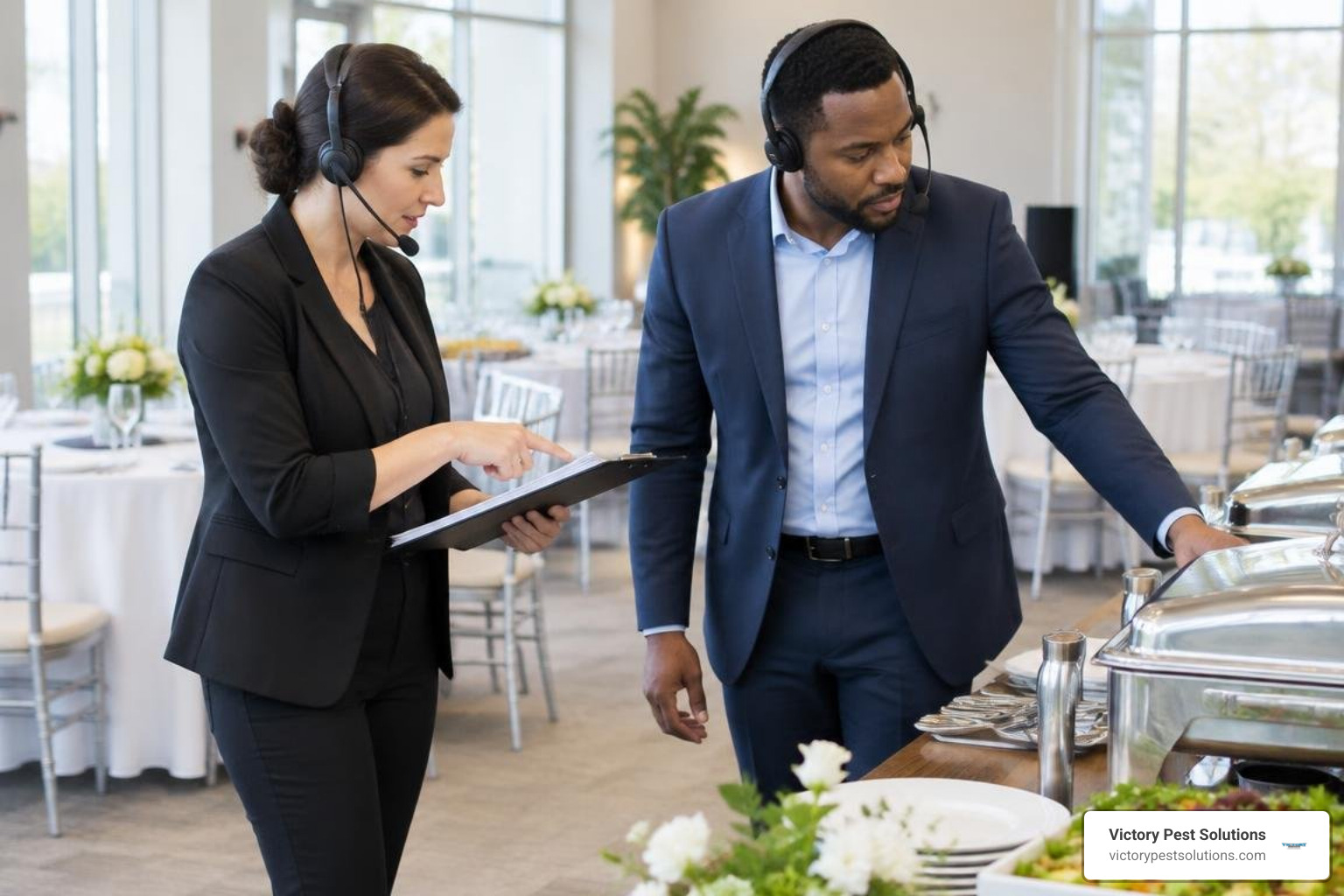
Operating a successful event space in New York requires orchestrating countless moving parts, from floral arrangements and lighting schedules to seamless catering service. When pests intrude on a high-stakes gathering, even the most meticulously planned event can unravel in minutes. Investing in comprehensive NYC commercial pest control ensures that your property maintains the highest standards of hospitality, food safety, and brand integrity.
Every live event introduces sudden surges in foot traffic, rapid food preparation, and heavy waste accumulation that naturally attract scavengers. Without a structured mitigation plan, banquet halls and outdoor pavilions become open invitations for unwanted insects and rodents. Our proactive management strategies eliminate these biological hazards before the first guest walks through the door, preserving operational continuity.
Modern hospitality venues rely heavily on word-of-mouth recommendations, corporate client relationships, and positive online reviews. A single viral video of a rodent darting across a dance floor can cause lasting financial harm to an established brand. By partnering with experienced commercial technicians, venues safeguard their public reputation while delivering memorable, uncompromised guest experiences.
Guest Health, Food Safety, and Severe Legal Liability
Maintaining strict food safety standards is non-negotiable for any commercial gathering serving catered cuisine and artisanal beverages. Pests such as flies, cockroaches, and rodents carry dangerous foodborne pathogens, including Salmonella, E. coli, and Listeria, which readily contaminate food preparation surfaces. Adhering closely to NYC Health Department pest control rules prevents severe cross-contamination risks and keeps hospitality operations fully compliant.
Outdoor gatherings present additional physical risks when aggressive stinging insects or biting vectors infiltrate guest seating areas. A single wasp sting can trigger severe, life-threatening anaphylactic shock in an allergic attendee, exposing property owners and event hosts to substantial legal liability. Proactive perimeter inspections and targeted source elimination neutralize these biological hazards before tables are set.
The legal fallout from pest-related health incidents extends beyond personal injury claims to regulatory shutdowns and substantial municipal fines. When catering operations or banquet venues fail health inspections due to active infestations, the resulting cancellations can devastate seasonal revenue. Commercial pest management provides the documented protection required to shield businesses against regulatory penalties and liability claims.
Protecting Electrical Infrastructure and Venue Property
Live events depend on intricate, temporary infrastructure, including complex audio-visual setups, ambient lighting rigs, and specialized catering appliances. Mice and rats possess continuously growing incisors, compelling them to gnaw constantly on building materials, insulated wiring, and structural framing. Enlisting specialized commercial rodent control services protects your expensive electronics from catastrophic short circuits, unexpected blackouts, and electrical fires.
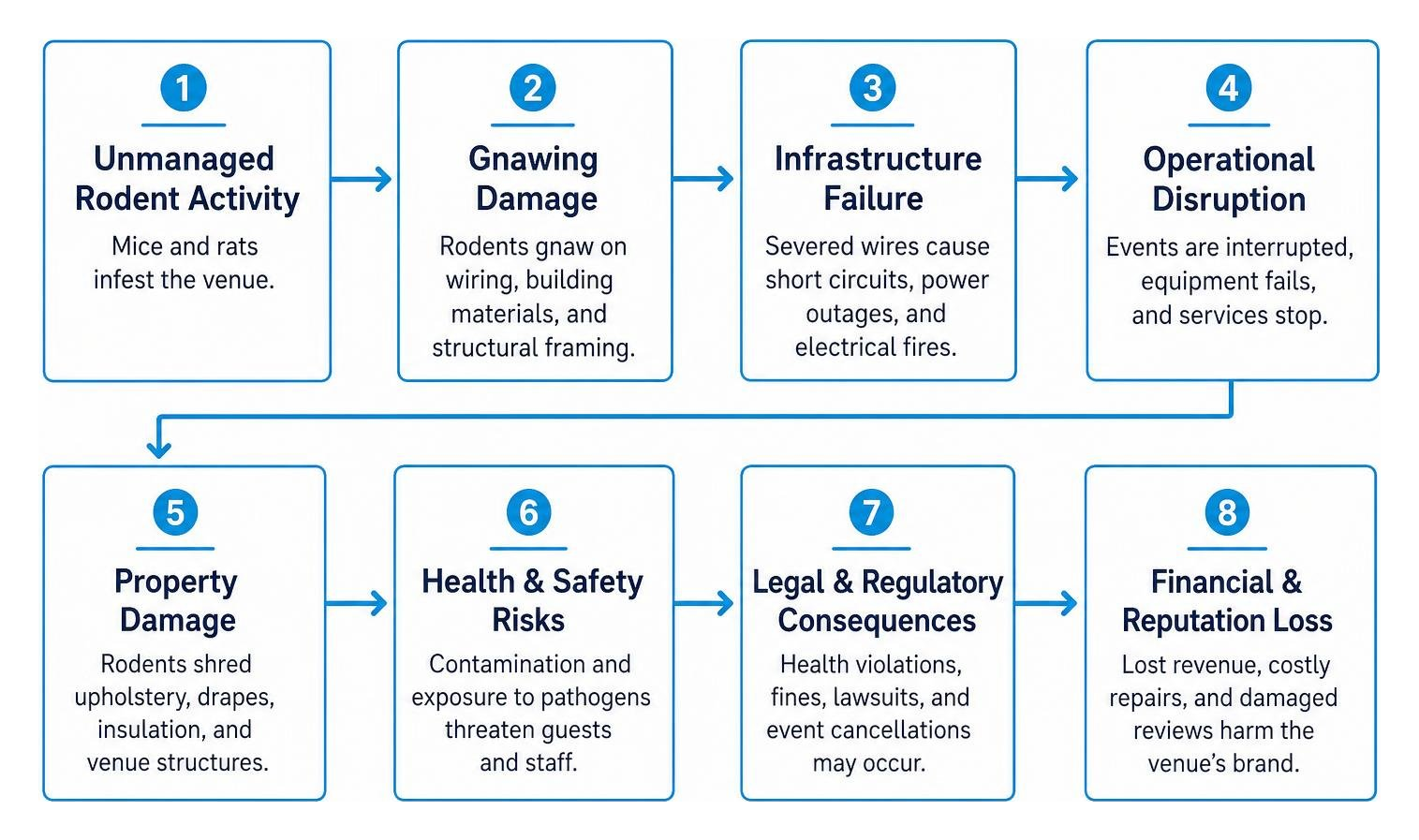
Pest damage often extends far beyond severed wiring to compromise permanent venue structures, historic woodwork, and decorative fixtures. Rodents frequently shred upholstery, drapes, and insulation to build nests inside subflooring and hollow staging platforms. Establishing continuous exterior baiting networks and interior physical barriers preserves the physical integrity of your valuable event spaces.
Emergency repairs during an ongoing banquet or conference are stressful, disruptive, and exceptionally costly to execute. When a gnawed power cable shuts down a ballroom sound system mid-presentation, the operational disruption damages the venue’s credibility immediately. Proactive structural exclusion and strategic trapping keep infrastructure intact and ensure every function runs without technical hitches.
High-Risk Pests That Threaten Indoor and Outdoor Event Spaces
Every venue layout faces unique pest pressures depending on its architectural design, surrounding landscape, and seasonal climate conditions. Dedicated banquet and catering hall pest control programs must account for both indoor dining ballrooms and open-air garden terraces. Identifying high-risk pests early allows venue staff to implement targeted deterrents that stop infestations before they impact live operations.
Indoor ballrooms with contiguous kitchen facilities create constant warmth, moisture, and organic food debris that draw crawling pests. Conversely, outdoor pavilions and rooftop terraces are vulnerable to transient flying insects drawn by ambient light and open beverage stations. Understanding these behavioral patterns enables our technicians to create dynamic defenses tailored to each specific zone within a venue.
The secret to comprehensive control lies in eliminating harborages, resting sites, and food attractants before gatherings begin. When venue managers address pest vulnerabilities during routine maintenance, they significantly reduce the risk of emergency sightings during high-capacity events. A multi-layered defense ensures that every square foot of your hospitality footprint remains pristine.
Flying and Stinging Insects: Flies, Mosquitoes, and Wasps
Outdoor banquets and twilight receptions are prime targets for phototactic flying pests drawn to warm decorative lighting and sweet food aromas. House flies and blow flies swarm around outdoor buffet warmers, contaminating dishes and frustrating guests within seconds of food presentation. Implementing specialized commercial fly control services—including discrete ultraviolet light traps and organic attractant traps—removes flying pests without disrupting the visual ambiance.
Stinging wasps and yellowjackets are naturally aggressive scavengers drawn to open cocktail bars, draft beer taps, and discarded fruit garnishes. Meanwhile, standing water near lawn perimeters and decorative fountains provides ideal breeding grounds for biting mosquitoes. Treating perimeter foliage with non-repellent residual products and utilizing natural larvicides in water features drastically suppresses active populations around guest zones.
To prevent evening lighting from acting as a beacon for swarming beetles and moths, venue coordinators should position high-intensity fixtures away from seating areas. Aiming directional floodlights toward event spaces from distant poles keeps insects drawn to the light source rather than hovering over guest tables. Combining smart lighting placement with targeted barrier sprays keeps outdoor dining comfortable and hygienic throughout the evening.
Crawling Invaders and Rodents: Mice, Rats, and Cockroaches
Commercial kitchens, banquet staging zones, and service corridors provide abundant harborage for crawling invaders that thrive on grease and food crumbs. German cockroaches hide within deep motor housings, under stainless steel prep counters, and inside wall voids, emerging quickly when catering activities intensify. Deploying precision commercial cockroach control treatments targets these resilient insects at their source, keeping food preparation spaces sanitary and compliant.
Exterior dumpster pads, loading docks, and waste compactors serve as the primary staging grounds for urban rodents seeking entry indoors. Norway rats and house mice exploit tiny gaps under exterior service doors, worn weatherstripping, and open delivery bays during setup. Sealing these entry points with heavy-gauge wire mesh, metal kickplates, and durable silicone sealants stops nocturnal scavengers from moving into public spaces.
Subfloor voids, hollow risers, and decorative temporary stages are frequently overlooked harborage zones that offer rodents warm, undisturbed shelter. Installing tamper-resistant bait stations and discrete multi-catch mechanical traps along foundation perimeters creates an impenetrable protective ring around your property. Maintaining strict sanitation along service routes prevents crawling pests from finding food between scheduled events.
Integrating Pest Management Across the Full Event Lifecycle
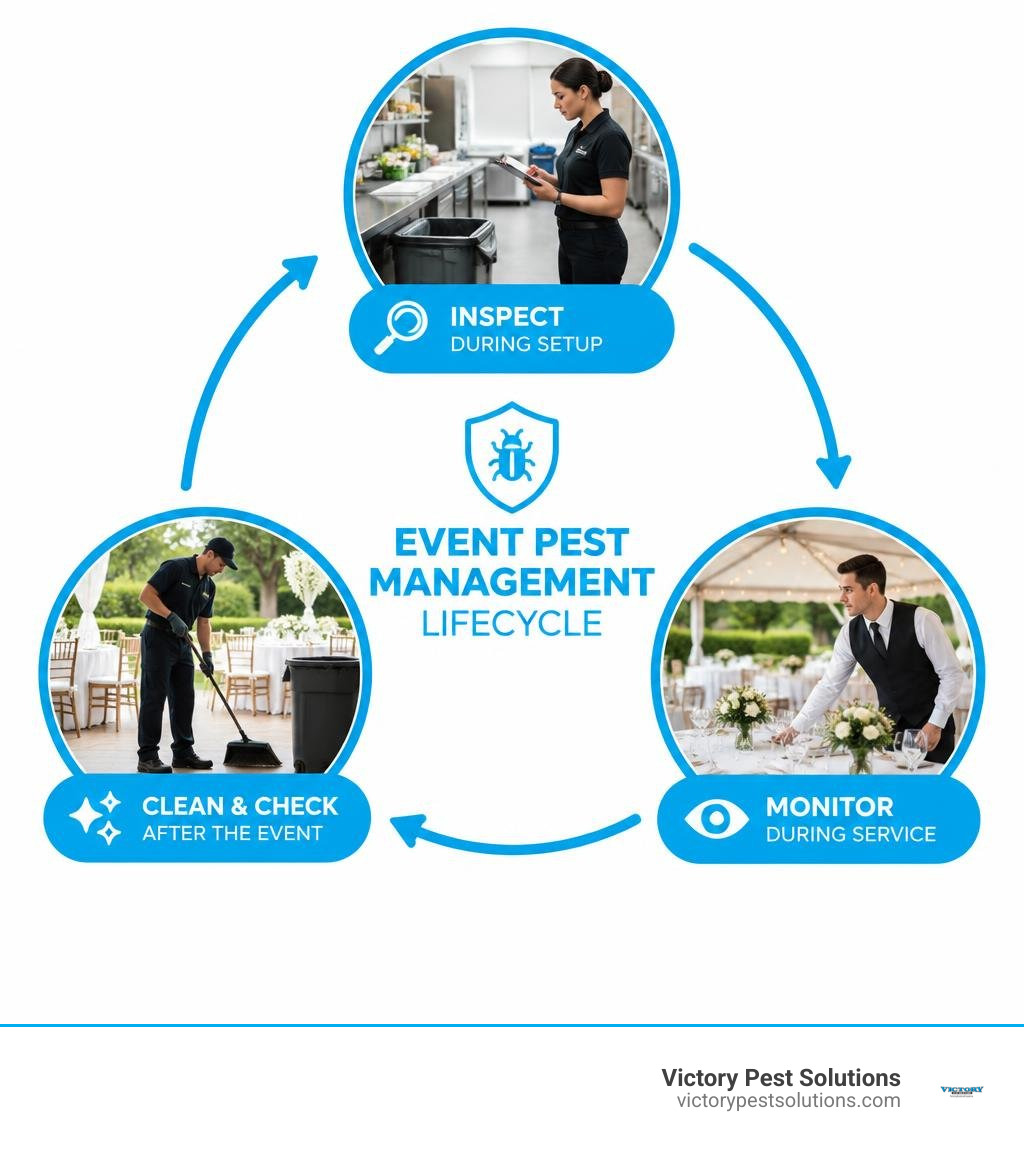
High-capacity gathering spaces demand structured operational workflows that tie hygiene, waste logistics, and pest deterrence together. Industry-leading facilities management standards for high-capacity venues demonstrate that aligning sanitation schedules with live event timelines is the most reliable way to prevent pest activity across thousands of annual visitors. Pest control must operate as a fluid, continuous cycle spanning pre-event preparation, live monitoring, and post-event turnaround.
Every phase of an event presents distinct pest pressures that require tailored operational responses from venue staff and pest professionals. During initial setup, open loading doors create entry opportunities, while the live event generates high volumes of organic refuse that attract hungry scavengers. The overnight post-event reset provides the ultimate window to deep-clean surfaces and reinforce protective barriers before the next booking arrives.
By formalizing pest control checkpoints within daily event checklists, hospitality operators turn pest management into an invisible, effortless standard operating procedure. Our commercial technicians work directly with your facilities team to integrate inspections into shift handovers and load-in schedules. This integrated lifecycle approach ensures that no structural vulnerability or sanitation lapse goes unaddressed.
Pre-Event Site Audits and Strategic Waste Planning
Successful event pest management begins days before attendees arrive with detailed site audits of perimeter grounds and interior facilities. Conducting regular commercial pest inspections uncovers early warning signs, such as rodent droppings near storage racks, insect entry points along utility conduits, or standing moisture near outdoor decks. Eliminating these attractants well ahead of load-in guarantees a safe, pest-free environment when decorating begins.
Strategic waste planning is essential for preventing rapid trash accumulation from overwhelming venue staff during peak hours. Facilities managers must position heavy-duty, pest-proof waste bins equipped with tight-fitting spring lids throughout high-traffic dining zones. Directing outdoor lighting angles away from waste corrals and treating perimeter vegetation eliminates pest staging zones adjacent to main entry doorways.
Staff should also survey outdoor landscapes for hidden water sources, ensuring that drainage swales, air conditioning condensate lines, and decorative planters are clear of stagnant water. Emptying drip trays and clearing roof gutters removes crucial mosquito breeding habitats within days. Establishing clear buffer zones around catering tents guarantees that food staging remains isolated from exterior landscape pests.
Live Event Monitoring and Post-Event Turnaround Protocols
During live events, pest management shifts toward subtle, continuous monitoring and rapid sanitation protocols executed behind the scenes. Venue staff must empty full waste receptacles regularly, cycling full bags into sealed exterior dumpsters before food odors escape into guest areas. Applying principles from our comprehensive integrated pest management guide ensures that minor spills and organic debris are cleaned immediately, removing opportunistic food sources.
Discreet intervention during live operations avoids drawing guest attention to routine pest prevention activities. Staff should utilize non-chemical measures, such as covered busing carts, concealed service routes, and rapid plate scraping in enclosed dishwashing suites. Keeping back-of-house bars and drink refill stations dry stops fruit flies from congregating near open glassware.
Once the celebration concludes and guests depart, the critical overnight turnaround and deep sanitization protocol begins. Cleaning crews must sweep under risers, scrub banquet floor drains, wipe down commercial cooklines, and sanitize all waste disposal receptacles. Conducting a thorough post-event inspection verifies that no residual food debris remains to sustain pests between scheduled functions.
Why Professional Commercial Solutions Matter for Event Spaces
Commercial event spaces cannot rely on store-bought insect sprays or generic traps that offer short-lived, superficial results. Professional pest management combines advanced scientific knowledge of pest biology, structural exclusion techniques, and state-of-the-art chemical formulations to achieve complete population control. Licensed technicians select low-odor, botanical, and non-repellent treatments that eliminate target pests without leaving offensive chemical smells or unsightly residues in luxury spaces.
Pest management associations, including the thousands of certified commercial professionals recognized by the National Pest Management Association (NPMA), establish the rigorous safety protocols that protect commercial food handling environments. Modern commercial formulations bond tightly to exterior masonry, soil, and vegetation without washing away during light precipitation or off-gassing into interior dining spaces. These long-lasting residual barriers work continuously in the background, keeping your venue fully protected across consecutive event bookings.
Furthermore, commercial pest professionals understand local municipal codes and health guidelines, ensuring your operations remain audit-ready at all times. Professional documentation, digital service logs, and trend analyses give venue operators tangible proof of due diligence during regulatory reviews. Partnering with dedicated commercial experts provides the comprehensive defense that hospitality brands need to thrive.
Professional Event Space Pest Control and In-House Staff Coordination
A truly resilient pest prevention program relies on seamless synergy between licensed commercial exterminators and on-site hospitality staff. While commercial technicians handle structural exclusion, barrier applications, and regulatory documentation, venue employees maintain critical daily sanitation and waste handling standards. The table below outlines how these complementary responsibilities work together to protect your venue across every stage of operation:
| Operational Focus | Professional Pest Management Team | In-House Venue & Catering Staff |
|---|---|---|
| Inspection & Monitoring | Identifies harborages, entry points, and structural vulnerabilities with digital monitoring devices. | Conducts daily visual spot-checks during room turnarounds and logs unusual activity immediately. |
| Chemical & Biological Safety | Applies low-odor, EPA-registered formulations and target-specific non-repellent barriers safely. | Avoids unapproved DIY sprays; focuses exclusively on food-safe sanitizers and surface cleaners. |
| Waste & Attractant Control | Installs tamper-resistant exterior rodent stations and perimeter fly management hardware. | Empties waste bins continuously, cleans beverage drip trays, and maintains sealed dumpster lids. |
| Regulatory Compliance | Provides formal compliance reporting, chemical safety data sheets, and IPM documentation. | Follows commercial kitchen sanitation checklists and adheres to local food storage regulations. |
| Emergency Response | Delivers 24/7 priority remediation and discreet corrective treatments for high-stakes events. | Quarantines affected service areas quietly, removes attractants, and alerts pest control managers. |
Customizing Event Space Pest Control for Weddings, Galas, and Festivals
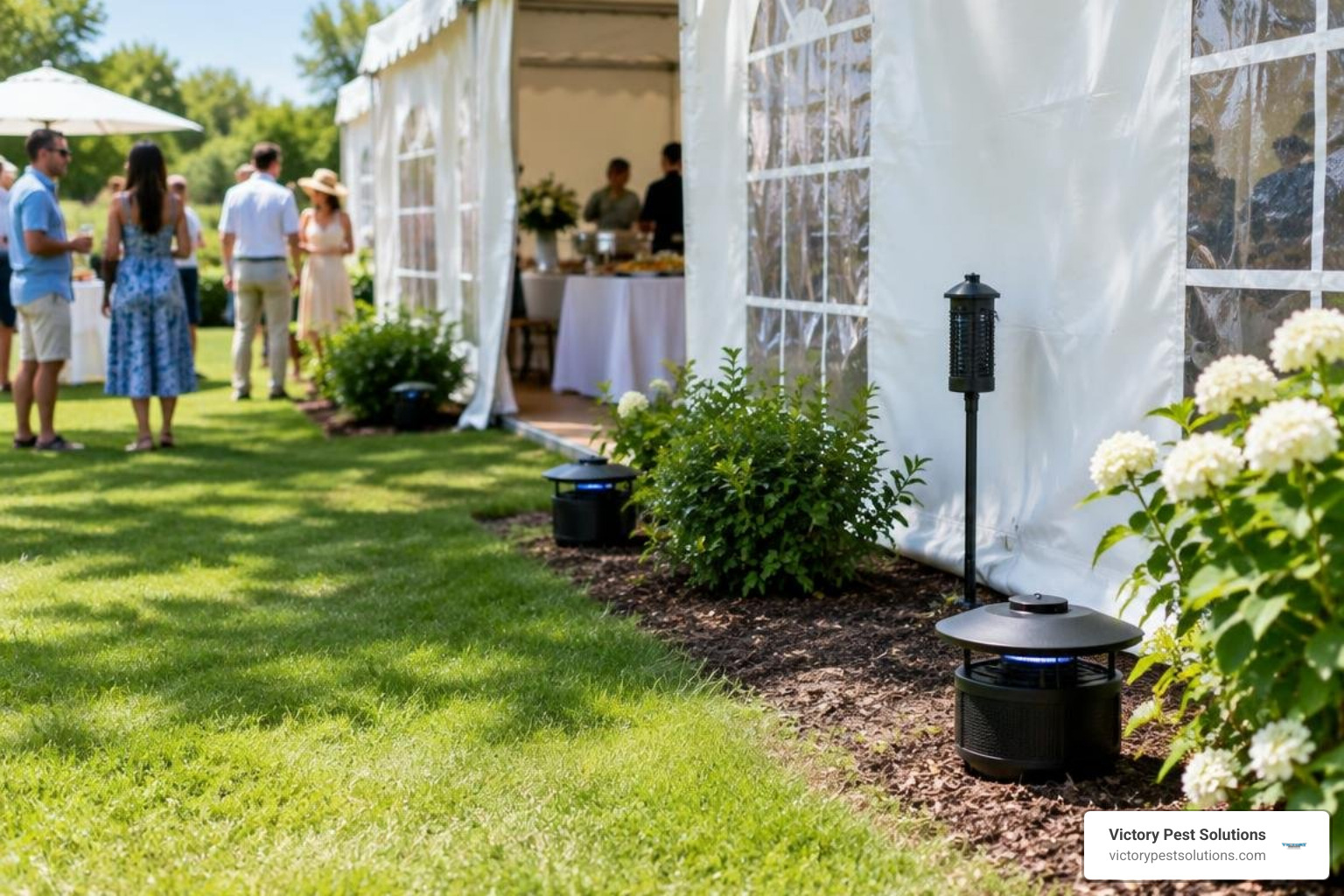
Every event format brings distinctive logistical hurdles that require tailored pest management solutions. An outdoor summer wedding surrounded by dense woodland requires extensive mosquito knockdown treatments, tick barrier applications, and discreet yellowjacket traps hidden within perimeter landscaping. In contrast, a high-profile corporate gala hosted in a historic urban ballroom requires strict rodent exclusion, subfloor monitoring, and non-invasive cockroach prevention.
Large-scale outdoor festivals and street fairs present massive logistical demands involving multiple mobile food vendors, open beer gardens, and sprawling temporary staging. Managing pests across these high-volume environments requires establishing centralized, secure waste transfer stations and deploying high-capacity fly management units along perimeter fences. Technicians must analyze the natural topography and prevailing wind patterns to create protective barrier perimeters that keep pests far from crowded stages.
Rooftop venues and open-air skyline terraces face unique pressures from urban bird populations and flying insects carried on rising thermal currents. Installing discreet optical bird gels, stainless steel exclusion spikes, and directional airflow fans around rooftop bars protects guests without compromising panoramic views. Tailoring pest protocols to the specific physical architecture of each venue ensures flawless event execution every time.
Frequently Asked Questions About Pest Control for Event Spaces
How far in advance should an event venue schedule pest treatments?
We recommend scheduling professional perimeter and barrier treatments 24 to 48 hours prior to an event’s scheduled load-in time. This precise treatment window allows low-odor, fast-acting residual formulations to dry thoroughly and establish an effective insect barrier before catering staff set up tables and decorations. For venues hosting large outdoor gatherings or seasonal weddings near wooded landscapes, scheduling an initial property assessment two weeks in advance allows technicians to identify and treat upstream breeding sites.
How does professional pest control protect open food and beverage stations?
Professional pest management protects open culinary stations by combining discreet mechanical traps, directional air curtains, and targeted perimeter barriers placed well away from dining tables. Technicians install low-profile ultraviolet fly lights and non-chemical pheromone traps within back-of-house service corridors to intercept flying insects before they reach buffet lines. By eliminating pests at the venue perimeter, open food and beverage stations remain completely protected without applying chemicals near guest dining surfaces.
What immediate steps should venue staff take if a pest is spotted during a live event?
If a pest is spotted during an ongoing event, staff should handle the situation discreetly without alarming nearby guests. A designated team member should remove any affected food items, clean and sanitize the immediate surface, and subtly redirect foot traffic away from the area if necessary. Staff should immediately log the exact time, location, and pest type in the venue’s internal logbook and contact our 24/7 commercial emergency support team for rapid post-event remediation.
Secure Your Venue with Proactive Commercial Protection
Delivering unforgettable, high-end hospitality experiences requires complete confidence that your property is safe, clean, and free from invasive pests. At Victory Pest Solutions, we provide round-the-clock commercial pest management designed specifically for the demanding schedules of premier venues, banquet halls, and hospitality operators. Our proactive prevention programs, rapid 24/7 emergency response, and customized integrated pest management protocols ensure your facilities remain impeccably maintained for every celebration.
Do not let surprise pest disruptions jeopardize your client relationships, online reviews, or municipal health compliance standing. Explore our comprehensive hotel pest control solutions to discover how our tailored commercial service agreements protect your brand year-round. Contact our expert commercial pest team today to schedule a comprehensive site evaluation and safeguard your event venue against unwanted pests.