
NYC Commercial Pest Control: 5 Smart Strategies
Why NYC Commercial Pest Control Is a Business-Critical Decision
NYC commercial pest control is one of the most urgent operational challenges facing facility managers in the city today. One failed inspection, one guest complaint, one rodent sighting on the floor — any of these can shut down your business, tank your reputation, and cost far more than a year of professional pest management.
Here’s a quick snapshot of what you need to know:
- Most common pests: Rodents, German cockroaches, bed bugs, flies, and birds
- Top risk: NYC Department of Health violations — a single live cockroach can trigger a 28-point grade deduction; a rodent sighting can force a closure
- Who is responsible: Both building owners and tenants are legally required to prevent and address infestations under NYC Health and Administrative Codes
- Best approach: Integrated Pest Management (IPM) — combining exclusion, monitoring, and targeted treatment
- What to look for in a provider: NY State licensing, same-day response capability, and audit-ready documentation
NYC’s density, aging infrastructure, and year-round pest pressure make this a problem that won’t solve itself. The businesses that stay protected are the ones that treat pest control as an ongoing operational system — not a one-time fix.
I’m Len Oppenberg, founder of Victory Pest Solutions, and I’ve spent over two decades in NYC commercial pest control — including years specializing in high-urgency environments like healthcare facilities where a pest sighting in an operating room demands an immediate response. In this guide, I’ll share the five strategies that actually work for NYC businesses facing real, recurring pest pressure.
The Unique Challenges of NYC Commercial Pest Control
Operating a business in New York City is an incredible adventure, but it comes with structural realities that pests absolutely love. Our city’s high-density environments mean that you do not just share walls with neighboring businesses; you share their pest risks too. If a restaurant next door or an apartment upstairs neglects its sanitation, those pests will quickly seek new real estate in your facility.
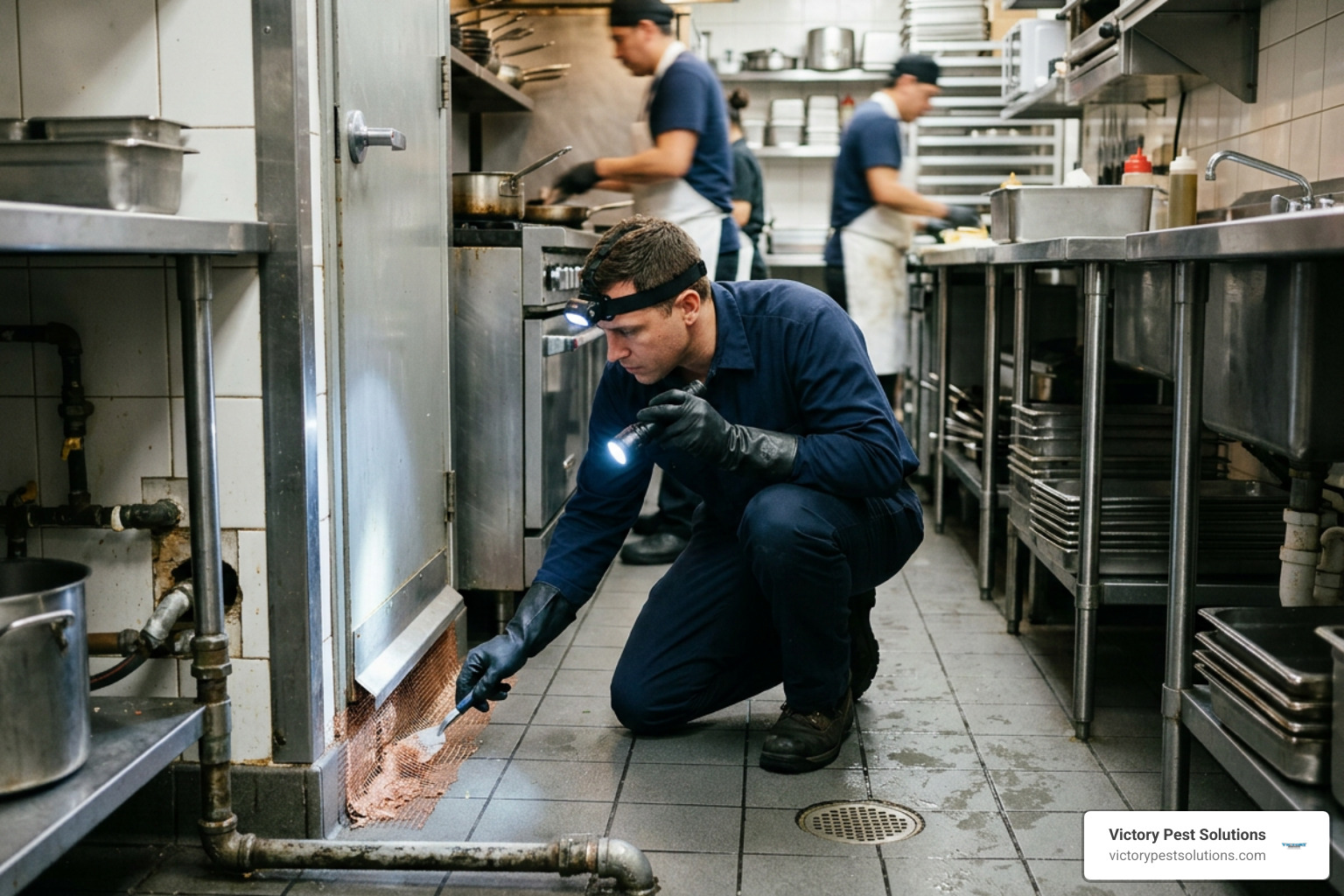
When we look at Common Pests in NYC Commercial Spaces, we are dealing with highly adapted, resilient urban invaders. Rodent infestations are an ongoing battle. Norway rats and house mice exploit the tiniest gaps in aging brickwork, foundation cracks, and utility lines to gain access to warm, food-rich interiors.
Meanwhile, German cockroach resilience is legendary. These insects reproduce at an explosive rate in heated commercial kitchens and damp utility spaces, quickly developing resistance to over-the-counter sprays if not managed by professionals.
To make matters more complicated, seasonal pest pressure behaves like a predictable clock in the five boroughs:
- June Pressure: As the weather warms up in late spring and early summer, insect reproduction accelerates dramatically. German cockroaches multiply faster, ants invade office break rooms in search of moisture, and newly dispersed spring rodent litters begin seeking out their own territories.
- Winter Rodent Migration: When the temperature drops, rats and mice look for food, water, and nesting spots indoors. They will chew through wood, drywall, and even server cables to find shelter.
This intense pressure isn’t limited to Manhattan. Whether you need specialized services in the outer boroughs like the Bronx, Brooklyn, Queens, and Staten Island, or you are managing a sprawling retail space further east in Nassau County, the fundamental rule remains the same: proactive exclusion is your best defense.
NYC Health Department Regulations and Inspection Standards
If you run a food service or hospitality business in New York City, the Department of Health and Mental Hygiene (DOHMH) is a constant presence in your operational planning. The DOHMH takes a zero-tolerance approach to pests in food-handling environments. Businesses can also review the city’s official NYC restaurant grading and inspection guidance to understand how inspection results are evaluated and displayed.
Under the strict NYC Health Department Pest Control Rules, inspectors look for active infestations, nesting materials, and even minor entry points.
The consequences of failing to meet these standards are severe:
- DOH Violations & Fines: A single live cockroach sighting can result in a massive point deduction. Accumulated violations lead to heavy fines, and a single rodent sighting in an active food preparation area can result in an immediate closure.
- Restaurant Closures: Historically, the DOHMH has closed over 1,500 food service establishments in a single year for critical rodent and insect violations, issuing fines to thousands of others.
- HPD Violations: For multi-family residential and mixed-use commercial properties, the Department of Housing Preservation and Development (HPD) issues strict violations for pest issues that are not resolved promptly.
Under NYC Administrative Codes, both building owners and commercial tenants share the legal obligation to keep their spaces pest-free. You cannot simply wait for a violation to land on your desk before taking action; you must have an active, documented prevention system in place. To understand what is at stake, review our breakdown of NYC Restaurant Health Inspection Pest Failures to see how quickly minor oversights turn into public relations disasters.
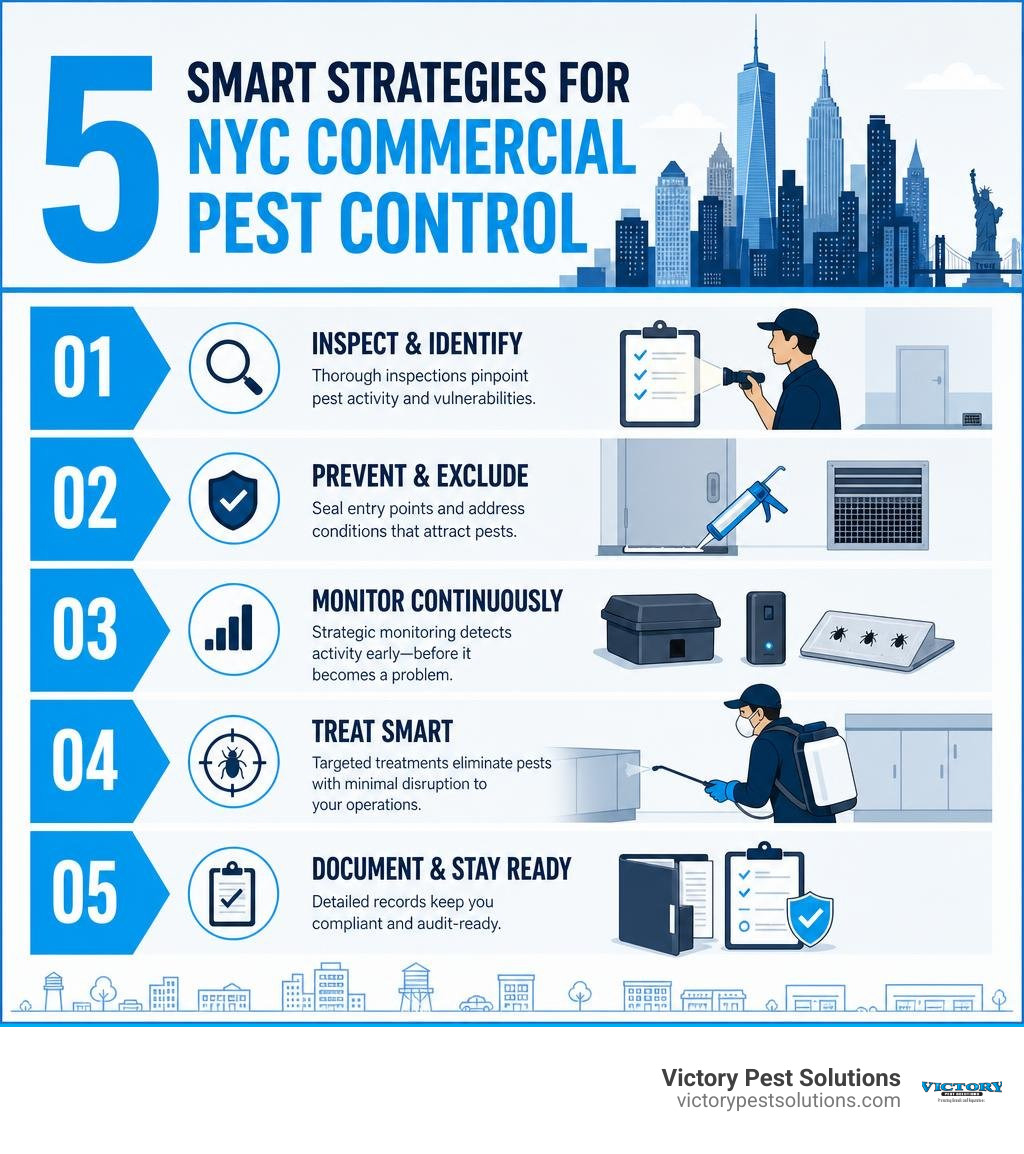
5 Smart Strategies for NYC Businesses
To keep your doors open, your customers happy, and your brand reputation spotless, you need a proactive operational protocol. Facility management must focus on risk mitigation and long-term prevention rather than reactive extermination.
Implementing The Importance of Regular Commercial Pest Inspections is the foundation of this proactive approach. Here are the five smart strategies every NYC business owner should deploy.
1. Deploy Integrated Pest Management as Your Primary NYC Commercial Pest Control Strategy
For decades, traditional pest control relied on a simple formula: wait for bugs to appear, then spray heavy chemicals to knock them down. Today, we know that approach is both temporary and hazardous, especially in commercial environments. The modern, gold-standard solution is Integrated Pest Management (IPM).
IPM is an ecosystem-based strategy that focuses on long-term prevention. Instead of relying solely on chemical treatments, IPM targets the root causes of pest infestations by eliminating the food, water, and shelter that pests need to survive.
The core principles of Integrated Pest Management NYC Restaurants and commercial properties include:
- Structural Exclusion: We physically block pests from entering your building. This means sealing cracks in foundations, installing heavy-duty door sweeps, and screening vents.
- Habitat Modification: We identify and correct environmental conditions that attract pests, such as standing water, poor waste management, and cluttered storage areas.
- Non-Chemical Alternatives: We prioritize mechanical traps, sticky monitors, and biological controls before introducing chemical options.
- Targeted Baiting and Trapping: When treatments are necessary, we use highly targeted baits placed safely in tamper-resistant stations, keeping them completely away from food preparation and customer areas.
- Low-Exposure Formulations: We select EPA-registered, low-impact products designed to resolve the pest issue with zero risk to your employees, guests, or the environment.
By focusing on how pests get in and why they want to stay, IPM provides a permanent shield for your business while keeping chemical exposure to an absolute minimum.
2. Tailor Extermination Protocols for Manhattan Hotels and Hospitality
No sector is more sensitive to pest issues than the Manhattan hotel and hospitality industry. In the age of instant online reviews and social media, a single guest posting a photo of a bed bug or a cockroach can destroy a hotel’s reputation overnight, directly impacting your Revenue Per Available Room (RevPAR).
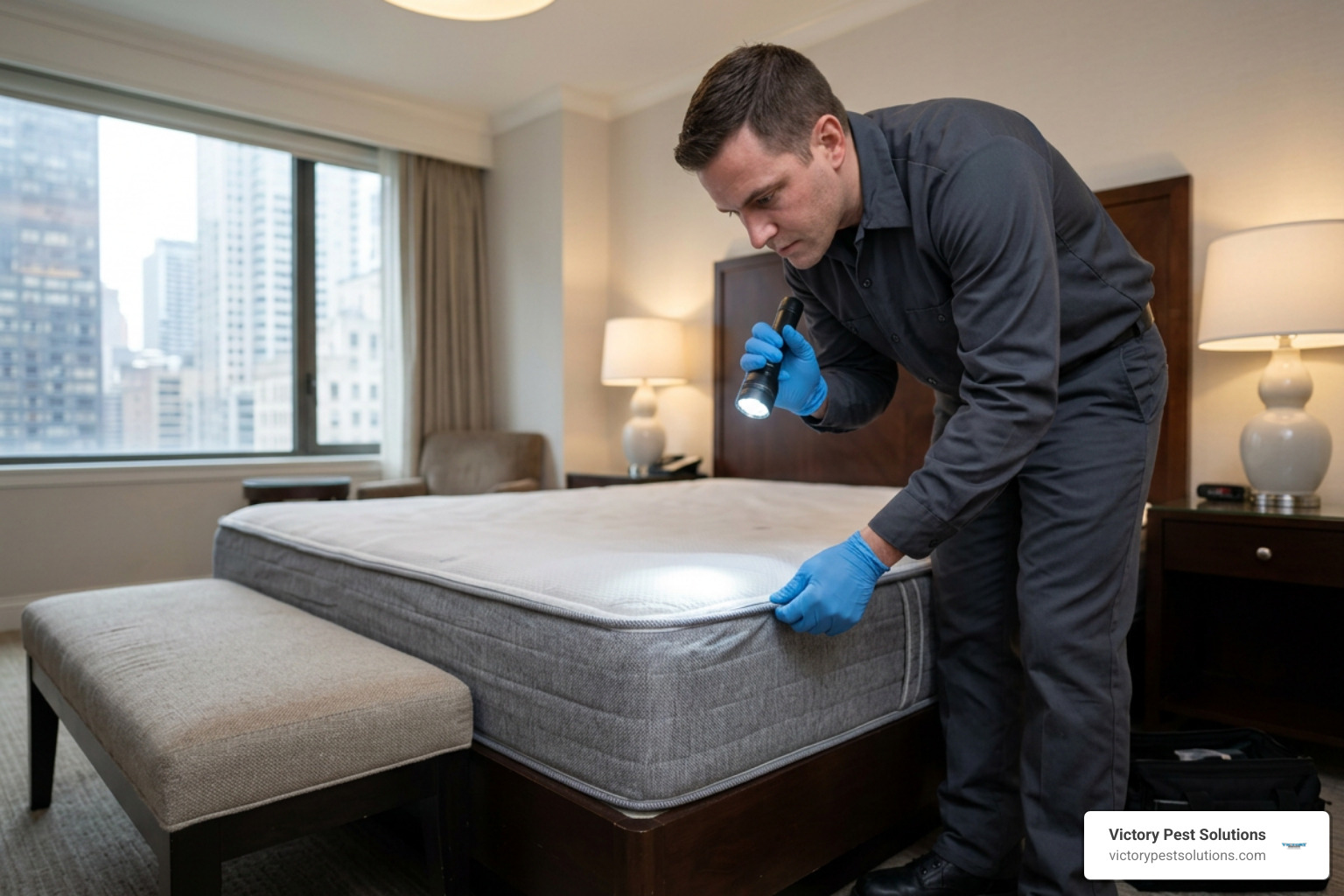
To protect your guests and your bottom line, you need a specialized, highly discreet hospitality protocol:
- Bed Bug Detection & Prevention: Bed bugs are excellent hitchhikers, entering hotels on luggage and clothing. We utilize highly trained K9 bed bug detection teams to sweep rooms quickly and accurately, catching bed bug activity long before a guest does.
- Targeted Insect Control: Utilizing advanced Commercial Insect Control Services ensures that common crawling pests are intercepted before they ever reach guest-facing areas.
- Cockroach Management: Kitchens, room service pantries, and guest room bathrooms require rigorous Commercial Cockroach Control Services to eliminate harborages in wall voids and behind heavy appliances.
- Trash Chute & Compactor Cleaning: Dirty trash chutes are a primary breeding ground for flies and cockroaches. Regular high-temperature cleaning removes the organic buildup that attracts pests.
- Drain Treatments: Organic slime in floor drains is the perfect nursery for drain flies. Regular biological drain treatments break down this organic matter, cutting off the fly life cycle at the source.
3. Maintain Audit-Ready Documentation for NYC Commercial Pest Control Compliance
When an NYC health inspector walks through your door, they do not just look at your floors and countertops — they ask to see your pest control logbook. If your documentation is missing, incomplete, or outdated, you can face severe penalties regardless of how clean your kitchen looks.
To keep your business protected, your pest control files must be completely transparent and audit-ready at all times. This is especially true for facilities operating under Hazard Analysis Critical Control Point (HACCP) protocols, where strict food safety standards are legally mandated.
| DOH Inspection Grade | Pest Violation Risk | Point Deduction | Recommended Action |
|---|---|---|---|
| Grade A (0-13 points) | Minor/No Pest Activity | 1 – 5 points | Maintain regular IPM inspections and update digital logs weekly. |
| Grade B (14-27 points) | Moderate Pest Activity / Minor Entry Points | 5 – 10 points | Schedule immediate exclusion service and increase trap monitoring. |
| Grade C (28+ points) | Critical Infestation / Open Entry Vectors | 28+ points (Critical) | Emergency treatment required; identify Signs of Rodent Infestation NYC Restaurants. |
An audit-ready compliance file should contain:
- Digital Service Logs: Detailed, timestamped electronic records of every technician visit, noting what was inspected, what was found, and what actions were taken.
- Pesticide Usage Reports: Exact records of any EPA-registered products applied, including SDS (Safety Data Sheets) and manufacturer labels.
- Floor Plan Maps: A clear map of your facility showing the exact location of all bait stations, traps, and monitoring devices.
- Real-Time Reporting & GPS Tracking: Verification of when your technician arrived and departed, ensuring complete accountability for your service.
4. Secure Same-Day Emergency Response and Exclusion
In the commercial world, a pest emergency cannot wait until next week. If a restaurant manager spots a rodent in the dining room or a hotel guest reports a bed bug at 2:00 AM, you need an immediate, decisive response.
We provide rapid dispatch and 24/7 support to address these crises before they impact your operations. But solving a pest emergency is about more than just setting traps; it requires structural exclusion to ensure the pests cannot return.
- Rapid Emergency Dispatch: Our team is ready to respond to urgent calls, providing fast on-site evaluations to neutralize the immediate threat.
- Commercial Rodent & Fly Solutions: We quickly deploy specialized Commercial Rodent Control Services and Commercial Fly Control Services to clear out active populations.
- Identifying Entry Points: We inspect structural vulnerabilities, looking for gaps around utility lines, floor drains, and loading docks.
- Heavy-Duty Door Sweeps: Rats and mice can squeeze through gaps as small as a dime. Installing commercial-grade door sweeps on all exterior doors is an essential first line of defense.
- Tamper-Resistant Bait Stations: We secure all exterior baiting systems in locked, heavy-duty stations to keep them completely safe from public contact.
- Structural Sealing: We use metal mesh, concrete patches, and silicone sealants to permanently close off entry pathways.
5. Choose a Certified Provider with Local NYC Expertise
Commercial pest control is highly regulated, and a residential “bug spray” service simply does not have the training or credentials required to protect a commercial facility. When choosing a partner, you must look for highly specific professional certifications.
Your provider must hold active New York State Department of Environmental Conservation (DEC) certifications in the following categories:
- Category 7A (Structural and Rodent Control): The core certification required for managing pests inside and around commercial buildings.
- Category 7C (Termite Control): Essential for identifying and treating wood-destroying insect infestations before they cause structural damage.
- Category 7F (Food Processing): A specialized certification required to apply pest control treatments safely inside active food manufacturing, packaging, and processing plants.
Additionally, active membership in the National Pest Management Association (NPMA) and the New York State Pest Management Association (NYPMA) demonstrates a commitment to the latest industry safety standards and technological advancements.
Local technician knowledge is irreplaceable. An exterminator who understands the unique architectural quirks of Manhattan pre-war buildings, the transit patterns of urban rodents, and the specific expectations of NYC health inspectors will always deliver a superior level of protection.
Frequently Asked Questions About NYC Commercial Pest Control
What is the difference between residential and commercial pest control in NYC?
While residential pest control focuses on treating individual homes, commercial pest control involves much larger operational scales, strict regulatory compliance, and significant liability risks. A single pest sighting in a home is an annoyance; a pest sighting in a commercial facility can lead to a health department shutdown, lawsuits, and lost revenue.
Commercial programs require customized industry protocols, detailed digital documentation, and ongoing preventative monitoring plans to meet strict legal and audit standards.
How do seasonal changes in New York affect commercial pest pressure?
Seasonal shifts dictate pest behavior in the city. In the spring, rodent litters grow and disperse, while rising summer temperatures accelerate insect reproduction, pushing pests like ants and roaches into air-conditioned break rooms.
In the late autumn and winter, rodents migrate indoors to escape the freezing cold, seeking warmth and food inside commercial basements, kitchens, and wall voids. Proactive seasonal adjustments allow us to intercept these pests before their behavior changes with the weather.
How do exterminators handle sensitive environments like hospitals and schools?
In highly sensitive environments like healthcare facilities and schools, patient and student safety is our absolute priority. We strictly follow Green Shield and LEED-compliant practices, relying almost entirely on non-toxic methods such as structural exclusion, mechanical traps, and sanitation adjustments.
When chemical treatments are absolutely necessary, we apply only EPA-registered, low-exposure formulations in highly targeted, tamper-resistant areas to ensure complete safety for all occupants.
Conclusion
When it comes to protecting your business from the relentless pressure of urban pests, a reactive approach is a recipe for operational and financial disaster. Staying ahead of health department inspections, protecting your brand reputation, and maintaining a safe environment for your staff and customers requires a dedicated, professional partnership.
At Victory Pest Solutions, we specialize in delivering premier, worry-free NYC Commercial Pest Control across New York City. With our 24/7 emergency support, proactive prevention programs, and specialized industry expertise, we ensure your facility remains completely protected and fully compliant.
Don’t wait for a failed inspection to take action. Contact us today to schedule a comprehensive property assessment and learn how our customized Commercial Pest Control programs can safeguard your business for the long haul.