
Integrated Pest Management Manhattan Guide
Why Pest Problems in Manhattan Demand a Smarter Approach
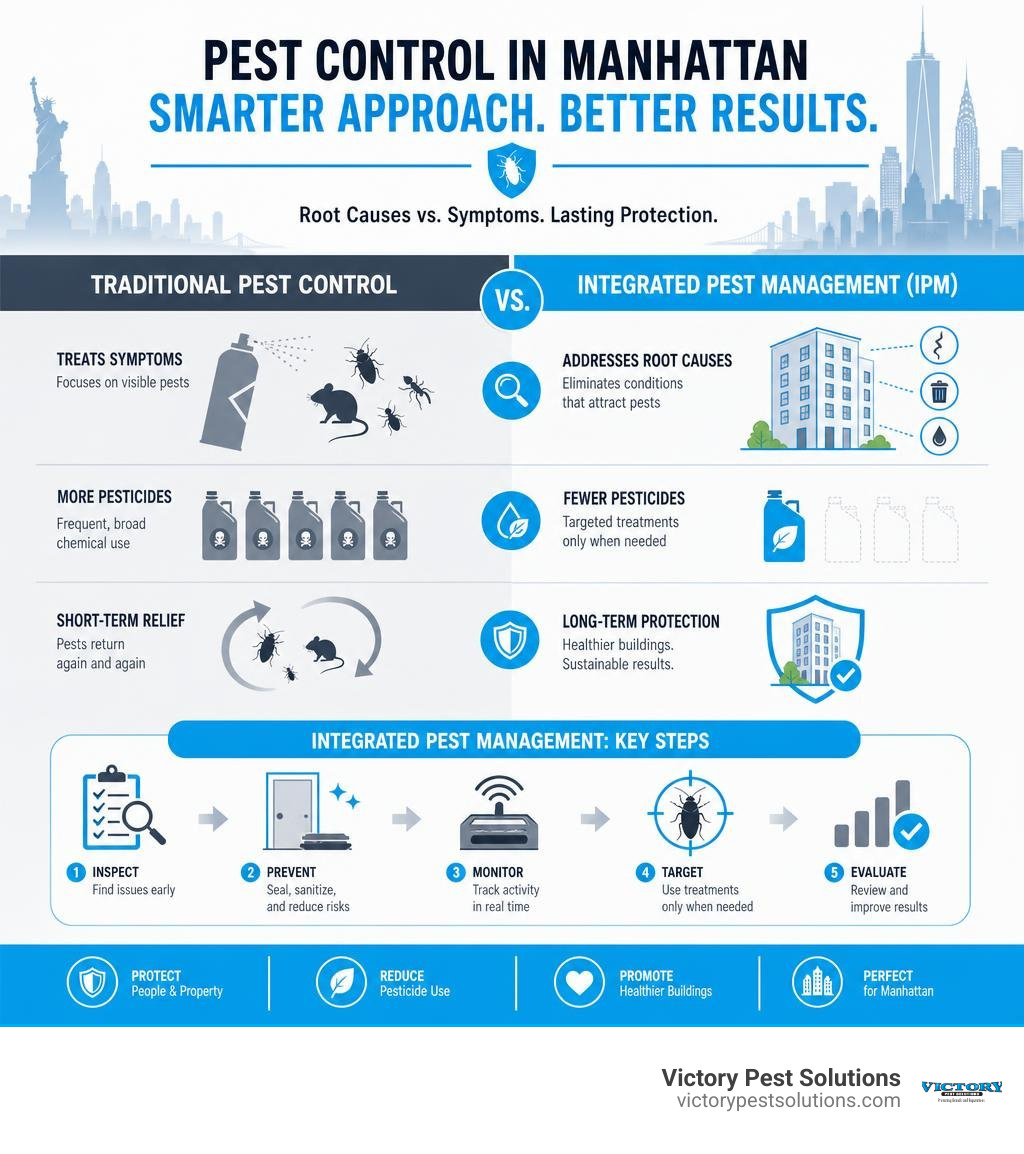
Integrated pest management in Manhattan is the most effective way to control pests long-term in one of the world’s most demanding urban environments — without relying on repeated pesticide applications that put residents, guests, and staff at risk.
Here’s what you need to know at a glance:
- What it is: A prevention-first strategy that combines inspection, structural exclusion, sanitation, monitoring, and targeted treatment
- Who needs it: Hotels, restaurants, healthcare facilities, residential high-rises, and commercial properties across Manhattan
- Why it works: It addresses root causes — cracks, food sources, entry points — rather than just spraying over symptoms
- Key pests it controls: German cockroaches, bed bugs, mice, clothes moths, and rats
- Legal context: NYC requires licensed pest management professionals (NYSDEC-registered) for commercial and multi-family buildings
- The result: Fewer pesticide applications, healthier buildings, and long-term pest elimination
Manhattan’s density makes pest control uniquely difficult. Pests don’t respect unit boundaries. A single cockroach colony in one apartment can spread through shared wall voids and utility risers across an entire floor. In some New York City neighborhoods, more than 50% of households report seeing cockroaches daily. More than one million New Yorkers live with asthma, and cockroach and mouse allergens are a documented trigger. For a facility manager running a hotel, restaurant, or commercial building, a pest sighting is not just a nuisance — it can mean a failed health inspection, a scathing online review, or a regulatory violation.
Traditional extermination — spray it and hope for the best — doesn’t cut it here. Manhattan’s pre-war buildings, high-rises, and interconnected infrastructure require a systematic, science-based approach that gets to the source of the problem.
I’m Len Oppenberg, founder of Victory Pest Solutions, and I’ve spent over two decades in pest management, including specialized work in healthcare facilities where the stakes for effective integrated pest management in Manhattan are as high as they get. That experience shapes everything we do at Victory Pest Solutions, and this guide will walk you through exactly how a modern IPM program works — and how to put one in place for your property.
Why Integrated Pest Management Manhattan Programs Are Essential for High-Rises
Manhattan’s architectural landscape is a beautiful mix of historic pre-war brownstones, massive commercial towers, and modern glass high-rises. However, this architectural diversity creates a perfect storm for pest infestations.
Older, historic buildings have settled over the decades, creating structural gaps, warped door frames, and cracks in building foundations. Pre-war apartments feature extensive networks of shared walls, utility voids, and radiator pipe chases. These hollow spaces act as superhighways for pests, allowing them to travel vertically and horizontally between units with ease.
Because of this interconnectedness, Manhattan Hotels Face Higher Pest Risks compared to properties in suburban environments. If a single guest room or apartment develops a bed bug or rodent problem, the infestation can rapidly spread to adjacent rooms, floors, or commercial spaces.
High-density living means that traditional, isolated treatments do not work. If you spray a pesticide in one kitchen, you may simply drive the German cockroaches through the wall voids into the neighboring apartment or hotel suite. This “pest relocation” cycle repeats indefinitely until you address the structural vulnerabilities of the entire building. To break this loop, property managers must implement cohesive, building-wide IPM strategies that target these structural pathways.
The Core Pillars of an Effective Urban IPM Program
Integrated Pest Management is not about waiting for a tenant to complain and then spraying chemicals. It is a proactive, prevention-based approach that prioritizes long-term solutions over quick fixes. By focusing on physical barriers, sanitation, and biological knowledge of pests, IPM dramatically reduces reliance on chemical pesticides. This supports environmental responsibility and protects public health, particularly in sensitive spaces like hotels, restaurants, and medical centers.
The following table highlights the difference between chemical and non-chemical IPM methods, illustrating how they work together under a balanced program:
| Method Type | Core Strategy | Manhattan Application Example | Role in IPM |
|---|---|---|---|
| Non-Chemical | Physical Exclusion | Sealing pipe penetrations with copper mesh and silicone sealant. | Primary defense; blocks pests from entering or migrating. |
| Non-Chemical | Sanitation | Deep cleaning compactor rooms and installing secure, tight-fitting trash lids. | Removes food and water sources, disrupting pest reproduction. |
| Non-Chemical | Mechanical Trapping | Placing sticky monitors and multi-catch rodent traps in utility corridors. | Identifies pest species, tracks population levels, and catches invaders. |
| Chemical | Targeted Microinjection | Applying non-repellent gel baits directly into deep wall voids and crevices. | Used only when pests are actively identified; avoids broad surface sprays. |
| Chemical | Growth Regulation | Using Insect Growth Regulators (IGRs) to disrupt pest reproductive cycles. | Stops immature insects from breeding, ensuring long-term colony collapse. |
The Core Steps of Integrated Pest Management Manhattan Protocols
To achieve consistent results, we follow a rigorous five-step IPM process tailored to the realities of Manhattan real estate.
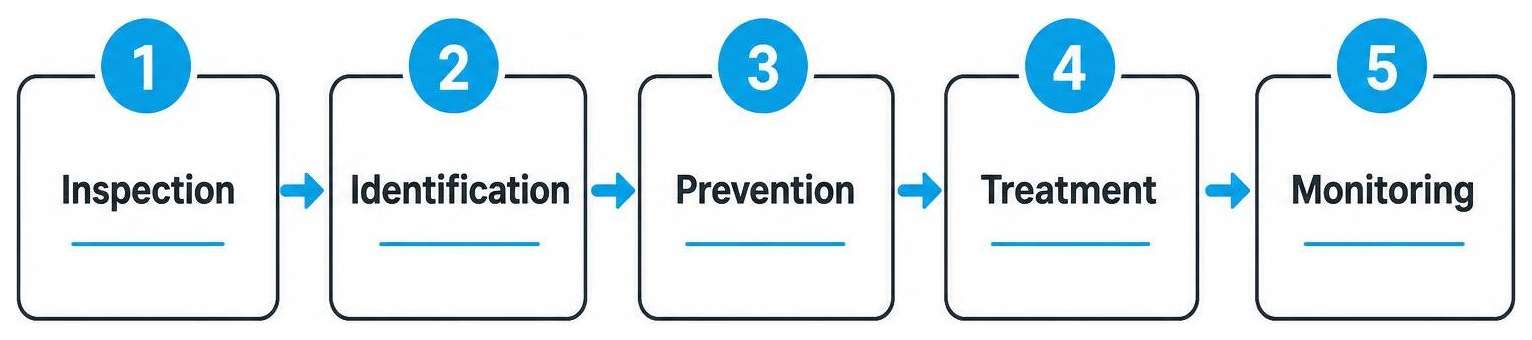
- Thorough Inspection: We don’t just look at the floor. We inspect compactor rooms, crawl spaces, dropped ceilings, and utility shafts. Understanding The Importance of Regular Commercial Pest Inspections is key; routine assessments catch structural vulnerabilities before pests do.
- Accurate Identification: Effective treatment depends on knowing your target. For example, treating American cockroaches requires different strategies than treating German cockroaches. Our pest specialists identify the exact species to exploit their specific biological habits.
- Proactive Prevention: This step involves altering the environment to make it uninviting to pests. We focus on eliminating food, water, and shelter.
- Targeted Treatment: If pests are present, we use highly targeted, low-toxicity methods. This might mean applying gel baits or utilizing heat treatments rather than broadcast chemical sprays.
- Continuous Monitoring: We place monitoring stations in high-risk areas and keep detailed logbooks to track pest activity over time, adjusting our strategy as seasonal patterns change.
Non-Chemical Control and Structural Exclusion
Exclusion is the absolute foundation of urban rodent and insect control. If you don’t seal the holes, you’re just feeding a rotating door of pests.
At Victory Pest Solutions, we emphasize NYC Commercial Rodent Proofing Exclusion as a primary defense. This involves sealing every potential entry point with durable, rodent-resistant materials:
- Mice and Rats: A house mouse can squeeze through a gap the width of a pencil (just 1/4 inch). We seal these gaps using heavy-duty copper mesh, hardware cloth, and professional-grade sealants. We also install heavy-duty door sweeps on exterior doors and trash room doors.
- Cockroaches: Adult cockroaches can hide in cracks as small as 1/16 of an inch. We use high-quality silicone sealant to close gaps along baseboards, counter backsplashes, and around plumbing pipes under sinks.
- Garbage Management: Pests are drawn to food waste. Buildings should be equipped to securely store at least three days’ worth of garbage in tight-fitting, heavy-duty containers. Regular cleaning of trash compactors, chutes, and bin rooms removes the grease and organic residue that pests feed on.
Targeting Common Manhattan Pests with Precision Tactics
Controlling pests in Manhattan requires a deep understanding of the species that thrive in high-density environments. Let’s look at the primary offenders and how IPM addresses them.
- German Cockroaches: These pests breed rapidly and quickly develop resistance to over-the-counter sprays. We use microinjection techniques and Insect Growth Regulators (IGRs) to target them inside wall voids and behind commercial kitchen appliances.
- Mice and Rats: Traditional baiting with rodenticides inside a building can lead to pests dying in wall voids, causing odor problems. We focus on structural exclusion first, combined with strategically anchored, tamper-resistant mechanical traps.
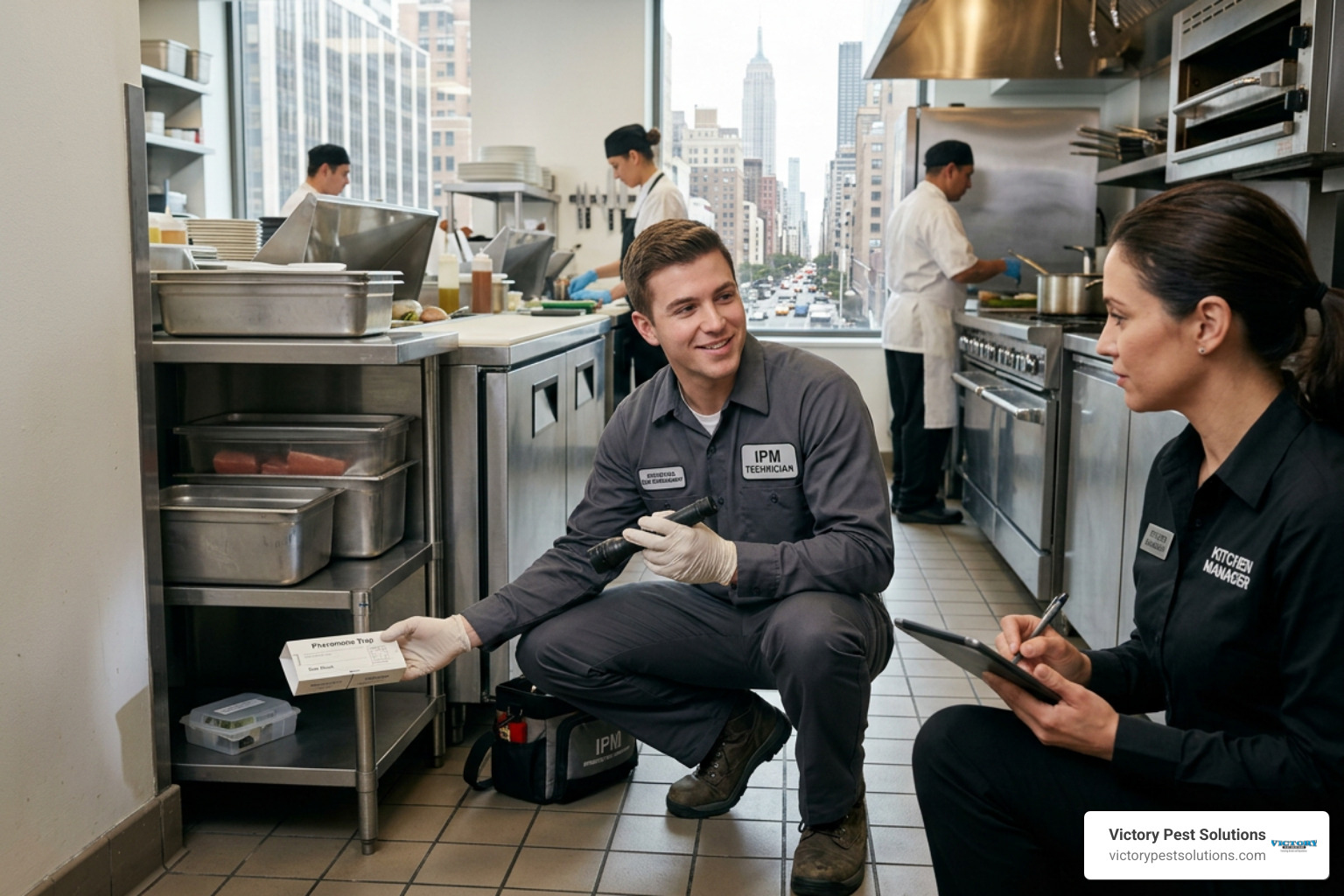
- Clothes Moths: Textile pests can devastate high-end retail inventory and residential closets. We utilize species-specific pheromone monitoring traps to capture adult moths and pinpoint breeding sites in stored wool, cashmere, and silk.
- Bed Bugs: These hitchhikers are a major challenge for high-turnover properties. We use proactive inspection protocols and targeted treatments to eliminate them quickly and discreetly.
Implementing Integrated Pest Management Manhattan Strategies in Hotels
In the hotel and lodging sector, guest satisfaction and brand reputation are everything. A single pest complaint on social media can cost a hotel thousands of dollars in lost bookings.
Because of high guest turnover, hotels face constant exposure to bed bugs. To manage this risk, we implement specialized IPM protocols:
- K-9 Bed Bug Detection: Scent-detection dogs can locate bed bugs in mattress seams, behind headboards, and under carpeting with high accuracy, allowing us to find infestations before guests do.
- Thermal Heat Treatments: When bed bugs are confirmed, we use whole-room heat treatments. Raising the room temperature to 120–130°F kills all life stages of bed bugs — including eggs — in a single, non-chemical service.
- Discreet Operations: We understand the sensitive nature of hotel pest control. We coordinate closely with engineering teams and management to provide fast, low-profile services that keep rooms open for bookings. To learn more about these specific challenges, see our guide on Common Pest Problems in Manhattan Hotels.
Managing Food Service and Restaurant Environments
Manhattan’s restaurants operate in some of the most tightly regulated spaces in the country. To maintain a clean, compliant kitchen, you need a pest management partner who understands how food service environments function.
A successful restaurant IPM program focuses on several key areas:
- Drain Cleaning: Organic sludge in commercial drains is a primary breeding ground for drain flies and fruit flies. We use biological foam treatments to break down this buildup.
- Targeted Gel Baiting: Rather than spraying chemical barriers near food prep surfaces, we apply non-repellent gel baits directly into deep cracks and equipment voids where roaches hide.
- Sanitation Auditing: We inspect food storage areas, under-counter refrigeration units, and dishwashing stations to identify moisture issues and food debris that attract pests.
Implementing these steps is crucial for passing inspections. For more details, explore our resources on Integrated Pest Management NYC Restaurants.
Regulatory Compliance and Public Health Standards in NYC
Operating a commercial property or multi-family building in Manhattan comes with strict legal and regulatory responsibilities. The city’s high density means that pest management is treated as a critical public health issue.
Key regulations and compliance standards include:
- Local Law 55 (Asthma and Allergen Prevention): This law requires owners of multi-family buildings to keep properties free of pests like cockroaches and rodents, which produce allergens linked to asthma. Owners must use IPM practices — including sealing cracks and addressing leaks — rather than relying on routine chemical spraying. Learn more through the official Integrated Pest Management Toolkit provided by the city.
- DOHMH Grade A Ratings: Restaurants and food service establishments must maintain strict standards to keep their Grade A letter cards. Pest activity or inadequate record-keeping can result in immediate fines or closure.
- Rat Mitigation Zones: Specific neighborhoods in Manhattan are designated as Rat Mitigation Zones due to high rodent activity. Properties in these zones face increased inspections and must comply with strict trash containerization rules.
- Licensing Requirements: Under New York State law, only professionals licensed by the New York State Department of Environmental Conservation (NYSDEC) can apply pest control treatments in commercial and multi-family buildings.
Understanding the NYC Health Department Pest Control Rules and the broader Pest Control Law NYC is essential for keeping your property compliant. For restaurant owners, staying up to date on NY Regulatory Pest Control Requirements for Restaurants helps prevent unexpected violations during surprise city inspections.
Partnering for Long-Term Pest Elimination
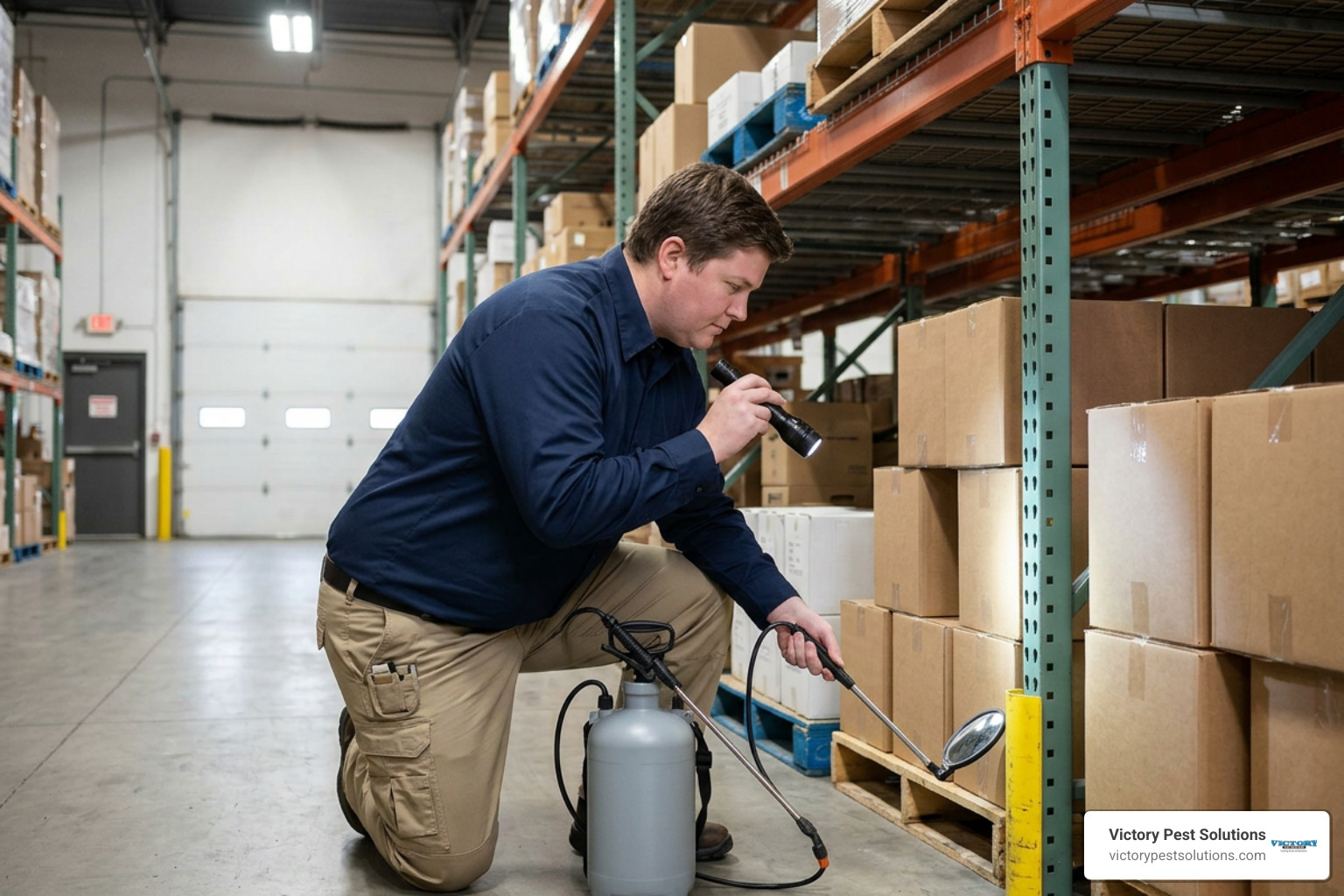
Successful IPM is built on a partnership between property managers, building staff, and a dedicated pest management professional. At Victory Pest Solutions, we provide the expertise, tools, and support needed to keep your facility pest-free.
When you partner with us, you receive:
- 24/7 Support and Fast Response: Pest issues don’t stick to business hours. We provide around-the-clock emergency support to address urgent problems immediately.
- Proactive Prevention Programs: We focus on stopping pests before they establish a foothold, saving you time, stress, and money.
- Audit-Ready Documentation: We maintain comprehensive pest control logbooks, certificates of treatment, and detailed service reports. This clear record-keeping ensures you are always ready for third-party audits or health department inspections.
- Industry-Specific Expertise: From high-turnover hotels to sterile healthcare facilities, we tailor our services to meet your specific industry standards. We are proud of our preferred vendor status with the New Jersey Hospital Association, reflecting our commitment to the highest levels of sanitation and care.
Whether you need comprehensive Commercial Pest Control or specialized NYC Pest Management Services Commercial programs, our team is ready to help. Contact us today to schedule a thorough property inspection and take the first step toward long-term pest elimination.
Frequently Asked Questions About Manhattan IPM
What is the difference between traditional pest control and IPM?
Traditional pest control often relies on scheduled, calendar-based chemical spraying to kill visible pests. Integrated Pest Management (IPM) is a prevention-first approach that focuses on the root causes of infestations. It uses structural exclusion, improved sanitation, and continuous monitoring to keep pests out, using targeted chemical treatments only as a last resort.
Are IPM treatments safe for children and pets in residential buildings?
Yes. Because IPM prioritizes non-chemical methods — like sealing entry points and using mechanical traps — it significantly reduces pesticide exposure. When targeted chemical treatments are necessary, we use low-toxicity, eco-friendly gel baits placed deep within walls and crevices, keeping them completely out of reach of children and pets.
How does IPM help commercial properties pass NYC health inspections?
IPM directly addresses the structural and sanitation issues that health inspectors look for, such as food debris, standing water, and entry points. Additionally, the detailed documentation and pest logbooks provided under an IPM program show inspectors that your business is proactively managing pest control in compliance with city regulations.