
Guide to Eco Friendly Hotel Pest Control
Eco-Friendly Hotel Pest Control Starts With Prevention
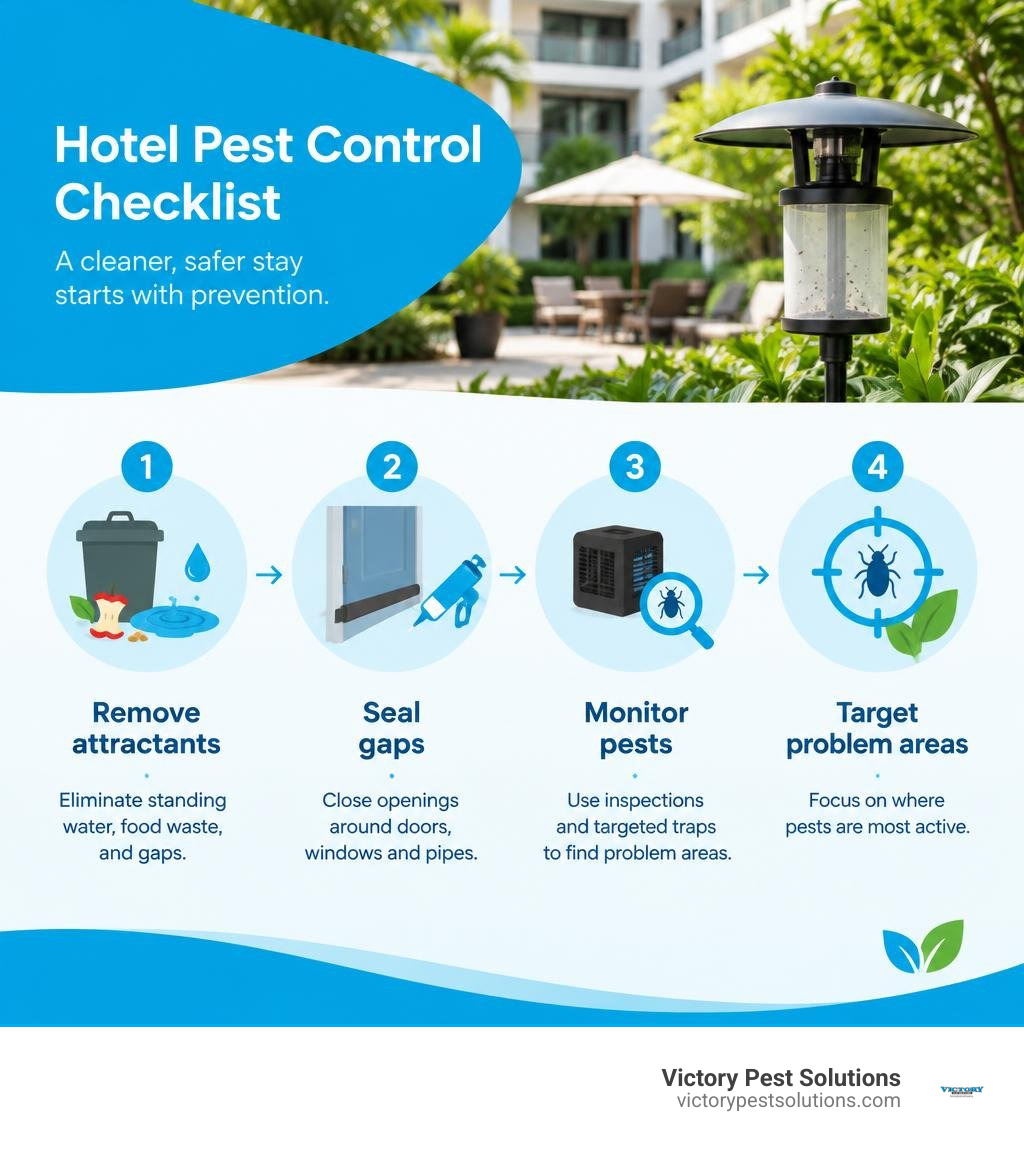
For eco-friendly hotel pest control, start by removing what attracts pests: standing water, food waste, and gaps around doors or pipes. Then use inspections and targeted traps to find problem areas and track results. This approach can reduce the need for routine spraying while helping protect guests and staff.
I’m Len Oppenberg, founder of Victory Pest Solutions, and I’ve worked in pest control since 2000, including in settings where a quick, careful response matters. That experience guides my approach to eco friendly hotel pest control: find the cause first, then choose the least disruptive solution that works.
What Is Eco Friendly Hotel Pest Control and How Does It Work?
In the hospitality sector, pest management has undergone a fundamental transformation. For decades, traditional extermination relied heavily on scheduled, blanket applications of chemical sprays across guest floors, kitchens, and outdoor recreation areas. Today, modern travelers demand sustainable practices, non-toxic environments, and higher environmental standards.
Eco friendly hotel pest control focuses on proactive, biological, and mechanical methodologies to suppress pest populations without compromising guest health or indoor air quality. By employing non-toxic interventions and comprehensive hospitality pest management services, hospitality operators can manage pest pressures discreetly while safeguarding their brand reputation and sustainability credentials.
Core Principles of Eco Friendly Hotel Pest Control
Sustainable pest control is grounded in Integrated Pest Management (IPM). Rather than treating symptoms reactively with toxic pesticides, IPM addresses the root causes of pest activity through environmental manipulation, physical exclusion, and biological interventions.
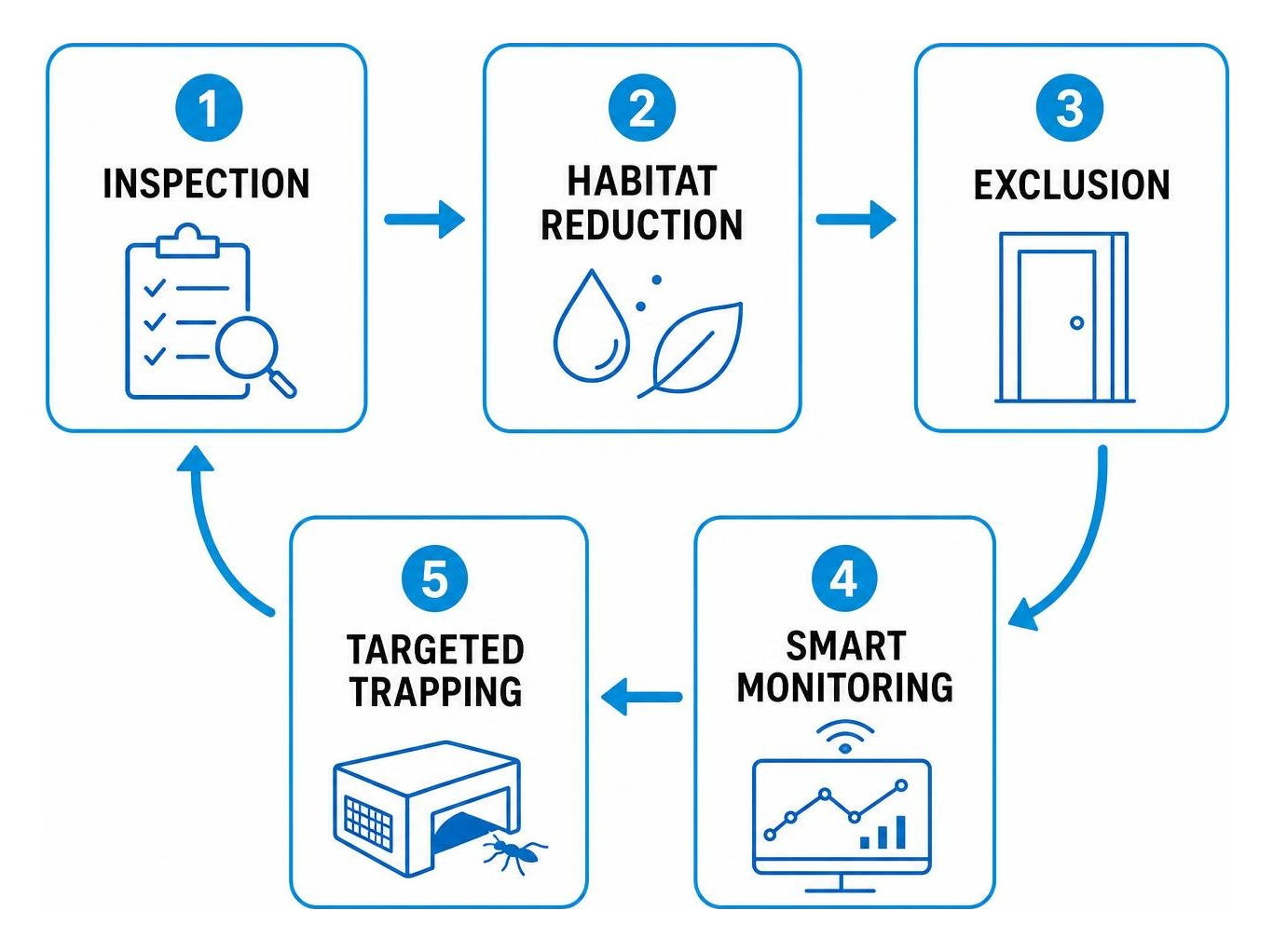
The core principles include:
- Species-Specific Targeting: Traps and interventions are engineered to target pest vectors specifically, ensuring beneficial insects like bees and butterflies remain completely unharmed.
- Continuous Monitoring: Utilizing high-precision monitoring stations allows technicians to track pest activity levels in real time and act before an infestation establishes itself.
- Cultural and Sanitation Controls: Eliminating moisture sources, securing food storage, and managing refuse to naturally deny pests the resources they need to thrive.
- Physical Exclusion: Sealing building envelopes to prevent entry rather than trying to eradicate pests once they are inside.
Hotels that follow our comprehensive integrated pest management guide ensure compliance with strict environmental health codes while maintaining an uncompromised guest experience.
Insecticide-Free Trapping and Biological Solutions
A standout breakthrough in chemical-free pest control is advanced, lure-based vector trapping. Traditional outdoor mosquito management often involved broad-spectrum fogging, which introduces chemical residues into dining courtyards, rooftop lounges, and pool areas.
Modern commercial traps eliminate chemicals entirely. These systems simulate human respiration and skin emissions by releasing controlled flows of carbon dioxide combined with patented human scent mimics (lactic acid and fatty acid compounds). This specifically lures host-seeking female mosquitoes into an intake fan that captures them inside a catch bag, where they dehydrate naturally.
Scientifically validated traps—such as Biogents systems, which have over 1 million units deployed worldwide across more than 100 countries—demonstrate capture efficacy rates between 87% and up to 93% when paired with carbon dioxide. Because these traps rely entirely on biological cues rather than indiscriminate neurotoxins, non-target pollinators are left unaffected. Deploying these high-performance, discreet luxury hotel pest control solutions allows boutique properties and urban resorts to keep open-air terraces comfortable and pest-free.
High-Tech Innovations and Real-World Hospitality Case Studies
Modern pest management leverages high-tech data collection and advanced spatial science to maintain pest-free environments.
Satellite Mapping and Smart Monitoring Systems
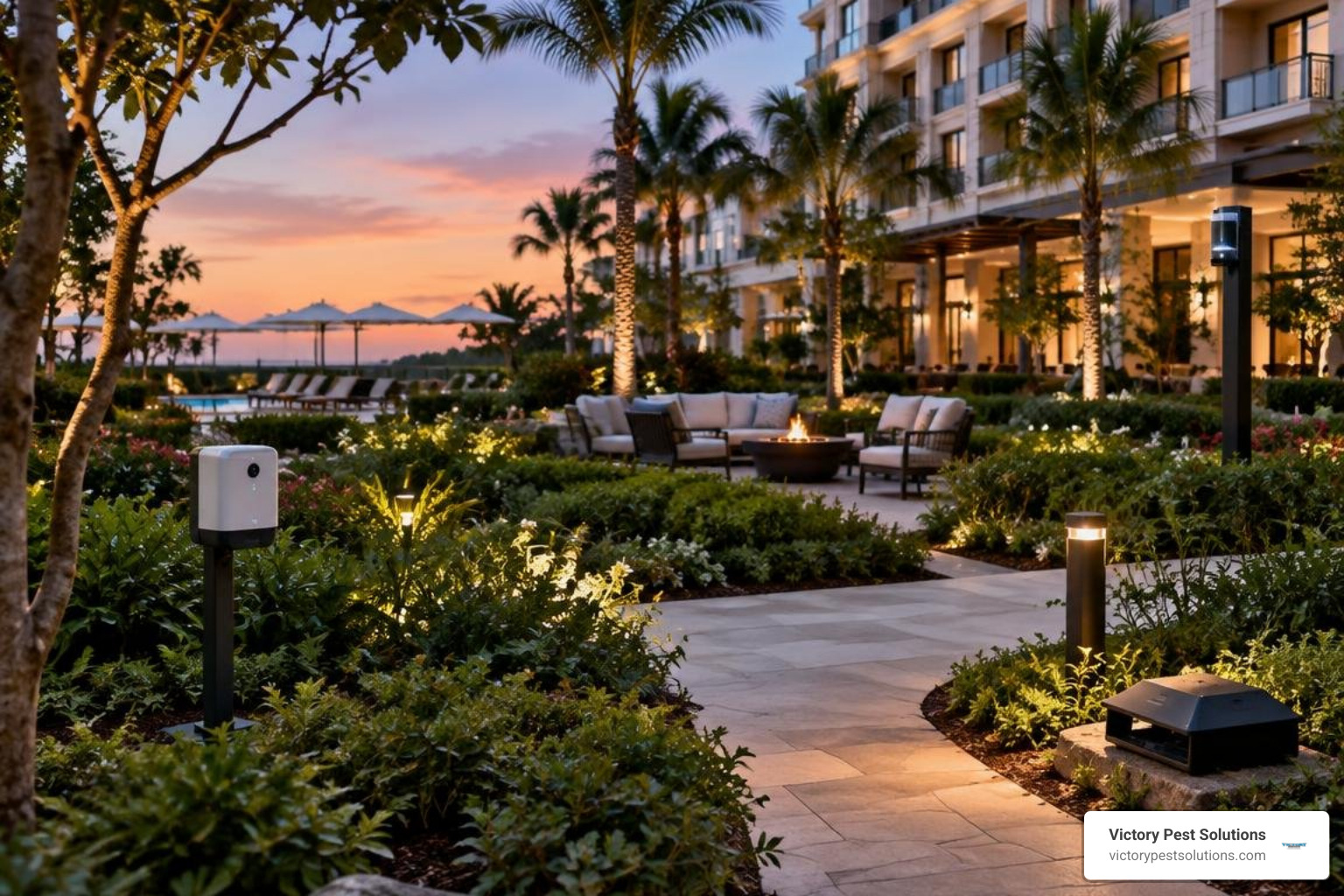
Pest vector control has entered the space age through services like the SmartSenZ satellite-guided pest management study, backed by the European Space Agency (ESA). This technology combines high-resolution Earth Observation (EO) satellite imagery (under 1-meter resolution) with satellite navigation (SatNav) to map hotel topography, microclimates, drainage patterns, and vegetation density.
By overlaying spatial satellite data with ground-level sensor stations, pest control specialists can identify vector breeding hotspots before adult insects emerge. This data-driven framework establishes precise action thresholds for targeted interventions. It plays a vital role in international tourist destinations managing vector-borne risks such as dengue, Zika, and chikungunya, allowing properties to proactively intercept pests without wide-area chemical fogging.
Real-World Field Results Across Global Resorts
Rigorous field trials and international hotel partnerships showcase the clear efficacy of modern non-chemical systems:
- Novotel Pau Pyrénées (Accor Group): During a pilot program detailed in the sustainable mosquito control partnership case study, the property deployed targeted lure traps across its outdoor dining and park areas. In just eight weeks, the traps captured over 30,000 mosquitoes, restoring outdoor guest comfort without spraying synthetic insecticides.
- Soneva Fushi Resort (Maldives): Transitioning away from intensive chemical fogging, the luxury eco-resort installed a comprehensive grid of scent-and-carbon-dioxide lure traps paired with aggressive standing-water management. Within six weeks, the resort recorded a 95% reduction in mosquito populations, while simultaneously seeing a resurgence of native pollinators and bird species.
- SmartSenZ Conservation Lodges: The ESA-backed SmartSenZ demonstration proved its effectiveness across four hotels in Guadeloupe and six premier private game reserves in South Africa (including Sabi Sands and Phinda). Following the pilot, ten conservation lodges—including Sir Richard Branson’s luxury Ulusaba Private Game Reserve lodges—signed long-term contracts to deploy satellite-guided, chemical-free vector management.
These real-world applications demonstrate that sustainable vector control not only works, but frequently outperforms conventional chemical applications in demanding commercial settings.
Comparing Sustainable Methods to Traditional Chemical Treatments
Evaluating pest management options requires looking at immediate efficacy, labor requirements, environmental impact, and long-term return on investment.
| Feature / Metric | Eco-Friendly Integrated Pest Management (IPM) | Traditional Chemical Insecticide Treatments |
|---|---|---|
| Primary Mechanism | Biological lures, exclusion, smart traps, habitat removal | Broad-spectrum synthetic pyrethroids, neurotoxins, fogging |
| Pest Resistance | Zero risk; pests cannot develop resistance to physical traps or exclusion | High risk; insect populations rapidly develop chemical resistance |
| Guest & Staff Safety | Non-toxic; zero VOCs, no chemical residues, zero exposure risks | Potential respiratory irritation, chemical odors, re-entry delays |
| Environmental Impact | Protects pollinators (bees, butterflies), birds, and aquatic life | Indiscriminate mortality of beneficial insects; run-off risks |
| Long-Term Cost | Lower long-term costs; equipment investment with minimal recurring consumables | Escalating operational costs due to recurring chemical sprays and labor |
| Data & Accountability | Digital capture counts provide auditable vector data and trend lines | Subjective results with little to no pest population analytics |
Cost and Effectiveness Breakdown
While conventional chemical extermination might appear budget-friendly upfront, recurring labor expenses, frequent re-treatments, and chemical costs add up quickly. Over time, insects also develop physiological resistance to commonly used synthetic pyrethroids, requiring stronger formulations and higher application frequencies to achieve the same suppression.
Investing in permanent hardware—such as smart catch stations, biological lure networks, and exclusion barriers—delivers predictable operating expenses. Once installed, these systems provide round-the-clock population suppression with minimal routine maintenance. Implementing structured, proactive hotel pest prevention strategies stabilizes operating budgets while delivering superior pest suppression.
Guest Safety and Biodiversity Preservation
Modern hotel guests notice—and review—clean, chemical-free hospitality environments. Traditional aerosolized chemical treatments release volatile organic compounds (VOCs) and leave residues on outdoor dining furniture, cabanas, and courtyard greenery. For sensitive individuals, children, and pets, these residues can cause skin and respiratory irritation.
Eco-friendly approaches protect indoor air quality and preserve outdoor ecosystems. Preserving natural predators like dragonflies, birds, and spiders creates a natural biological buffer that keeps pest populations in check. Highlighting these practices in sustainability reporting reassures guests and supports strong reviews for exterior hospitality pest management.
Actionable Steps to Implement Eco Friendly Hotel Pest Control
Transitioning a hotel property to an eco-friendly pest control model requires a practical, step-by-step program.
Eliminating Breeding Sites and Structural Proofing
Physical exclusion and source reduction form the foundation of any non-toxic pest defense:
- Eliminate Stagnant Water: Mosquitoes need only a bottle cap of standing water to breed. Inspect air conditioning condensation lines, flat rooftop drains, elevator pits, decorative fountain catchments, and potted plant saucers weekly.
- Clear Landscaping and Debris: Keep perimeter bushes trimmed at least 18 inches away from exterior walls. Clear fallen leaf litter, organic mulch buildups, and organic debris where pests nest.
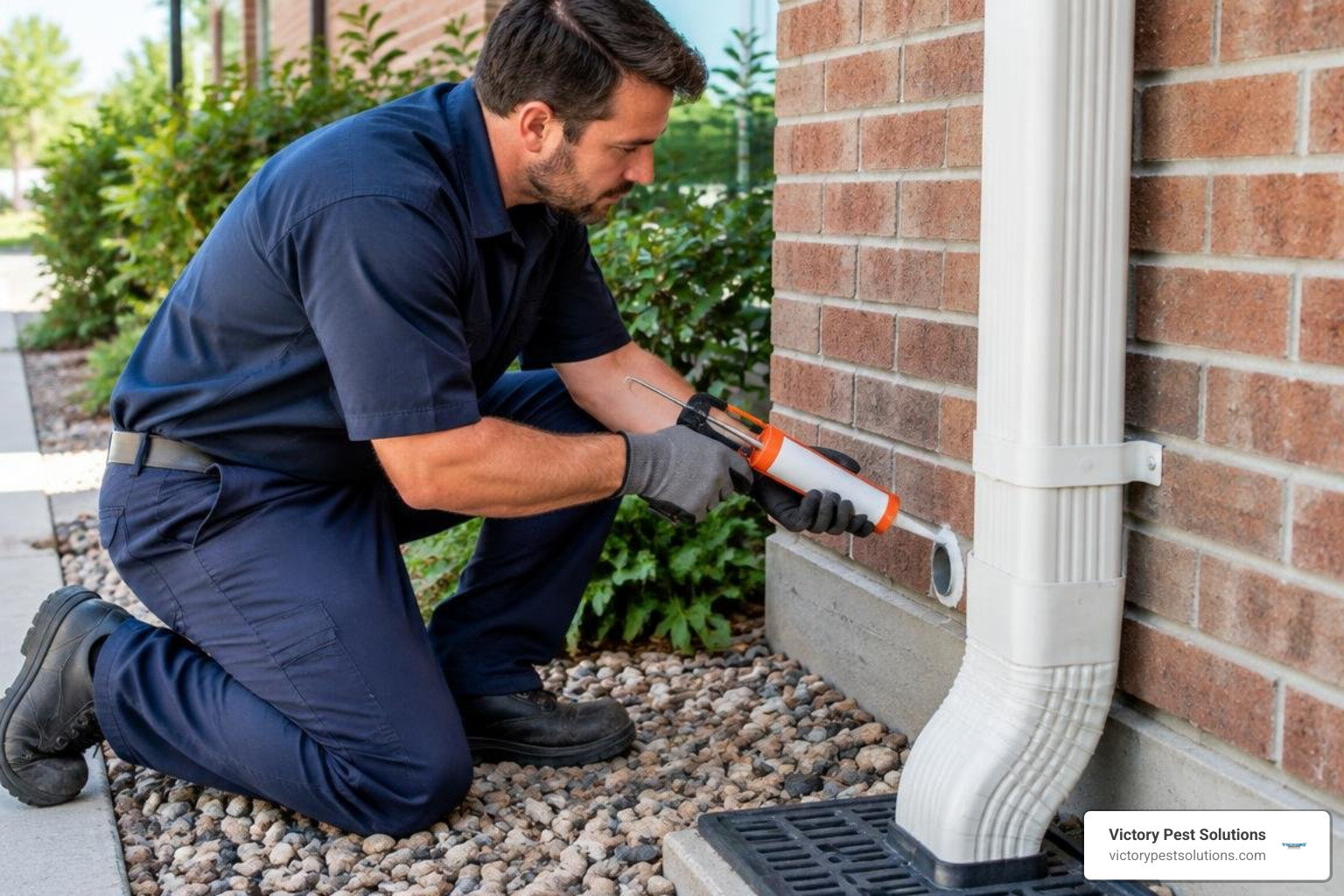
- Seal Structural Entry Points: Install heavy-duty door sweeps on service entrances, kitchen docks, and guest balcony doors. Seal utility penetrations, masonry voids, and conduit openings using stainless steel mesh and commercial silicone caulking through professional hotel proofing and pest exclusion.
- Manage Exterior Lighting: Replace standard white incandescent exterior lights with warm LED fixtures (yellow spectrum) that do not attract nocturnal flying insects to guest entryways.
Staff Training and Proactive Sanitation Audits
Even the most advanced traps cannot compensate for poor sanitation. Hotel staff serve as the first line of defense:
- Housekeeping Inspection Routines: Train housekeeping teams to inspect high-risk areas during room turnovers, checking mattress seams, headboards, plumbing chases, and luggage storage areas for early signs of pest activity.
- Food & Beverage Protocols: Establish strict kitchen sanitation audits. Ensure trash compactors, commercial grease traps, and recycling storage rooms are deep-cleaned, covered, and emptied on set schedules.
- Data-Driven Action Thresholds: Use digital reporting logs where staff can log sightings immediately. When trap capture counts rise in a specific zone, technicians can inspect and address the underlying cause before guests ever notice an issue, an essential standard in specialized hotel pest control for NYC hospitality.
Frequently Asked Questions About Hotel Pest Management
How quickly do non-chemical mosquito and insect traps show results?
Targeted lure-and-capture systems begin catching insects immediately upon activation. However, because these systems work by interrupting the insect reproductive cycle—capturing egg-laying females before they can reproduce—noticeable population suppression typically takes between two to four weeks. Field studies show sustained population reductions of 85% to 95% within six to eight weeks of continuous deployment.
Can eco-friendly pest control handle severe infestations in high-occupancy hotels?
Yes. Eco-friendly pest control relies on an integrated, multi-barrier strategy. For active infestations, non-toxic physical treatments (such as high-temperature thermal remediation, targeted HEPA vacuuming, cryonite freezing, and desiccant dusts) quickly eliminate pest clusters. Once the initial population is knocked down, mechanical exclusion, lure traps, and structural improvements keep pests from returning.
What are the main corporate social responsibility (CSR) benefits for hospitality brands?
Adopting sustainable pest control supports environmental, social, and governance (ESG) goals. Eliminating synthetic chemical fogging protects local biodiversity, prevents pesticide runoff into municipal waterways, and improves air quality for both guests and hotel staff. These practices contribute directly toward green building certifications (such as LEED and Green Key) and support sustainability reporting metrics.
Elevating Hospitality Standards with Sustainable Pest Management
Guest satisfaction in the hospitality industry relies on delivering spotless, comfortable, and safe environments. Transitioning to sustainable, non-toxic pest management protects your brand, preserves local ecosystems, and meets the expectations of today’s eco-conscious travelers.
At Victory Pest Solutions, we provide 24/7 commercial support and customized, proactive pest prevention programs designed specifically for hotels, resorts, and dining venues across New York City, Manhattan, Brooklyn, Queens, the Bronx, Staten Island, Long Island, and Westchester County. Contact our team today to schedule an expert consultation for hotel pest control and elevate your property’s environmental standards.