
Can You Freeze Out Roaches? A Guide to Cockroach Removal in Cold Storage
The Pest Problem Hiding in Your Commercial Cooler
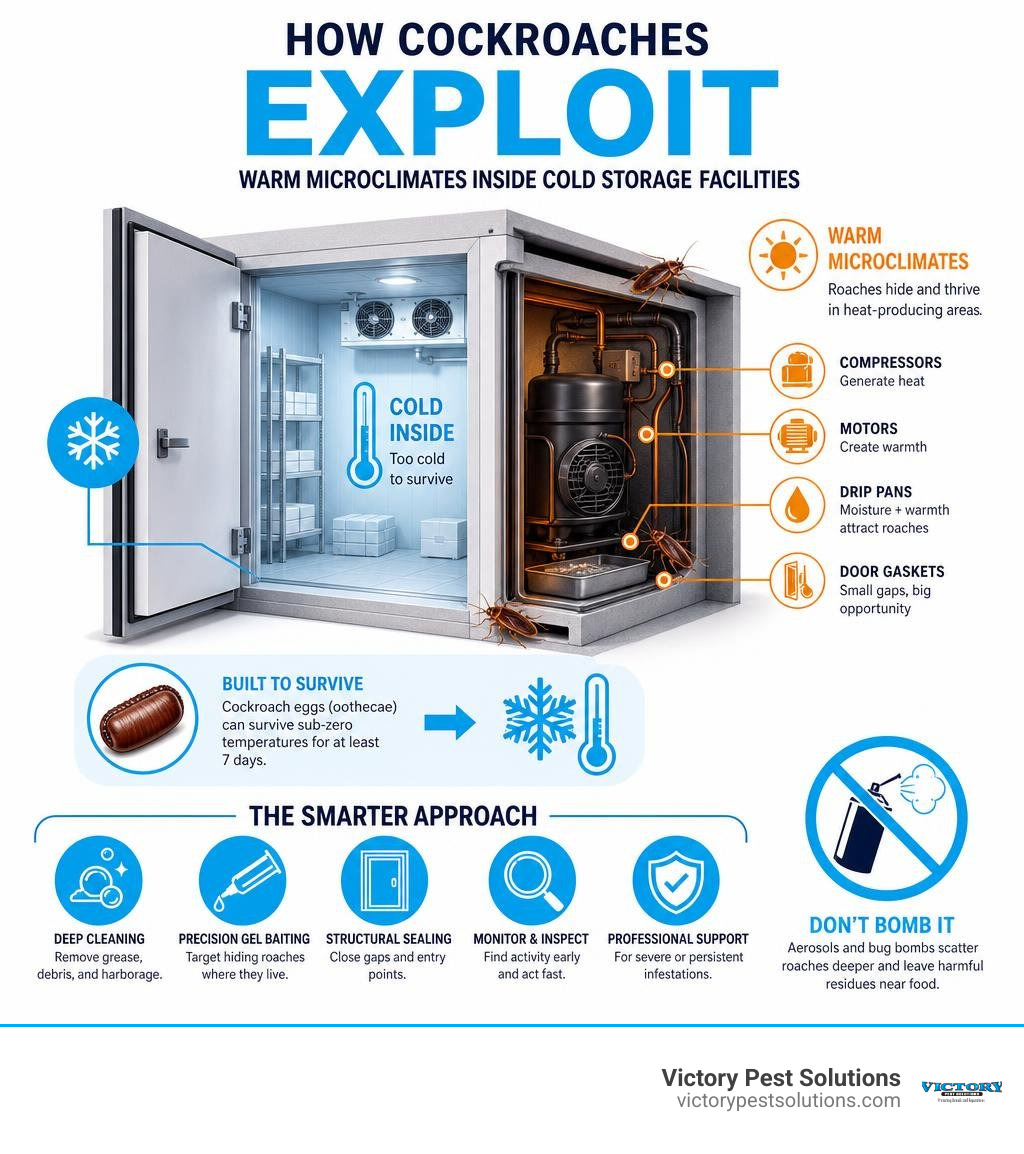
Cockroach removal in cold storage is one of the most misunderstood pest control challenges facing facility managers today. Many assume that freezing temperatures make cold storage units pest-proof. They don’t.
Here is a quick summary of what you need to know:
- Cockroaches cannot survive inside a refrigerator or freezer — standard fridge temps (35°F–40°F) are lethal to adult German cockroaches within 10 hours
- But cockroaches do infest cold storage units by living in the warm mechanical zones — compressors, motors, drip pans, and door gaskets — not the cold interior
- Cockroach eggs (oothecae) can survive sub-zero temperatures for at least 7 days, meaning cold alone does not eliminate an infestation
- DIY bug bombs and aerosol sprays make the problem worse in cold storage environments — they scatter cockroaches deeper into voids and leave chemical residues near food
- Effective removal requires deep cleaning, precision gel baiting, structural sealing, and in severe cases, professional intervention
The result? A refrigerated warehouse or walk-in cooler can harbor a full cockroach infestation while the temperature inside reads well below freezing. For a hotel kitchen in Manhattan or a food service facility anywhere in NYC, that is a serious food safety and compliance risk.
I’m Len Oppenberg, founder of Victory Pest Solutions, and my background in pest control for commercial food service environments — including specialized work in healthcare and hospitality — gives me a practical perspective on cockroach removal in cold storage that goes beyond the standard advice. In the sections below, I’ll walk you through exactly how these infestations start, how to eliminate them safely, and how to keep them from coming back.
The Biology of Cold: Can Cockroaches Survive in Cold Storage?

To understand why cockroaches are so persistent in commercial cooling environments, we have to look at their biological makeup. Cockroaches are ectothermic, meaning they are cold-blooded organisms that rely on external environmental temperatures to regulate their internal metabolic rate. Unlike mammals, they cannot generate their own body heat.
When temperatures drop, their entire system slows down. If it gets cold enough, they enter a state of dormancy known as diapause. During diapause, their growth halts, their metabolic rate plummets, and they wait out the cold. However, there is a limit to their resilience. Every insect has a thermal death point—a temperature low enough to freeze their bodily fluids and cause irreversible physical damage.
For a detailed breakdown of how cockroach species behave and aggregate based on environmental factors, the University of Kentucky Entomology – Cockroach Biology guide offers extensive academic insights into their nesting habits.
The Chilling Point of German Cockroaches
The German cockroach (Blattella germanica) is a tropical species by evolutionary origin, making it highly sensitive to cold weather. Its “chilling point” is 45°F (7.2°C).
Once the ambient temperature drops below 45°F, a German cockroach’s muscles seize, and it enters a state of torpor. It cannot walk, feed, or reproduce. If exposed to temperatures below 45°F for more than 10 consecutive hours, the adult cockroach will die.
Given that a standard commercial refrigerator maintains temperatures between 35°F and 40°F (1.7°C and 4.4°C), the interior of a properly functioning cooler is a biological death trap for active adult roaches. However, this does not mean the appliance or the facility is safe from infestation. Beyond the immediate physical dangers of these pests, they transmit dangerous pathogens. You can learn more about these biological hazards in our guide on Cockroach Health Risks and Diseases.
How Egg Cases Endure Sub-Zero Temperatures
While adult cockroaches are highly vulnerable to the cold, their eggs are built like armored vaults. Female cockroaches produce a protective protein capsule called an ootheca, which houses up to 40 individual eggs.
These egg cases possess incredible embryonic resilience. While an adult German cockroach will perish within hours of freezing exposure, their oothecae can survive sub-zero temperatures for at least 7 days.
This means that even if a walk-in freezer is kept at 0°F, hitchhiking egg cases brought in on shipping pallets can remain viable. If those eggs are moved to a warmer zone or if the freezer experiences a temporary temperature fluctuation, they can hatch in just 28 days, starting a brand-new infestation. For more details on how cockroach life cycles adapt to harsh indoor conditions, consult the University of Minnesota Extension – Cockroaches resource.
Why Pests Target Refrigeration: The Paradox of Cold Storage Units
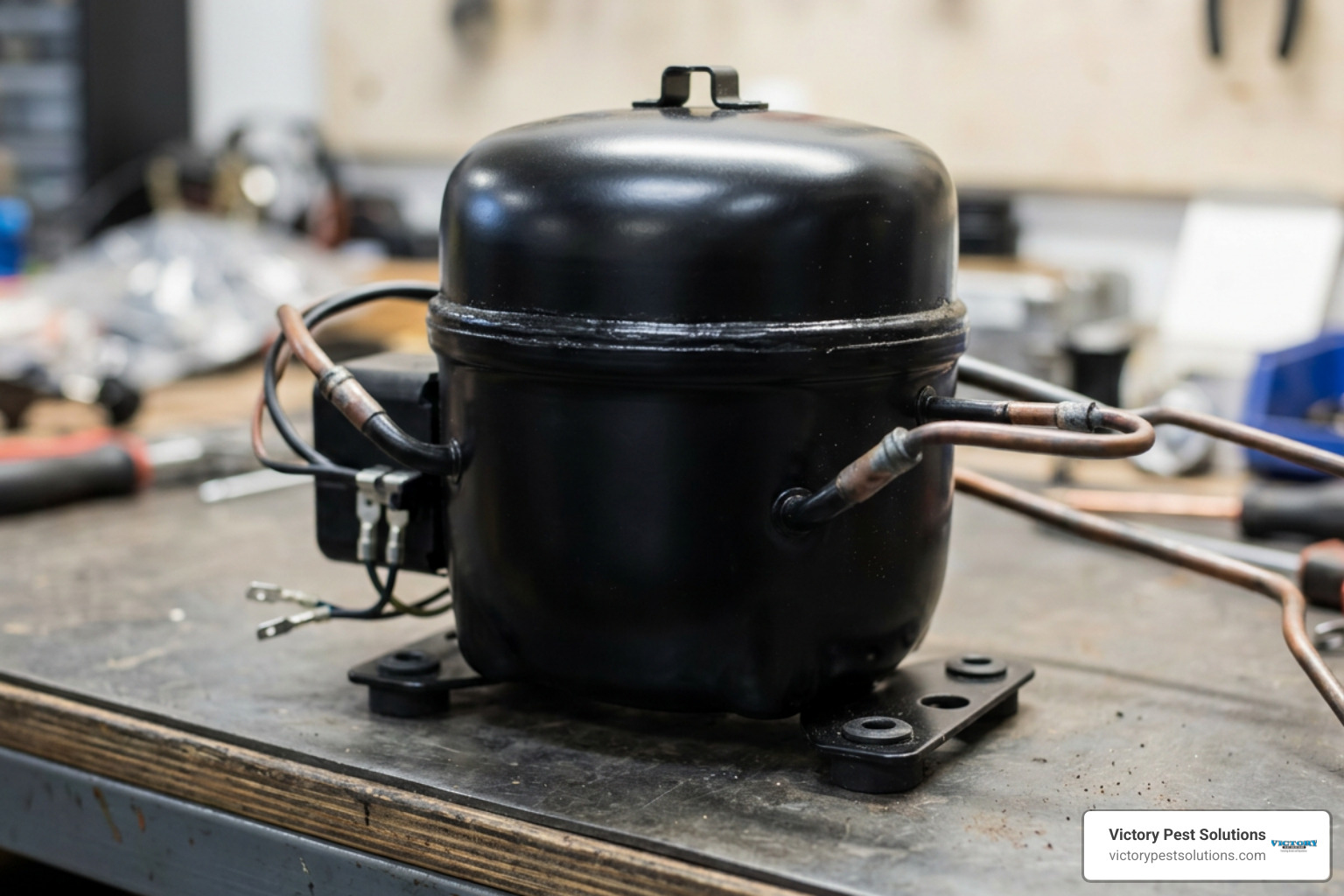
The paradox of cold storage is simple: the very machinery required to keep a walk-in cooler or industrial freezer cold generates massive amounts of heat and moisture on the outside. This creates a series of warm, humid microclimates in an otherwise cold environment.
Cockroaches are driven by thigmotaxis—a biological trait where they prefer to feel solid surfaces touching both their backs and bellies simultaneously. They crave tight, dark, warm, and humid spaces. The mechanical components of refrigeration units provide the ultimate “five-star resort” for these pests. To understand their behavior further, you can read more about the Penn State Extension – German Cockroaches analysis of indoor harborages.
Heat-Generating Compressors and Motors
The compressor and motor assembly of a commercial refrigerator or freezer are prime nesting locations. As these components work constantly to pump heat out of the cold storage compartment, they generate a consistent, warm microclimate that stays well above the 45°F chilling threshold, even in the dead of winter.
Cockroaches cluster in these electrical housings and motor shrouds. Over time, their nesting behavior can cause physical damage to the appliance. Their feces, shed skins, and aggregation secretions can corrode electrical contacts, chew through insulation, and block ventilation grates, leading to electrical shorts and costly mechanical failures. The University of Florida IFAS – German Cockroach Guide details how these pests exploit appliance electronics for harborage.
Moisture, Condensation, and Food Debris
Refrigeration units are naturally high-moisture environments. Condensation lines, defrost cycles, and drip pans provide a constant supply of standing water. Because water is the single most critical resource for a nesting female cockroach, these wet zones are irresistible.
Combine this moisture with food debris—such as spilled liquids, organic grime under the appliance, or grease buildup—and you have a self-sustaining ecosystem. If you want to know what conditions actively repel these pests instead, check out our article on 5 Things Cockroaches Hate to help make your facility less hospitable.
Step-by-Step Cockroach Removal Cold Storage Guide
Managing infestations in commercial food facilities requires a different approach than residential pest control. The table below highlights the differences in risk profiles:
| Feature / Risk | Residential Refrigerator | Commercial Cold Storage |
|---|---|---|
| Primary Species | German Cockroach | German, American, Oriental |
| Infestation Zones | Compressor, rear coils, door gaskets | Compressors, loading docks, insulated wall panels, temperature-shift zones |
| Main Food Source | Household crumbs, spilled milk, grease | Bulk organic spills, pallet debris, stagnant stock |
| Regulatory Risk | None (personal health) | FDA, USDA, local NYC health department violations, warehouse shutdowns |
| Treatment Constraint | Domestic food safety | Strict commercial food safety compliance; zero chemical drift allowed near stored inventory |
When executing cockroach removal in cold storage, you must maintain compliance with regulatory standards. The FDA – Retail Food Protection Guidelines outline strict sanitation and chemical application rules that must be followed in food-handling environments.
Step 1: Disconnect and Deep Clean the Appliance
Before applying any treatments, you must prep the area safely to protect both yourself and the equipment.
- Power Down and Unplug: Always disconnect the power supply to the refrigeration unit to eliminate electrical hazards and prevent damage to the compressor.
- Pull the Unit Out: Carefully slide the appliance away from the wall to expose the hidden floor space, baseboards, and rear mechanical housing.
- Vacuum Thoroughly: Use a HEPA-filter vacuum to capture live roaches, dead bodies, egg cases, and coffee-ground-like droppings from the coils, motor shroud, and floor. Empty the vacuum canister immediately into a sealed bag and dispose of it in an outdoor dumpster.
- Scrub the Gaskets and Drip Pan: Mix a food-safe, fragrance-free sanitizing wash. Scrub the rubber door gaskets (where food crumbs collect) and thoroughly clean and dry the drip pan to remove standing water.
Step 2: Precision Gel Baiting for Cockroach Removal Cold Storage
Never spray liquid insecticides or aerosols directly into the mechanical voids of a refrigerator or freezer. Sprays can cause electrical shorts, contaminate food-contact surfaces, and disperse the pests rather than killing them.
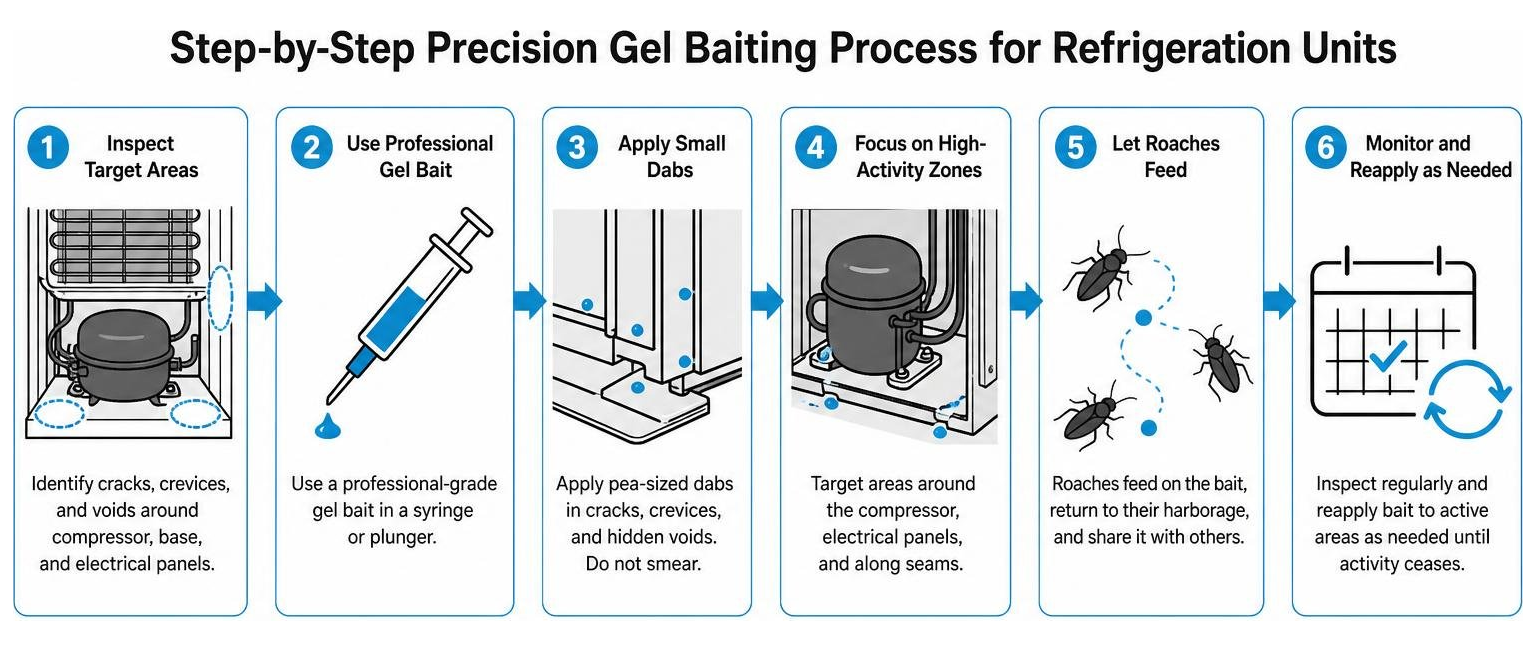
Instead, use professional-grade gel baits. Apply the bait in small, pea-sized dabs directly into the cracks, crevices, and structural voids surrounding the compressor and electrical panels. The cockroaches will feed on the bait, return to their harborage, and die. Because roaches are coprophagic (they eat feces) and necrophagic (they eat their dead), the poison will cascade through the hidden population.
For facilities operating commercial kitchens in Manhattan or Brooklyn, our targeted Cockroach Control Commercial Kitchens NYC services provide the specialized application techniques required to eliminate these populations safely.
Step 3: Structural Exclusion and Sealing
Once the active population is treated, you must block future entry.
- Seal Wall Penetrations: Use silicone caulk or expandable foam paired with copper mesh to seal gaps around utility lines, electrical conduits, and plumbing pipes behind the appliance.
- Install Heavy-Duty Door Sweeps: Walk-in coolers must have tight-fitting, commercial-grade sweeps installed on the doors to prevent pests from crawling inside when the doors are closed.
- Repair Gaskets: Replace any cracked, worn, or warped rubber door gaskets immediately. A compromised gasket not only lets cold air escape (raising your energy bills) but also serves as an easy highway for roaches to enter the cooler’s interior.
Why DIY Bug Bombs Fail in Temperature-Controlled Environments
When business owners spot a cockroach scurrying near their commercial refrigeration units, their first instinct is often to buy a total-release pesticide fogger, commonly known as a “bug bomb.” In a commercial cold storage environment, this is a dangerous mistake.
The Danger of Aerosols in Food Storage
Using DIY bug bombs in or around food-grade cold storage facilities violates federal and local food safety regulations. Aerosol foggers release a fine mist of pesticide droplets that settle indiscriminately on all exposed surfaces.
If this mist drifts into food preparation areas, storage racks, or open inventory, it leaves behind a toxic chemical residue. This can result in immediate product contamination, severe health department violations, and expensive inventory write-offs.
How Foggers Drive Pests Deeper Into Voids
From a pest control perspective, bug bombs are highly ineffective against cockroaches. The active ingredients in these foggers are typically synthetic pyrethroids, which act as strong repellents.
Because the mist cannot penetrate the deep, enclosed mechanical voids where cockroaches actually nest, the chemicals only contact the few roaches out in the open. The remaining population senses the chemical threat and panics. This repellent effect drives the cockroaches deeper into wall voids, insulated panels, and complex electrical housings, scattering the infestation and making it far more difficult to eradicate.
Proactive Prevention: Keeping Roaches Out of Commercial Coolers
Preventing an infestation in a cold storage facility is far easier—and much cheaper—than trying to clean one up after the fact. By establishing strict operational protocols, you can deny pests the food, water, and shelter they need to survive. To build a comprehensive defense, you can review our full suite of Commercial Pest Control protocols.
Implementing FIFO and Sanitation Protocols
Maintaining an organized inventory is your first line of defense.
- First In, First Out (FIFO): Implement a strict FIFO inventory management system. Stagnant stock that sits in dark corners for months provides undisturbed breeding grounds for pests. Regular rotation ensures that inventory is constantly moved and inspected.
- Daily Waste Management: Remove organic waste, trash, and food scraps from the facility daily. Ensure all waste receptacles have tight-fitting lids and are washed down regularly.
- Eliminate Cardboard: Cockroaches love corrugated cardboard. The glue used to bind cardboard boxes is a viable food source, and the corrugated channels provide perfect harborages. Unpack dry goods immediately upon delivery and transfer them to clean, plastic storage bins with lockable lids. Discard all supplier cardboard boxes in outdoor recycling units immediately.
Maintaining Gaskets and Temperature Zones
Your facility’s physical structure must remain secure.
- Inspect Door Seals: Check the seals on walk-in coolers and freezers weekly. If you can slide a piece of paper through the closed door gasket, the seal is not airtight, and cockroaches can easily slide through.
- Manage Temperature-Shift Zones: Pests typically enter cold storage facilities through loading docks and receiving areas where warm air meets cold air. Establish clear temperature zoning and use strip curtains or high-speed doors to minimize the time these entryways remain open.
Professional Cockroach Removal Cold Storage Solutions for NYC Businesses
Commercial cold storage facilities, especially those in the high-density hospitality and hotel sectors of Manhattan and Brooklyn, operate under intense regulatory scrutiny. A single pest sighting during a health inspection can tarnish a brand’s reputation overnight. Our specialized Cockroach Control Services in NYC are designed to keep your business compliant and pest-free.
When to Call an Exterminator for Cockroach Removal Cold Storage
If you have attempted DIY treatments for more than two weeks and are still seeing live roaches, or if you spot cockroaches crawling around during daylight hours (a classic sign of severe overcrowding in hidden nests), it is time to call in the experts.
Professional intervention is also essential if your business is preparing for an upcoming food safety audit or health department inspection. If you are wondering about the limits of retail products, read our analysis on Can Pest Control Get Rid of Roaches to see why professional-grade tools are necessary for commercial spaces.
Integrated Pest Management for Manhattan Hospitality
At Victory Pest Solutions, we utilize Integrated Pest Management (IPM) principles to resolve cold storage infestations.
Rather than relying on blind chemical spraying, our approach focuses on:
- Detailed Inspections: Using high-intensity flashlights and digital monitoring sensors to map out precise nesting zones in temperature-shift areas and compressor housings.
- Low-Temperature Formulations: Applying specialized, non-drifting baits and dusts that maintain their chemical stability and efficacy in high-moisture and low-temperature zones.
- Regulatory Documentation: Providing comprehensive post-service reports that detail our findings, the actions taken, and recommended structural repairs, ensuring your facility is fully prepared for any health department audit.
Frequently Asked Questions About Cold Storage Pest Control
Can cockroaches live inside a deep freezer?
No, active adult cockroaches cannot survive long-term exposure to the sub-zero temperatures inside a deep freezer. However, their egg cases (oothecae) can survive freezing temperatures for up to 7 days. Additionally, cockroaches rarely try to live in the frozen interior; instead, they nest in the warm, humid mechanical voids of the freezer’s motor, compressor, and insulated walls.
Are standard pesticides effective in low temperatures?
No. Many standard liquid pesticides break down, lose their chemical stability, or freeze when applied in low-temperature environments. Effective cold storage pest control requires specialized, low-temperature-resistant gel baits and dry dust formulations applied strictly in non-storage zones to prevent product contamination.
How do cockroaches get into sealed refrigerators?
Cockroaches typically enter refrigerators through worn, cracked, or warped door gaskets that fail to create an airtight seal. They can also crawl along utility lines, electrical conduits, and drain pipes that enter the appliance. In many commercial settings, they hitchhike directly into the kitchen inside corrugated cardboard delivery boxes from suppliers.
Secure Your Cold Chain with Expert Pest Protection
A cockroach infestation in your cold storage units is a direct threat to your inventory, your regulatory compliance, and your business’s reputation. Don’t let a small mechanical nest turn into a major health department violation.
At Victory Pest Solutions, we provide commercial pest control services for businesses in food, hospitality, healthcare, and other industries across New York City, including Manhattan, Brooklyn, Queens, the Bronx, Staten Island, and Nassau County. Our unique approach includes 24/7 support, proactive prevention programs, and preferred vendor status with major regional healthcare and hospitality networks.
Protect your facility today. Explore our Commercial Cockroach Control Services and schedule a comprehensive professional inspection with our expert team.