
Commercial Pest Control Guide for Middletown Property Managers
Why Pest Control Is a Make-or-Break Issue for Middletown Property Managers
Middletown property management pest management is one of the most critical — and most overlooked — responsibilities facing commercial property managers and landlords in the Hudson Valley region. A single pest complaint can spiral fast: one roach sighting or rodent report spreads between units, triggers housing inspector calls, and puts your occupancy rates at risk.
Quick answer: What does effective Middletown property management pest control involve?
- Property-wide inspection — identifying pest activity in units, common areas, basements, utility rooms, and exterior entry points
- Targeted treatments — unit-specific and common area applications using low-impact, EPA-registered products
- Exterior barrier maintenance — sealing entry points around utility chases, dumpsters, and drainage routes
- Routine scheduling — monthly or bi-monthly visits tailored to your property’s size and pest pressure
- Compliance documentation — detailed service logs and treatment records for housing inspections and regulatory audits
Pest problems can directly affect tenant satisfaction, property conditions and day-to-day building operations. Multi-unit properties can be especially challenging because pests may move between apartments and common areas through shared walls, utility openings and other building pathways. A proactive pest management program helps property managers identify activity early and address conditions that allow infestations to spread.
I’m Len Oppenberg, founder of Victory Pest Solutions, and I’ve spent over two decades in commercial pest control — including specialized work in multi-unit housing and high-stakes facilities — giving me a front-row seat to exactly how Middletown property management pest management challenges play out in real buildings. In the sections below, I’ll walk you through everything you need to know to protect your property, your tenants, and your reputation.
The Unique Challenges of Middletown Property Management Pest Management

Managing pest control in multi-family and commercial properties in Middletown, NY, comes with unique structural and environmental hurdles. Unlike single-family homes, commercial buildings and apartment complexes are highly integrated ecosystems.
Multi-Unit Vulnerability and Shared Walls
In a multi-unit property, pests do not respect lease boundaries. Shared walls, utility chases, laundry chutes, and centralized HVAC ductwork act as superhighways for insects and rodents. If a tenant in Unit 3B has a cockroach issue, it is only a matter of time before those pests migrate to Units 3A, 3C, and 4B.
This interconnectedness means that treating a single unit in isolation is rarely effective. It simply drives the pests into adjacent spaces. Successful Property Management Pest Control requires a coordinated, building-wide strategy that targets pests at their source and blocks their travel routes.
Tenant Turnover and Sanitation Variances
Property managers must deal with a diverse group of tenants, each with different standards of cleanliness. While one tenant may keep a spotless kitchen, their neighbor might leave food waste exposed or delay taking out the trash. High tenant turnover rates also introduce risk, as new residents can unknowingly bring bed bugs, cockroaches, or stored product pests with them in moving boxes and furniture.
The Middletown, NY Climate and Seasonal Pressures
The Hudson Valley experiences dramatic seasonal shifts that dictate pest behavior throughout the year:
- Spring and Summer: Rising temperatures bring a surge in ant activity, stinging insects, and mosquitoes.
- Fall: As temperatures drop, rodents actively seek warm shelter and reliable food sources, targeting building foundations and utility entry points.
- Winter: Pests that have successfully breached the exterior barrier nest deep within walls, basements, and boiler rooms, remaining active indoors while freezing weather reigns outside.
Regulatory Compliance and Habitability
New York residential leases include an implied warranty of habitability requiring landlords to maintain premises that are fit for human habitation and free from conditions that are dangerous, hazardous or detrimental to occupants’ health or safety. Pest and vermin conditions can be relevant to habitability issues, making prompt documentation and response important for property managers.
Common Pest Threats in Middletown Commercial and Residential Properties
To build an effective defense, you must first understand the specific threats facing your Middletown properties. Different pests pose different risks to your building’s structural integrity, tenant health, and overall reputation.
| Pest Type | Primary Risks | Common Harborages | Key Prevention Strategy |
|---|---|---|---|
| Rodents (Mice & Rats) | Structural damage, chewed wiring (fire hazard), disease transmission, tenant panic | Basements, crawl spaces, utility closets, dumpster areas | Structural exclusion, sealing foundation gaps, secure trash management |
| Cockroaches | Asthma triggers, allergen accumulation, food contamination, rapid breeding | Kitchens, bathrooms, boiler rooms, shared laundry areas | Crack and crevice baiting, moisture control, tenant education |
| Bed Bugs | Severe tenant complaints, legal liability, rapid spread between units, reputational damage | Mattresses, box springs, baseboards, electrical outlets | Early detection, building-wide monitoring, rapid heat or chemical treatments |
| Ants (including Carpenter Ants) | Structural wood damage, cosmetic nuisances, food contamination | Wall voids, damp wood, window sills, kitchen pantries | Exterior barrier sprays, moisture reduction, targeted baiting |
Rodent Control and Middletown Property Management Pest Management
Rodents are a constant threat to multi-family housing and commercial properties in Middletown. Mice and rats can squeeze through incredibly small openings—a mouse needs a gap no larger than a dime, while a rat can fit through a hole the size of a quarter.
Once inside, they quickly target utility lines and pipe chases to travel between floors. Because their teeth grow continuously, rodents must gnaw constantly to keep them filed down. This can lead to damaged drywall, insulation and electrical wiring, creating additional maintenance and potential safety concerns.
To help keep rodents out, property managers should include structural exclusion as part of their pest management plan. This may involve identifying and sealing gaps around foundations, doors, utility penetrations, pipe openings and other potential entry points with materials appropriate for the structure.
Preventing Insect Infestations with Middletown Property Management Pest Management
Insects like German cockroaches, bed bugs, and pavement ants thrive in environments with dense human populations. Shared kitchens, communal laundry spaces, and trash collection rooms provide the perfect mix of moisture, warmth, and food.
- Cockroaches: German cockroaches are notorious for reproducing rapidly. They hide in dark, narrow crevices behind appliances and inside cabinets during the day, emerging at night to forage. Their droppings and shed skins contain potent allergens that can trigger severe asthma attacks, particularly in children.
- Bed Bugs: These hitchhiking pests are a property manager’s nightmare. They are easily introduced via used furniture, luggage, or shared laundry facilities. Because bed bugs can survive for months without a blood meal, they can easily linger in vacant apartments, waiting for the next tenant to move in.
- Ants: While some ants are merely a nuisance, species like carpenter ants can nest inside structural wooden beams, causing long-term damage that compromises the building’s stability.
Educating tenants on proper sanitation, encouraging them to report sightings immediately without fear of retaliation, and establishing clear protocols for trash disposal are essential steps in keeping these insect populations under control.
The Step-by-Step Commercial Pest Inspection and Treatment Process
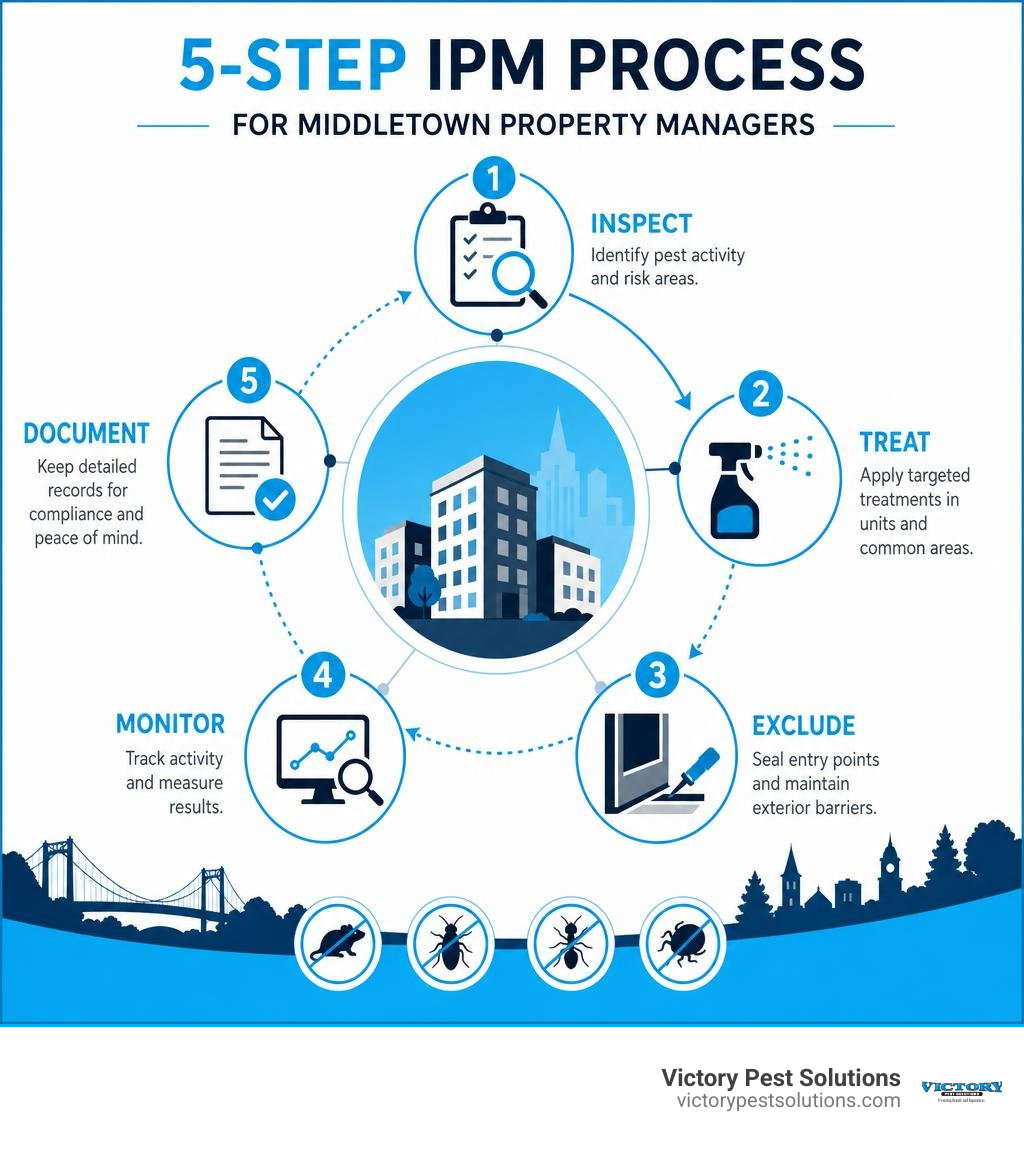
At Victory Pest Solutions, effective pest control follows an Integrated Pest Management (IPM) approach that combines inspection, monitoring, prevention, exclusion and targeted treatment. Here is the step-by-step process we use to manage pest activity in Middletown properties:
Step 1: Property-Wide Inspection and Mapping
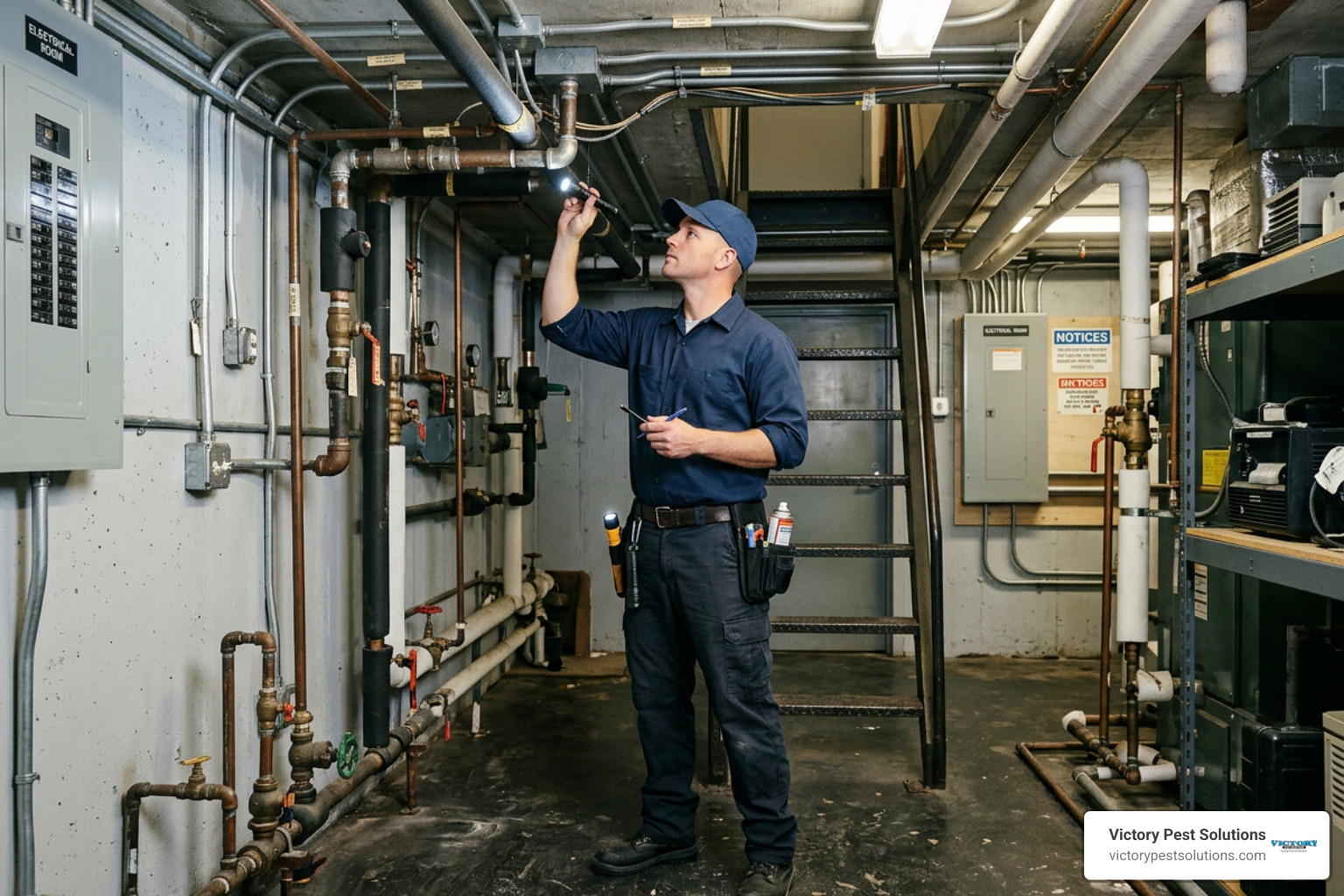
Our certified technicians begin with a comprehensive walkthrough of the entire property. We don’t just look at the living spaces; we inspect the high-risk, low-traffic areas where pests love to hide, including:
- Basements, crawl spaces, and boiler rooms
- Utility chases and electrical closets
- Shared laundry rooms and trash chutes
- Storage units and vacant apartments
- Exterior foundations, dumpster pads, and landscaping beds
We document our findings, mapping out active infestations, potential harborage sites, and structural vulnerabilities. Understanding the value of proactive care is key, which is why we emphasize The Importance of Regular Commercial Pest Inspections to catch problems before they scale.
Step 2: Targeted Interior Treatments
Once we identify the pests and their nesting sites, we apply targeted treatments. Rather than using broad chemical sprays that can disrupt tenants and leave strong odors, we focus on highly targeted baiting systems, dusts, and crack-and-crevice applications. Targeted applications allow pest control products to be placed in appropriate treatment areas based on the pest, building conditions and product label requirements.
>
Step 3: Structural Exclusion and Exterior Barriers
The most effective way to manage pests is to keep them from getting inside in the first place. We apply a water-based, low-odor perimeter barrier around the exterior foundation to intercept crawling insects. Simultaneously, we identify and seal structural gaps around doors, windows, utility lines, and foundations.
Step 4: Ongoing Monitoring and Maintenance
Pest pressures change with the seasons. We install discreet monitoring stations in strategic locations throughout the building to track pest activity between scheduled visits. This allows us to spot early warning signs of an infestation and adjust our treatment plan proactively.
Step 5: Digital Reporting and Compliance Documentation
After every visit, we provide property managers with detailed, audit-ready digital reports. These logs include:
- Detailed records of observed pest activity
- Exact descriptions of treatments applied and products used
- Clear photos of structural or sanitation issues that need attention (e.g., a broken door sweep or a leaking pipe)
- Recommendations for preventative maintenance
This documentation is invaluable for demonstrating regulatory compliance to health departments and housing inspectors.
Frequently Asked Questions about Middletown Property Management Pest Control
How often should property managers schedule pest control services?
For most multi-family and commercial properties in Middletown, we recommend monthly or bi-monthly preventative services. Properties with high tenant turnover, older structural designs, or nearby construction may require more frequent, customized visits. Regular scheduling allows us to maintain a consistent protective barrier and catch pest activity before it turns into a building-wide crisis.
What are the benefits of professional pest control versus DIY solutions?
While off-the-shelf baits and sprays might seem like a cost-effective quick fix, they rarely solve the root cause of an infestation.
- Professional Exclusion: DIY methods do not address how pests are entering the building. Professionals can identify potential entry points and use appropriate exclusion materials to help prevent rodents and other pests from entering the building.
- Targeted Products: Professional pest management allows technicians to select treatment methods based on the pest species, infestation level and building conditions rather than relying on a general-purpose retail product.
- Safety and Compliance: Certified technicians are trained to apply EPA-registered products safely, minimizing chemical exposure for your tenants and protecting you from liability.
How do professional services ensure minimal disruption to tenants?
Our team selects treatment methods based on the pest, property conditions and product label requirements while working to minimize disruption to tenants and normal building operations. We offer flexible, discreet scheduling options to perform treatments quietly, ensuring your residents are not alarmed and your daily operations are never disrupted.
Partnering with a Local Expert for Long-Term Protection
Managing a property is a demanding, 24/7 job. You shouldn’t have to spend your valuable time chasing down pest complaints or worrying about housing code violations.
Victory Pest Solutions is your trusted partner for professional Middletown NY Pest Control Extermination. We specialize in commercial pest management, offering:
- 24/7 Support: We are always available when an emergency arises, ensuring rapid response times to protect your property and reputation.
- Proactive Prevention Programs: Our custom Integrated Pest Management (IPM) plans are designed to stop pest issues before they start, saving you money and protecting your tenant relationships.
- Deep Local Expertise: We understand the unique pest pressures, structural designs, and local regulatory requirements of the Middletown and Hudson Valley area.
- Discreet and Professional Technicians: Our team is trained to work seamlessly alongside your maintenance staff, communicating clearly and treating your tenants with the utmost respect.
Don’t wait for a small pest issue to turn into an expensive, reputation-damaging crisis. Contact us today to schedule your comprehensive property walkthrough and take the first step toward worry-free, long-term pest management.