
How to Find a Commercial Rat Exterminator in NYC
What Should You Look for in a Commercial Rat Exterminator?
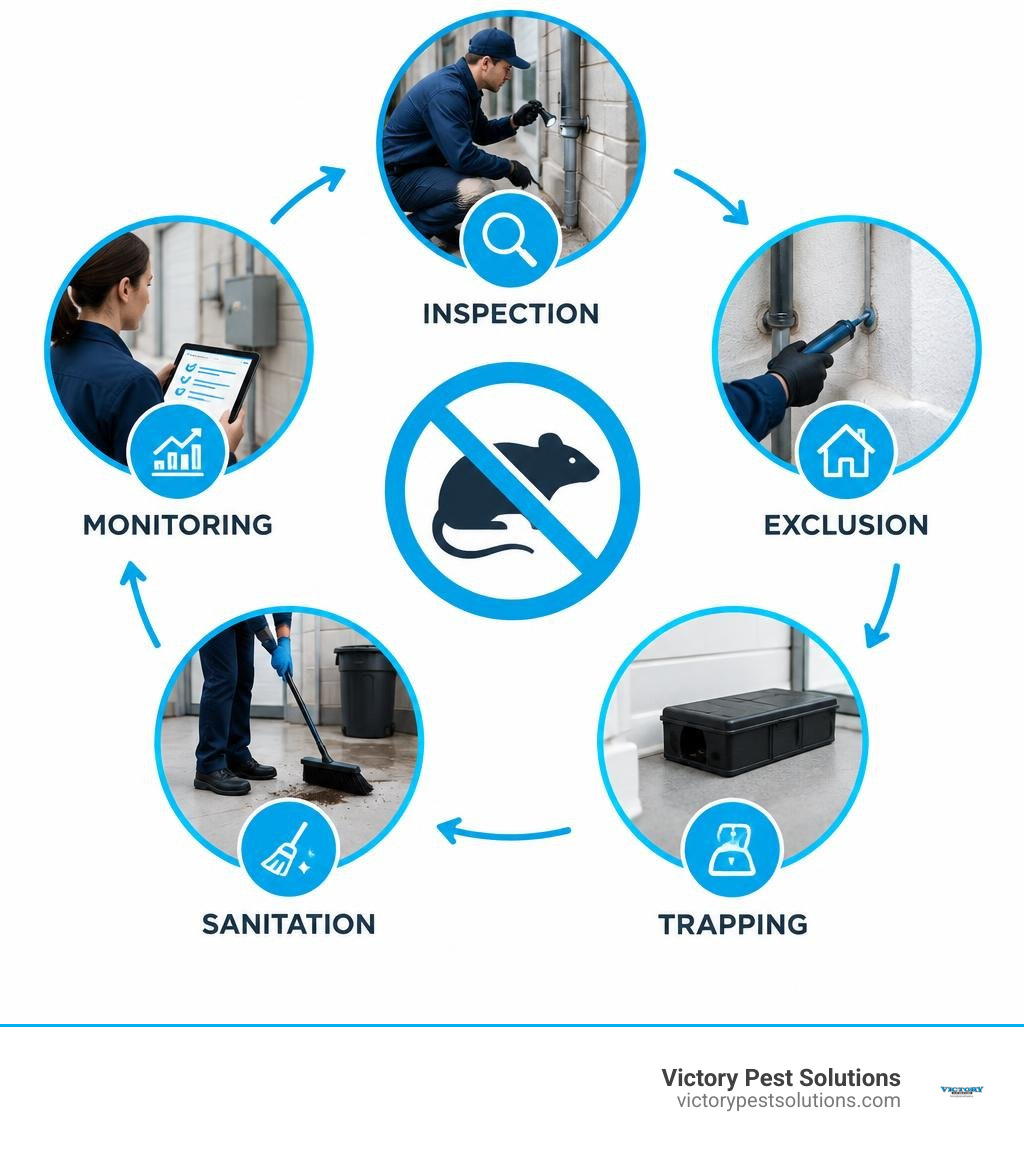
For lasting results, choose a commercial rat exterminator who does more than place traps or bait. A qualified provider should inspect the property, identify conditions contributing to rodent activity, locate potential entry points, develop a targeted treatment plan and provide follow-up monitoring when needed.
For hotels, restaurants, healthcare facilities, commercial kitchens, apartment buildings and other businesses in New York City, rat control should also address sanitation, building conditions, daily operations and the potential for recurring rodent pressure.
The NYC Department of Health recommends that pest management professionals inspect a property before developing a treatment plan and continue service as needed until rat activity is controlled. Property managers and business owners can review NYC Health’s rat-control guidance for pest management professionals.
>
I am Len Oppenberg, and I founded Victory Pest Solutions in 2007 after beginning my pest-control career serving healthcare facilities. My experience with rat exterminator services is grounded in the urgent, practical work of protecting commercial properties from pests that can disrupt business.
Victory Pest Solutions provides commercial rat control in NYC built around inspection, targeted treatment, exclusion and ongoing prevention based on the conditions found at each property.
Why Commercial Rat Control Requires More Than Treating the Active Infestation
When people discover signs of rodents scuttling behind drywall or beneath storage racks, their first instinct is often to call a general insect exterminator. While general pest technicians excel at spraying baseboards for ants or treating crevices for roaches, rodent management demands an entirely different discipline.
Rats are intelligent, neophobic mammals. Unlike insects that wander blindly into chemical residual barriers, rats actively avoid new objects in their territory, learn trap patterns, and navigate complex building architecture with calculated precision. Treating a mammalian infestation requires deep knowledge of behavioral biology, structural physics, and mechanical engineering.
A true rodent specialist uses specialized trapping equipment, mechanical exclusion materials, and airflow mapping rather than relying on generic chemical sprays. General pest control often leans on scattering loose bait blocks inside a building, which frequently results in dead rodents decaying inside unreachable wall cavities. A dedicated specialist focuses on permanent physical removal and structural defense.
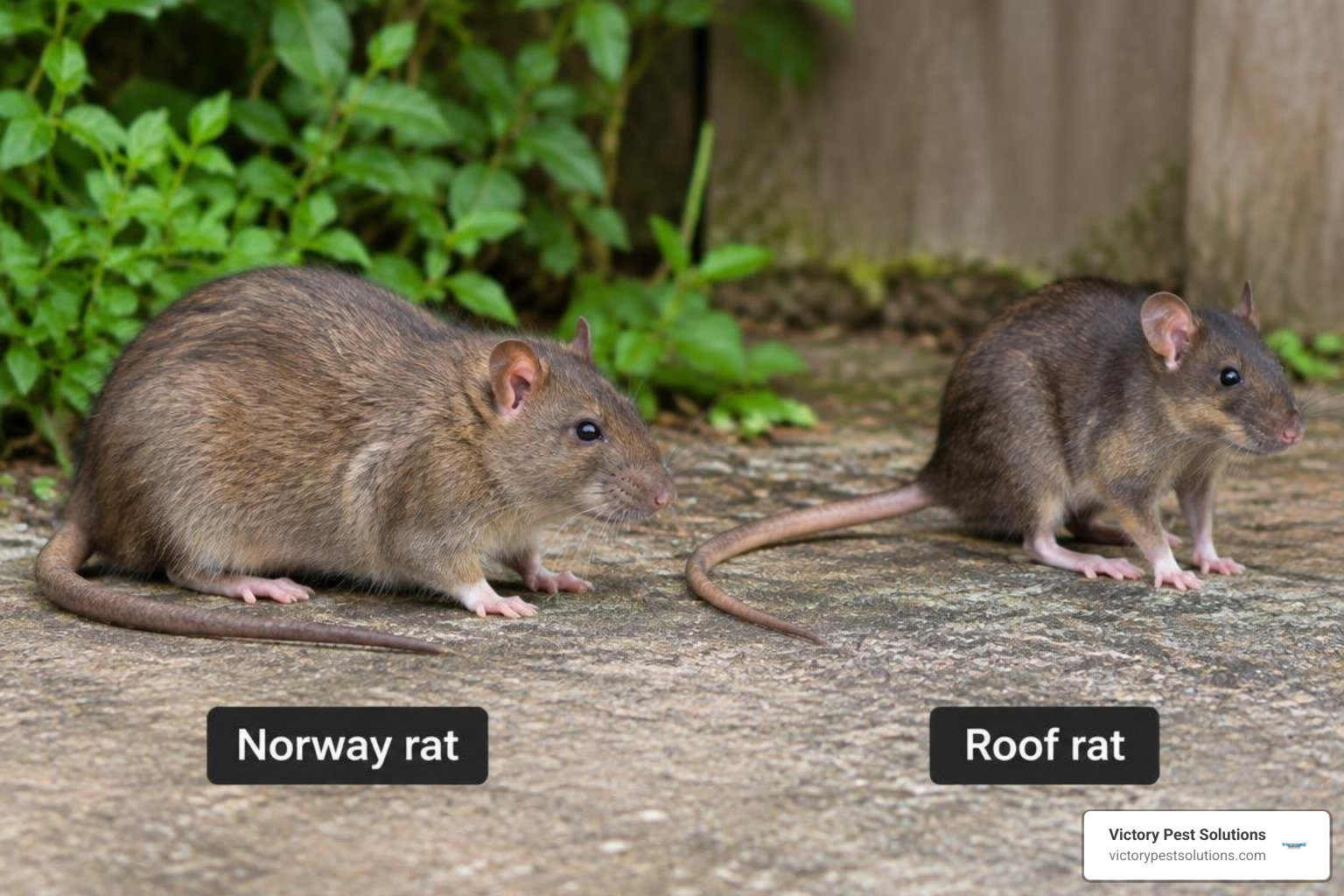
| Characteristic | Norway Rat (Rattus norvegicus) | Roof Rat (Rattus rattus) |
|---|---|---|
| Primary Habitat | Basements, ground floors, burrows, sewer mains | Attics, drop ceilings, rafters, upper floor voids |
| Physical Build | Heavy, stocky body; blunt muzzle; short tail | Slender body; pointed nose; tail longer than body |
| Climbing Ability | Moderate climber; prefers ground-level transit | Exceptional agility; travels along overhead wires |
| Dietary Preference | Proteins, grains, meat, garbage, dense grease | Fruits, nuts, seeds, fresh produce, electrical insulation |
| Entry Points | Foundation cracks, floor drains, broken sewer ties | Roof vents, soffit returns, fascia gaps, utility risers |
| Nesting Sites | Sub-slab burrows, crawlspaces, pallet bases | Pipe insulation, suspended ceilings, attic rafters |
How a Licensed Rat Exterminator Identifies Hidden Structural Vulnerabilities
Rats can enter commercial buildings through surprisingly small structural openings, including gaps around utility penetrations, plumbing lines, doors, vents and damaged exterior areas. The CDC recommends inspecting buildings for potential rodent entry points and sealing openings around utilities, doors, foundations, vents and other vulnerable areas.
Rats possess strong swimming abilities and frequently use municipal sewer infrastructure to enter buildings directly through compromised floor drains, unsealed pipe sleeves, or dry P-traps. As they travel the same pathways night after night, their oily coats leave dark, greasy rub marks along baseboards, joists, and pipe chases.
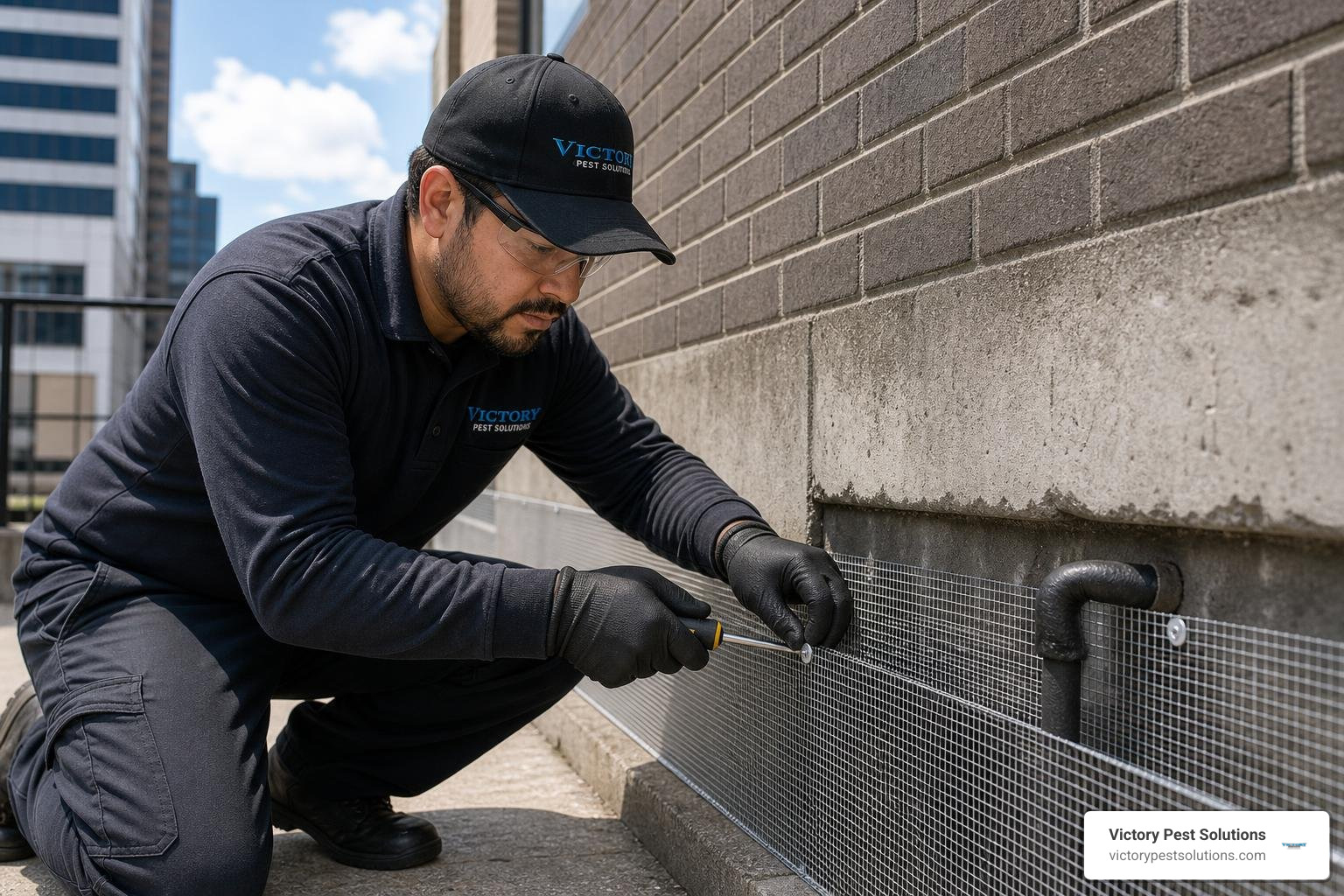
Our technicians trace these rub marks, along with distinct gnaw marks on structural timber, concrete, and wiring, to map the exact perimeter breaches. Sealing these vulnerabilities demands specialized knowledge of NYC commercial rodent proofing and exclusion methods, utilizing high-grade non-corrosive metals and architectural sealants that rodents cannot chew through.
Understanding Norway Rats vs. Roof Rats in Commercial Environments
In commercial facilities, identifying whether you are dealing with Norway rats or roof rats dictates the entire containment strategy.
- Norway Rats: These ground-dwellers dominate subterranean vaults, loading docks, and basement storage spaces. In commercial kitchens, they establish harborages underneath heavy cooking suites and inside hollow equipment legs, targeting grease traps and waste disposal zones.
- Roof Rats: These agile climbers target upper levels, nesting in drop ceilings, attic insulation, and elevator shafts. They access properties by running across overhead power lines, tree limbs, or exterior plumbing conduits.
Correctly identifying the type of rat and where activity is occurring helps determine where inspection, trapping and exclusion efforts should be concentrated. Victory Pest Solutions uses evidence found throughout the property to identify active areas and develop a targeted commercial rat control strategy based on the building, infestation and areas of rodent movement.
Comprehensive Rodent Eradication: Inspection, Exclusion, and Sanitation
Effective commercial rat control begins with a thorough inspection and a treatment plan based on the property, severity of the infestation and areas of active rodent movement. Depending on the conditions found, a professional program may incorporate structural exclusion, mechanical trapping, sanitation recommendations and continued monitoring to control current activity and reduce the risk of reinfestation.
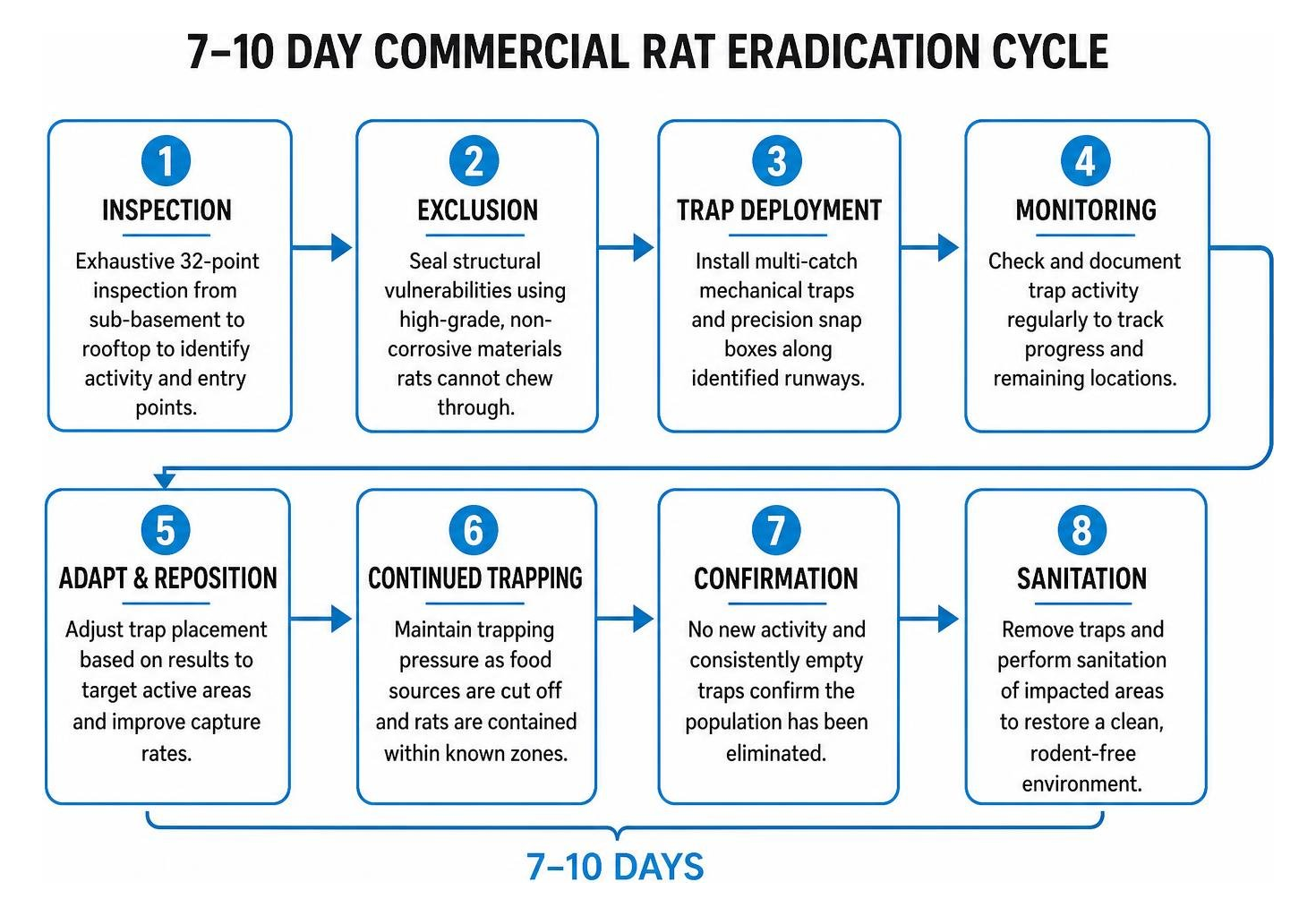
Once identified entry points have been addressed, technicians can concentrate trapping and monitoring in areas where rodent activity has been documented. The time needed to control an infestation depends on the size and complexity of the property, severity of activity, number of entry points and conditions contributing to the infestation. Commercial properties may require multiple service visits to remove rodents, adjust control measures and verify that new activity has stopped.
What to Expect During an On-Site Assessment from a Local Rat Exterminator
When our licensed professionals evaluate a property, we perform an exhaustive 32-point inspection covering every square foot from the sub-basement to the rooftop mechanical room. Homeowners and facility directors can expect the following during an on-site assessment:
- Attic and Ceiling Void Evaluation: Checking for compressed insulation runways, nesting clusters, gnawed wiring, and parasite presence.
- Crawlspace and Sub-Slab Inspection: Identifying active burrows, soil disruption, sewer tie-in leaks, and foundation fractures.
- Runway and Harborage Mapping: Using specialized UV tracking and physical sign identification to document rub marks, fresh droppings, and feeding caches.
- Utility and Plumbing Cataloging: Inspecting pipe sleeves, conduit penetrations, floor drains, HVAC ductwork, and roof vents for structural gaps.
- Custom Management Roadmap: Delivering a blueprint detailing exact structural exclusion points, internal mechanical trapping arrays, and immediate sanitation requirements.
Long-Term Prevention, Natural Deterrents, and Exterior Protection Plans
Once an active population is eliminated, ongoing exterior defense ensures that outside rodent pressures do not create new breaches. Outdoor populations are naturally attracted to dumpsters, grease collection vessels, and architectural warmth.
Many property managers ask whether natural rat deterrents such as peppermint oil or strong scents can replace professional treatment. These approaches should not be relied upon as a stand-alone solution for an active commercial infestation because they do not eliminate rodents or prevent them from entering through structural openings. Long-term commercial rat control requires addressing entry points, food sources, sanitation conditions and areas where rodents are nesting or traveling.
Sustainable protection requires an engineered exterior defense plan. Installing tamper-resistant perimeter stations and reinforcing high-risk building envelopes with steel mesh creates an impassable barrier. Establishing structured commercial rodent control for Manhattan properties keeps high-density urban facilities fully protected against constant street-level rodent surges.
Health Hazards, Parasite Risks, and Property Damage Caused by Rats
Rats can contaminate food and surfaces and create health and sanitation concerns in commercial properties. For restaurants, hotels, healthcare facilities and other commercial environments, signs of rat activity should be addressed promptly along with the conditions allowing rodents to enter and remain on the property.
Rats can also cause significant property damage through persistent gnawing. Electrical wiring, insulation, wood, stored materials and other building components may be damaged during an infestation. In commercial properties, rodent damage can create additional maintenance, sanitation and operational concerns. Addressing structural damage caused by rodents early can help prevent a manageable infestation from developing into a larger property problem.
Attic Cleanup, Decontamination, and Parasite Eradication
Removing rats may not address contamination left behind in nesting and activity areas. Droppings, urine, nesting material and other contaminated debris may require careful cleanup after the infestation has been controlled.
The CDC recommends specific precautions when cleaning areas contaminated by rodents, including avoiding sweeping or vacuuming rodent urine, droppings or nesting material before proper disinfection. Commercial properties with extensive contamination may require additional protective measures and specialized cleanup procedures.
Professional attic and crawlspace remediation requires:
- HEPA-Filtered Waste Extraction: Safely removing feces, contaminated nesting debris, and soiled insulation without aerosolizing dangerous pathogen-laden dust.
- Biocidal Sanitization: Applying EPA-registered virucides and disinfectants across all exposed structural timbers.
- Targeted Acaricide and Insecticide Treatments: Eliminating residual mite and flea populations before they migrate into occupied rooms.
- Thermal and Insulation Restoration: Replacing damaged materials with fresh, pest-resistant insulation to restore building efficiency.
Frequently Asked Questions About Rodent Control
How long does it take to completely get rid of rats in a building?
The time needed to eliminate rats from a commercial building depends on the severity of the infestation, size and complexity of the property, number of entry points and conditions contributing to rodent activity. Some properties may require multiple treatment and monitoring visits before technicians can confirm that activity has stopped. A commercial rat exterminator can provide a more accurate treatment plan after inspecting the property.
Are chemical poisons safe to use for indoor rat infestations?
We do not recommend or deploy loose chemical rodenticides inside interior occupied spaces. When a rat consumes anticoagulant bait indoors, it rarely exits before dying; instead, it retreats into inaccessible floor voids, wall cavities, or ceiling channels. The carcass decays over several weeks, producing severe odors, secondary fly infestations, and biohazard conditions. Mechanical trapping combined with structural exclusion remains the safest, most reliable approach.
Why do rat mites and fleas become worse after rats are removed?
Rats can carry fleas, mites and other parasites that may remain in nesting or activity areas after rodents are removed. Proper rodent management should therefore consider contaminated nesting material and sanitation needs in addition to eliminating the active infestation. The extent of cleanup or additional treatment depends on the conditions found at the property.
Securing Long-Term Rodent Protection for NYC Hospitality and Commercial Properties
In the hospitality, dining, and healthcare sectors across New York City, a single rodent sighting can compromise customer trust, trigger severe health department inspection failures, and result in costly operational closures. Hospitality properties, high-density residential towers, and commercial kitchens face continuous rodent pressure due to high waste output, subterranean transit tunnels, and dense structural layouts.
Victory Pest Solutions provides 24/7 commercial emergency support, non-invasive treatment methods, and proactive prevention programs designed to keep high-traffic facilities fully compliant with all municipal health codes. Implementing specialized hotel rodent prevention programs ensures brand integrity, guest comfort, and structural protection year-round.
Do not let rodents disrupt your operations, damage critical infrastructure, or put your building’s health at risk. Secure your facility today by scheduling an on-site evaluation with our dedicated NYC rodent control and rat exterminators.