
The Complete Guide to Hotel Pest Control & HVAC Solutions
How to Keep Pests Out of Hotel HVAC Systems
Check outdoor air intakes, guest-room HVAC units, vents, and condensate pans for droppings, nests, gnaw marks, leaks, and unusual odors. Seal gaps around pipes and ducts, add suitable screens to outdoor openings without blocking airflow, remove debris and standing water, and inspect filters monthly. If you find an active infestation, call a licensed pest professional rather than spraying into ductwork.
Make these checks part of the hotel’s regular HVAC and pest inspections. That way, a damaged screen or leaking drain gets attention before pests become a recurring guest complaint.
I’m Len Oppenberg, founder of Victory Pest Solutions, and I’ve worked in pest control since 2000, including urgent pest issues in health care facilities. That experience shapes my approach to hotel HVAC pest control: find the entry points, fix the conditions that attract pests, and keep monitoring.
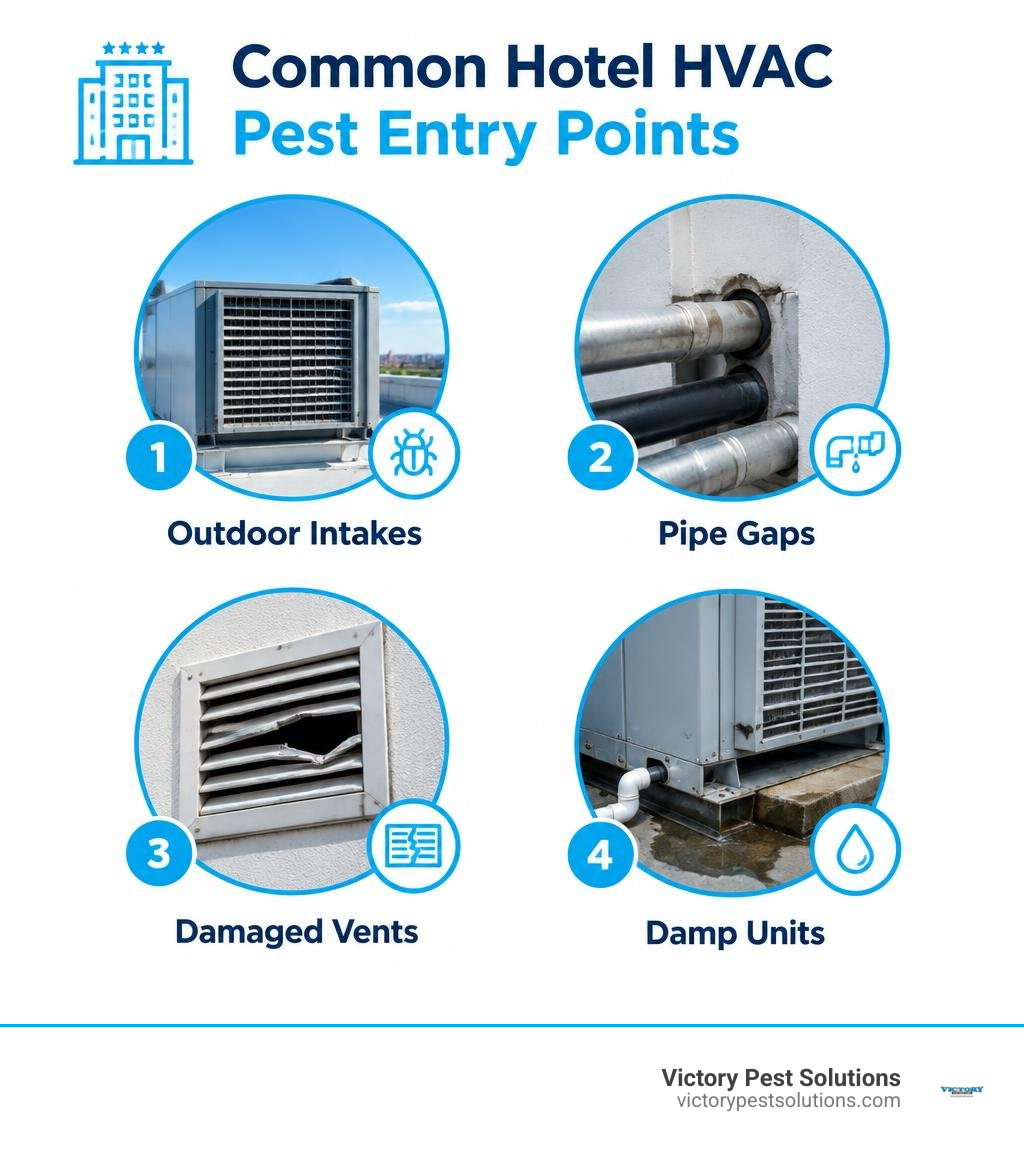
Why HVAC Systems Are Prime Targets for Hotel Pests
Heating, ventilation, and air conditioning networks are the lungs of any hospitality property. Unfortunately, the exact conditions that make air distribution work—constant airflow, regulated thermal gradients, humidity, and extensive hidden void spaces—also make ductwork an ideal superhighway for pests. In dense urban hospitality environments, from high-rise towers in Manhattan to boutique hotels across Queens and Brooklyn, HVAC architecture connects individual rooms, commercial kitchens, laundry facilities, and basements into one continuous, sheltered network.
Pests seek food, water, and shelter. An HVAC system provides all three in abundance:
- Thermal Dynamics: Rooftop units (RTUs), packaged terminal air conditioners (PTACs), and variable refrigerant flow (VRF) systems emit warmth in winter and cool condensation in summer, creating stable microclimates.
- Air Currents: Insects and rodents pick up scent trails carried along return plenums, guiding them straight toward guest-room food waste or kitchen prep zones.
- Moisture Accumulation: Cooling coils generate continuous condensation. If drainage lines clog or pans slope improperly, standing water creates a continuous hydration source.
- Dark, Undisturbed Voids: Wall chases, false ceilings, and interior duct pathways offer dark protection where pests can nest and breed without direct human disturbance.
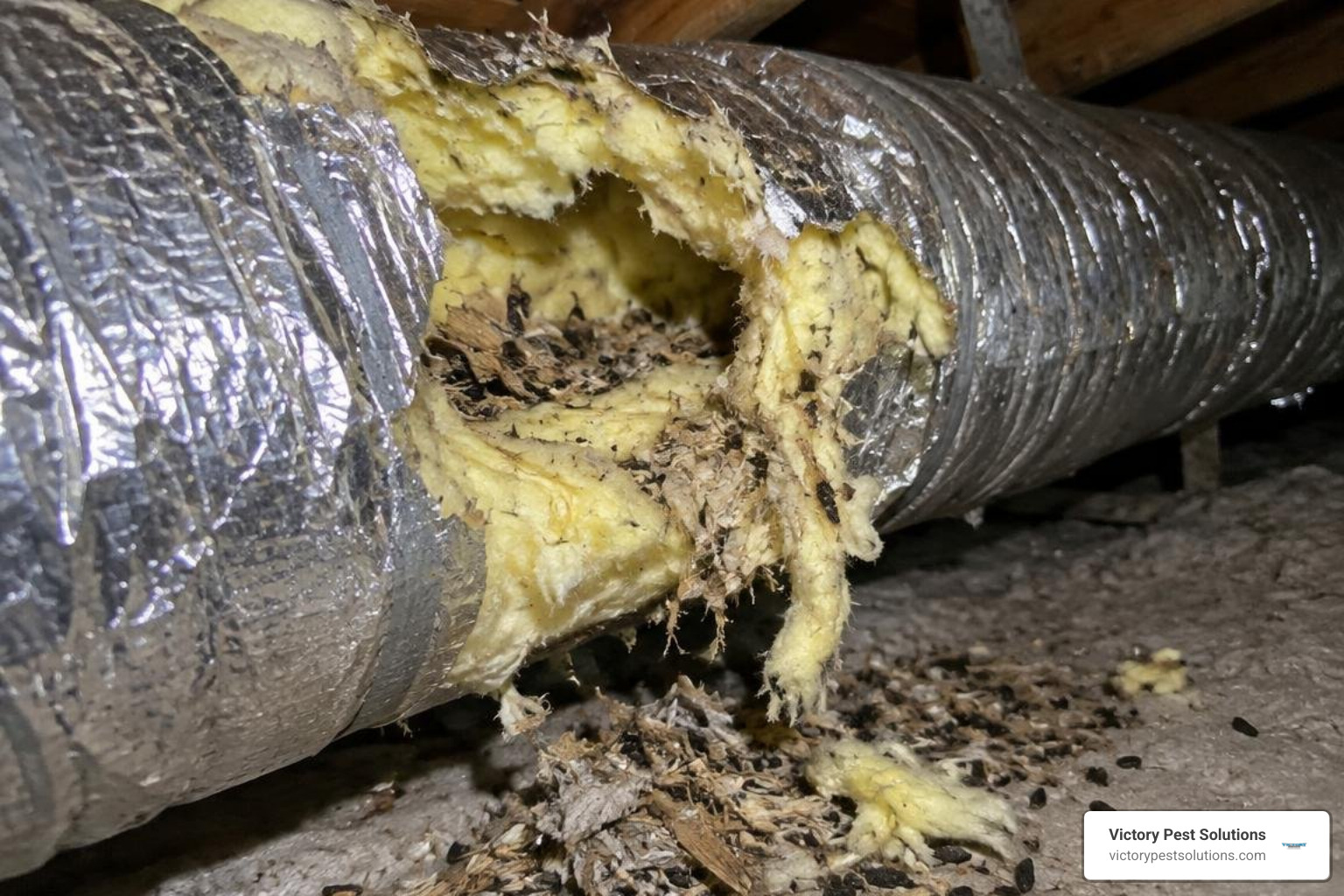
When rodents exploit exterior wall penetrations, establishing a comprehensive hotel rodent prevention program becomes necessary to prevent structural chewing on duct insulation and wiring. Similarly, spotting early signs of bed bugs in hotel rooms prevents these hitchhiking parasites from using wall chases behind PTAC units to spread between adjoining suites.
Left unaddressed, pest activity inside ductwork leads to severe guest dissatisfaction. Odors travel across entire floors, nesting materials block airflow, and pests emerge directly into guest quarters. Understanding how hotel reviews can be damaged by pest problems shows that a single video of a rodent near an air register can ruin a hotel’s reputation online, drive down RevPAR, and lead to costly room refunds.
Warning Signs of Infestation in Hotel Ductwork and PTAC Units
Hotel maintenance and housekeeping teams can catch infestations early by identifying specific physical and mechanical indicators:
- Unusual Musty or Oily Odors: German cockroaches emit an oily, pungent scent, while rodents leave behind a distinct, ammonia-like urine smell that intensifies whenever the fan blower kicks on.
- Droppings Accumulation: Finding pellet-like rodent droppings or dark, pepper-like roach specks inside return air grilles, under PTAC covers, or on filter media.
- Gnaw Marks and Shredded Insulation: Rodents constantly gnaw on fiberglass duct wrap, plastic drain pans, and electrical conduit, often using fiberglass batting to build nests inside plenum boxes.
- Scratching or Scurrying Noises: Sounds of movement inside ceiling plenums, drywall chases, or mechanical shafts, particularly at night during peak nocturnal pest activity.
- Restricted Airflow and Blower Drag: Nests, carcasses, or accumulated insect debris blocking duct dampers or blower fans, causing uneven room temperatures and increased utility bills.
- Mechanical Room Debris: Accumulations of shed insect skins, rodent hair, or nesting material on the floors surrounding indoor air handling units (AHUs).
Moisture Traps, Condensate Pans, and Pest Attraction
Air conditioning units pull substantial moisture out of humid air. In high-occupancy hotels, a single PTAC or fan coil unit can generate gallons of water daily during peak summer months. When condensate drain pans fail to drain completely, standing water forms a prime breeding zone for insects.
Standing water attracts American and Oriental cockroaches, drain flies, phorid flies, and silverfish. Over time, stagnant condensate creates an organic biofilm—a slimy mix of algae, fungi, and bacteria—that serves as a direct food source for pests. Excess moisture also spreads into nearby wall cavities and drywall, causing fungal rot and high indoor humidity that allows pests to thrive. For properties dealing with high pest pressure, targeted hotel cockroach control NYC protocols combined with aggressive condensate management are critical to breaking the breeding cycle.
Core Strategies for Hotel HVAC Pest Control and Prevention
Protecting HVAC infrastructure requires an approach that pairs mechanical exclusion with environmental management. Mechanical exclusion physically stops pests from entering ducts, while proper maintenance removes the moisture and organic food sources that sustain them.
The following comparison illustrates how different physical barriers perform against pest infiltration compared to standard HVAC filter media:
| Barrier Material / Component | Exclusion Target | Maintenance Requirements | Impact on Airflow | Best Application Zone |
|---|---|---|---|---|
| Aluminum Wire Mesh (1/4″ to 1/8″) | Rodents, birds, bats, large insects | Annual inspection for tears, seasonal debris clearing | Negligible when properly sized | Rooftop air intake louvers, exhaust outlets |
| Stainless Steel Escutcheon Collars | Mice, rats, crawling insects | Bi-annual seal inspection; tighten fasteners | None | Pipe/conduit penetrations through mechanical room walls |
| Silicone Caulk & Copper Mesh Fill | Small rodents, cockroaches, ants | Inspect during room turns; reapply upon settling | None | PTAC sleeve perimeter gaps, exterior wall joints |
| Standard HVAC Filters (MERV 8–13) | Airborne particulates, tiny insects | Replace every 30 to 90 days based on run-time | Moderate (requires scheduled replacement) | Internal return air plenums, indoor AHUs |
Mice can squeeze through exterior openings as small as 6 millimeters (about the diameter of a standard pencil), while adult cockroaches easily navigate gaps narrower than 2 millimeters. Hoteliers must implement structural hotel proofing pest control methods across all exterior envelopes, pairing dock sweeps with durable pipe collars. Securing mechanical rooms and rooftop equipment with dedicated exterior hotel pest control NYC measures protects the hotel from the outside in.
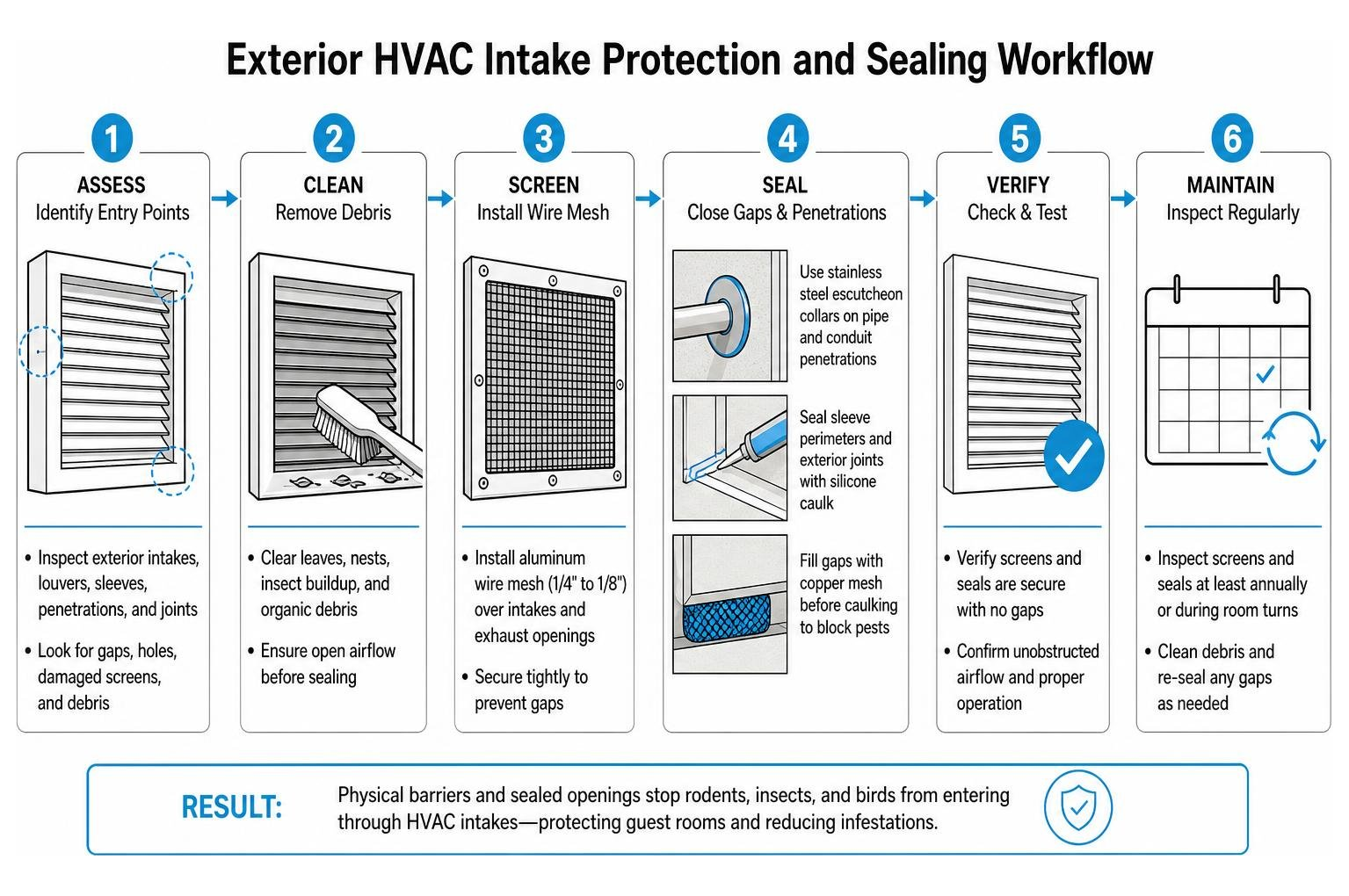
Installing Aluminum Wire Mesh Screens and Structural Seals
Exterior ventilation openings are direct highways into hotel interiors. Louvers on rooftop units, fresh air intake dampers, and kitchen exhaust vents draw in outside air—and along with it, insects, rodents, and birds seeking shelter.
To properly secure these openings:
- Rooftop Intakes and Exhausts: Fasten corrosion-resistant aluminum wire mesh or stainless steel hardware cloth over all outdoor intake hoods and louvers. Aluminum mesh provides durability against the elements and stops gnawing rodents without restricting system intake volumes.
- PTAC Sleeve Envelopes: Inspect the exterior perimeter of guest-room PTAC sleeves. Fill structural gaps between the sleeve and exterior masonry using expanding foam paired with copper mesh or stainless steel wool, finishing with commercial-grade exterior silicone caulk.
- Conduit and Line Set Penetrations: Seal where refrigerant lines, electrical feeds, and condensate pipes penetrate mechanical room floors and exterior facades with metal escutcheon plates and fire-rated silicone sealant.
- Weatherstripping and sweeps: Ensure mechanical room doors and rooftop access points feature heavy-duty sweep seals to eliminate bottom gaps.
Sanitation, Condensate Management, and Routine Duct Cleaning
Physical barriers must be supported by sanitation to eliminate pest attractants. A clean, dry HVAC system offers pests no reason to stay.
- Monthly Filter Checks and Replacements: Inspect filters monthly in high-traffic hotel environments. Clean filters maintain balanced airflow pressures, deterring pests that exploit low-velocity dead air zones.
- Condensate Pan and Line Treatment: Clear drain lines using wet-vac extraction and place slow-dissolving quaternary condensate pan tablets in every unit to break up organic biofilm and prevent algae buildup.
- Mechanical Room Housekeeping: Keep mechanical rooms completely free of storage boxes, discarded linens, and food trash. Pairing these efforts with structured hotel waste management pest control protocols in back-of-house areas ensures pests cannot find alternate food sources.
- Scheduled Coil and Duct Cleaning: Schedule annual professional cleaning of evaporator coils and internal duct networks to remove dust, mold, and insect debris that accumulate in air supply systems.
Technical Integration: Heat Treatments and IPM Coordination
Managing pests in hospitality environments requires close alignment between facilities engineering teams and licensed pest management professionals (PMPs). Routine maintenance handles structural sealing and filter swaps, but chemical treatments and targeted eradications require licensed execution under Federal Insecticide, Fungicide, and Rodenticide Act (FIFRA) standards and local health mandates. Understanding NYC hotel pest control regulations helps hotel operators maintain thorough documentation while keeping guest rooms safe.
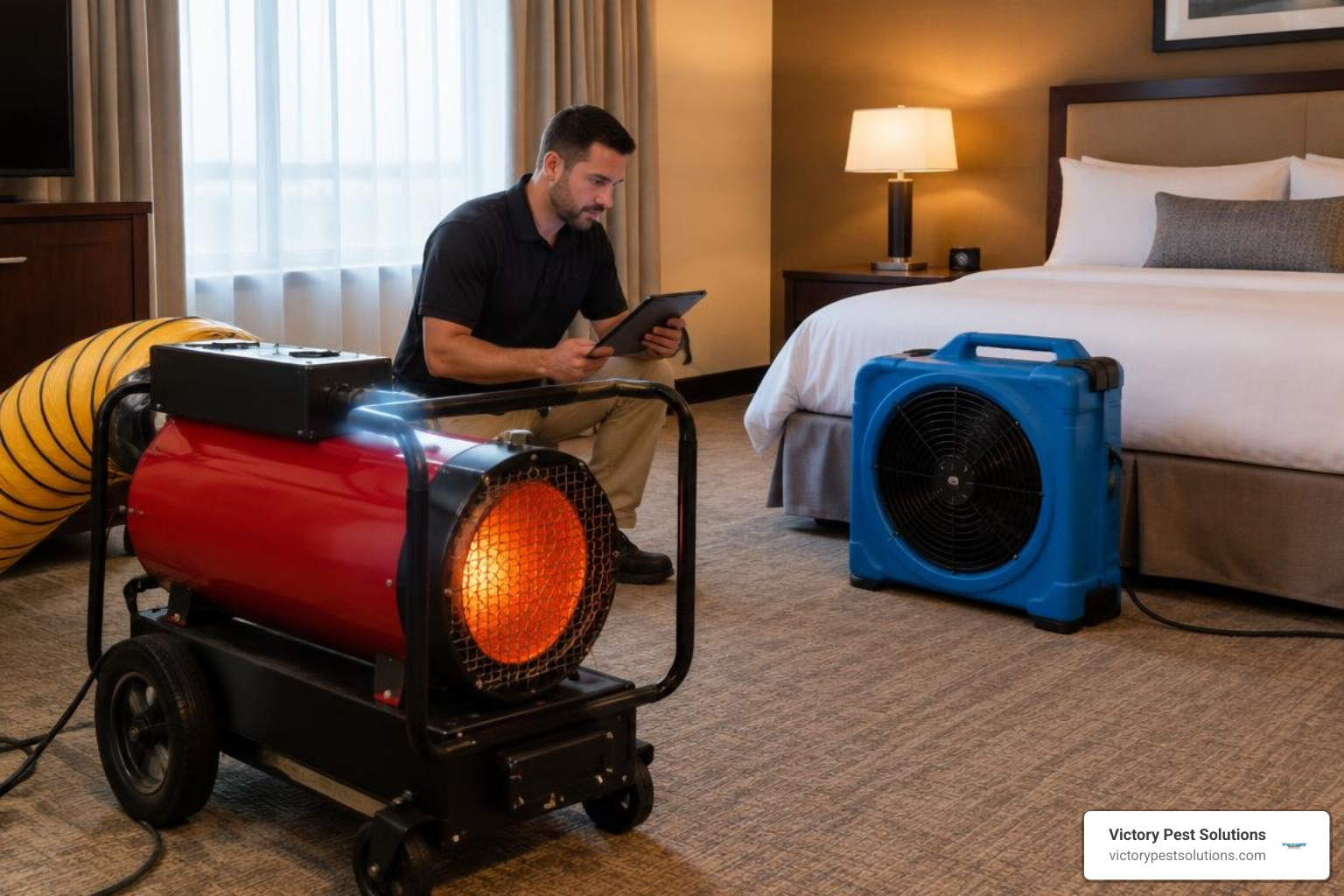
Integrating Hotel HVAC Pest Control into IPM Programs
Integrated Pest Management (IPM) is a data-driven strategy that prioritizes structural exclusion, sanitation, and targeted physical interventions over indiscriminate chemical spraying. Applying IPM to HVAC systems replaces random pesticide applications with systematic monitoring and threshold-based responses.
- Baseline Mapping: Map every rooftop unit, mechanical room, PTAC unit, and vertical air riser on facility floor plans. Number each monitoring device to track trend data over time.
- Targeted Monitoring: Install non-toxic insect glue boards and pheromone monitoring traps inside mechanical rooms, return air chases, and behind PTAC access panels. Check high-risk zones (such as mechanical rooms near kitchens) weekly, while evaluating guest-room corridors bi-weekly or monthly.
- Action Thresholds: Define clear operational triggers. A single cockroach or rodent trapped inside a mechanical room initiates immediate inspection of surrounding duct seals and drain pans.
- Multi-Room Isolation Protocols: If bed bugs or cockroaches are detected in a guest room, immediately remove that room from inventory along with the four adjoining rooms (left, right, above, and below). Inspect the shared utility chases and PTAC conduits between these units before releasing them back for guest reservations. For comprehensive protection, follow our integrated pest management Manhattan guide to align property workflows with specialized hotel pest control NYC hospitality requirements.
Heat Treatments and Hotel HVAC Pest Control Protocols
Thermal remediation is one of the most effective non-chemical methods for eradicating pests like bed bugs and cockroaches from hotel rooms and adjoining PTAC units. Heat penetrates deep into mattress seams, baseboards, wall voids, and PTAC chassis where pests hide.
At a temperature of 125°F, bed bugs and their eggs die in less than 1 minute. Maintaining this thermal threshold or higher for at least 2 hours ensures that heat saturates furniture, carpet backing, and interior wall voids. Similarly, adult male German cockroaches reach full mortality within 16 minutes at 125°F, and in just 7 minutes at 130°F.
Commercial electric bed bug heaters provide controlled, high-output thermal remediation without the need for open flames or exterior generator trucks. Portable units are sized to match specific room dimensions:
- A compact 9.3 kW heater running on standard 120-volt circuits generates 31,700 Btu/h to treat rooms up to 300 square feet.
- A mid-range 13.9 kW heater delivering 47,400 Btu/h treats rooms up to 600 square feet.
- A heavy-duty 19.0 kW heater delivering 65,400 Btu/h handles suites up to 800 square feet.
For detailed equipment data, review the technical specifications for electric bed bug heaters.
During thermal treatments, sealing HVAC supply registers, return grilles, and exhaust vents with heat-resistant plastic and painter’s tape is critical. This prevents heat from escaping into central ductwork and stops pests from fleeing the treatment zone through air vents into adjoining rooms. Using proper thermal remediation protocols helps hoteliers quickly identify and treat hotel bed bugs and return rooms to revenue-generating inventory with minimal downtime.
Frequently Asked Questions About Hotel HVAC Pest Control
How often should hotel HVAC vents and filters be inspected for pest activity?
HVAC filters and return air vents in guest rooms and common areas should be inspected visually every 30 days. In high-risk, high-traffic zones—such as mechanical rooms adjacent to commercial kitchens, laundry facilities, and loading docks—inspections should occur weekly.
Additionally, comprehensive seasonal audits should be conducted ahead of peak summer cooling and winter heating cycles. Hotel management teams can easily coordinate these reviews when they schedule hotel pest inspections to align with planned mechanical servicing.
Can pests travel between guest rooms through shared HVAC ductwork?
Yes. Pests commonly travel between rooms along utility chases, return air plenums, and shared vertical duct risers. While high-velocity supply ducts make travel difficult when fans are running, return air chases and unsealed wall penetrations around PTAC units provide quiet pathways when systems cycle off.
Bed bugs can crawl through unsealed electrical and piping chases behind wall units, while rodents follow warm duct wrap across ceiling voids. This makes sealing wall penetrations with fire-rated caulk, copper mesh, and escutcheon collars essential to prevent room-to-room migration.
What is the difference between routine maintenance and licensed extermination for HVAC units?
Routine maintenance covers non-chemical, structural, and sanitation tasks performed by in-house hotel engineering staff. This includes swapping air filters, clearing condensate drain pans, cleaning organic debris from intake louvers, and sealing exterior gaps around sleeves.
Licensed extermination involves applying EPA-regulated pesticides, setting restricted-use rodent baits, conducting specialized thermal remediations, and legally documenting treatments under FIFRA guidelines. In-house staff should never spray liquid insecticides or aerosol foggers directly into air ducts or air handling units. Chemical applications inside ventilation shafts must be handled exclusively by certified commercial pest control professionals using dedicated Manhattan hotel exterminator services.
Elevating Hotel Standards with Specialized Commercial Pest Solutions
Maintaining pest-free HVAC systems is vital for protecting indoor air quality, guest comfort, and your property’s online reputation. A single pest incident originating from a ventilation shaft can disrupt guest stays, lead to negative reviews, and cause costly operational delays.
Victory Pest Solutions delivers 24/7 commercial pest management tailored specifically to the high-demand hospitality sector across New York City, Manhattan, Queens, Brooklyn, Staten Island, the Bronx, Long Island, and Westchester. Our licensed professionals specialize in proactive IPM programs, detailed mechanical room audits, structural exclusion, and rapid-response thermal remediation that resolve issues without disrupting your guests.
Protect your hotel’s reputation and air distribution infrastructure by partnering with our expert team for comprehensive commercial hotel pest control services today.