
Why Early Bed Bug Inspections Matter
If you suspect bed bugs, take the room out of use and arrange a professional inspection promptly. A thorough inspection checks mattress seams, bed frames, headboards, upholstered furniture, luggage areas, and nearby cracks for live bugs, eggs, shed skins, and dark spots. Save any bug you find for identification, and avoid moving items to other rooms.
In a hotel or other busy property, finding bed bugs early can help limit disruption and guide which nearby rooms need checking. A visual check is a good start, but small infestations are easy to miss.
I’m Len Oppenberg, founder of Victory Pest Solutions. My pest control experience began in 2000 and includes work with healthcare facilities, where fast, careful bed bug inspections matter; here’s the inspection workflow this guide will walk you through.
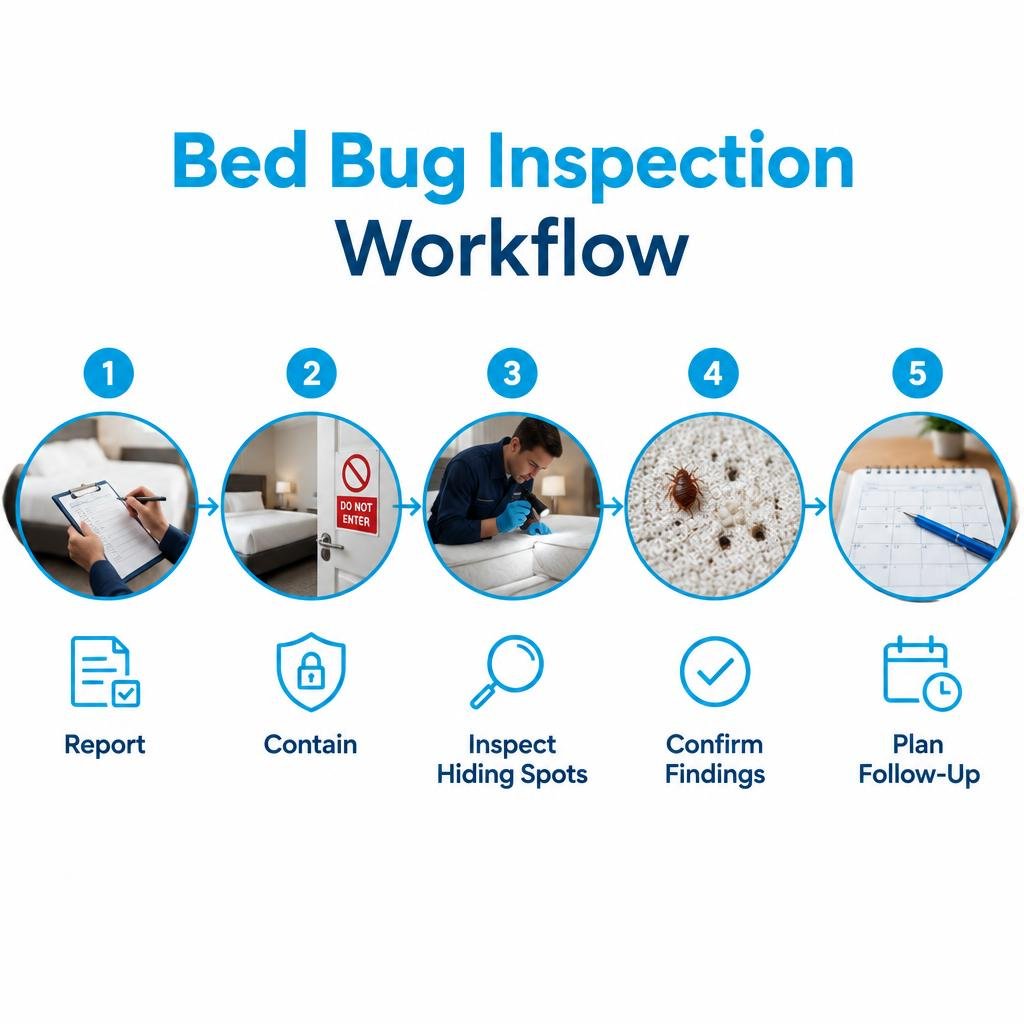
Essential Signs to Look for During Bed Bug Inspections
Conducting effective bed bug inspections requires understanding the subtle biological trails these elusive parasites leave behind. Because adult bed bugs hide during daylight hours and avoid open surfaces, finding active populations relies heavily on spotting physical evidence rather than catching the insects out in the open.
When checking for bed bugs, technicians focus on a distinct set of physical markers. As outlined in the Cornell University Guidelines for Prevention and Management of Bed Bugs in Shelters and Group Living Facilities, early detection is vital because a single fertilized female lays three to five adhesive eggs per day, rapidly compounding an infestation if left unaddressed.
Visual Evidence and Biological Indicators
Bed bugs (Cimex lectularius) undergo five nymphal instars before reaching maturity, shedding their rigid exoskeletons at each phase. These discarded cast skins (nymphal exuviae) appear as translucent, amber-tinted shells that mirror the shape of the insect.
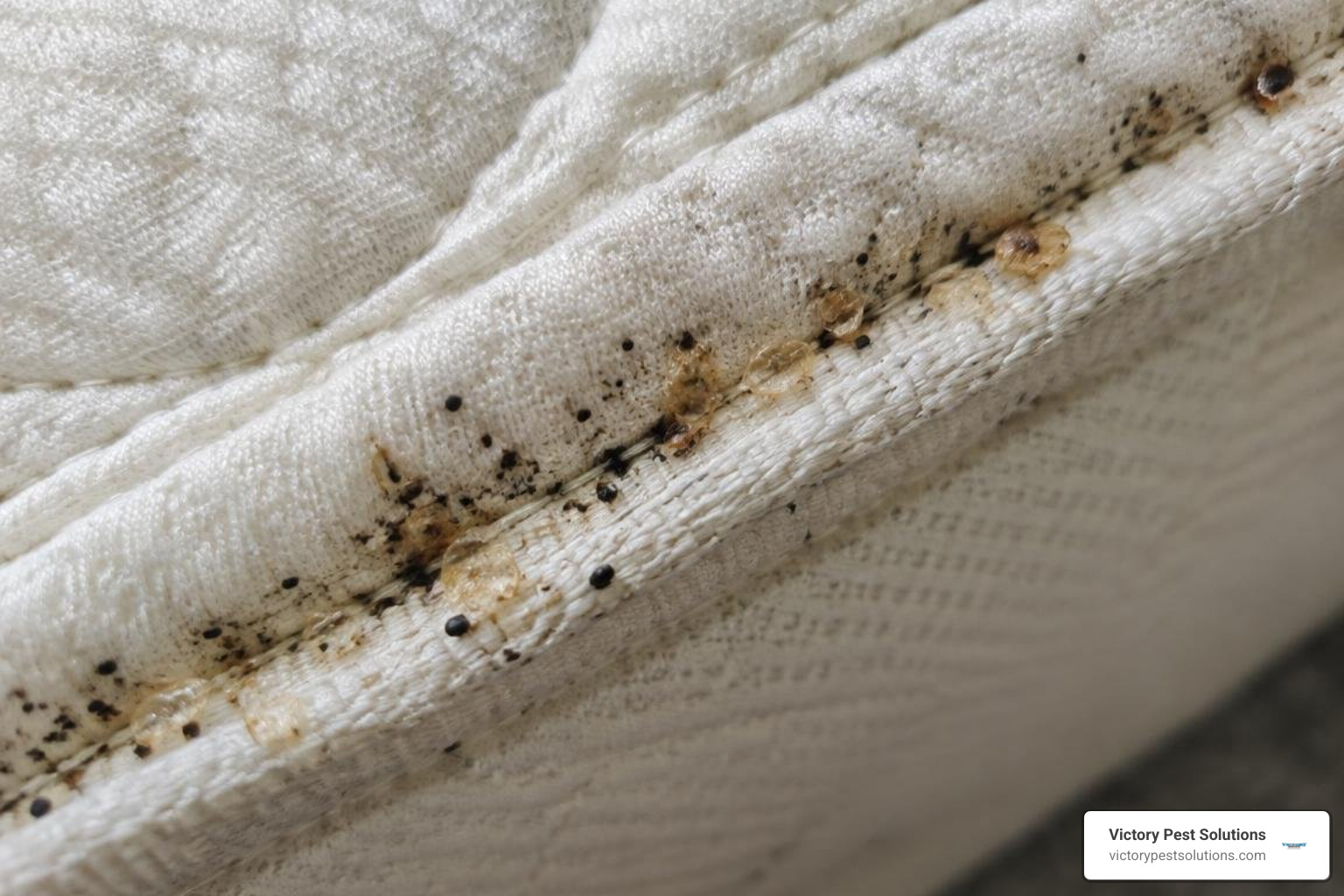
The primary biological indicators to look for include:
- Fecal Spotting: Digested blood droppings look like tiny, smooth black ink dots from a fine-tipped pen. Unlike flea dirt, bed bug fecal marks soak directly into fabric fibers or create slightly raised dots on hard surfaces. Rubbing these marks with a damp alcohol wipe turns them a characteristic reddish-brown, confirming their organic, blood-based origin.
- Adhesive Eggs and Eggshells: Measuring roughly 1 millimeter in length (comparable to a grain of salt), viable eggs are pearly white and glued securely into seams, wood pores, and joint crevices.
- Active Nymphs and Adults: Immature nymphs range from 1.5 to 4.5 millimeters and can appear nearly invisible or pale yellowish-white until they feed. Fully grown adults measure roughly 5 to 7 millimeters (the size of an apple seed), possessing flat, oval, rust-colored bodies that swell and elongate into reddish-brown cylinders after a complete blood meal.
- Pheromone Odors: In moderate-to-severe harborages, bed bugs emit alarm and aggregation pheromones. This produces a sweet, sickly musty scent often compared to rotting raspberries, coriander, or damp almond paste.
Identifying Harborages in Commercial and Hospitality Spaces
Bed bugs are flat enough to slip into cracks as thin as a standard credit card. In high-density settings like Manhattan hotels, finding where pests conceal themselves is crucial to avoiding widespread dispersal.
Familiarizing staff with common signs of bed bugs in hotel rooms helps hospitality teams isolate harborages quickly. While the mattress remains the most obvious resting place, bed bugs frequently spread across a wider area within hospitality suites:
- Wall-Mounted Headboards: In commercial properties, heavy headboards anchored directly to sheetrock offer dark, undisturbed voids that serve as prime harborages.
- Box Springs and Bed Frames: The dust covers on the undersides of box springs, along with staple lines, corner guards, and screw recesses, harbor large clusters of nesting bugs.
- Upholstered Seating: Plush lounge chairs, sofa bed mechanisms, and decorative cushions in hotel guest rooms frequently host breeding pairs.
- Luggage Racks and Closets: Wooden or tubular metal luggage stands, along with adjacent closet baseboards, are direct drop-off zones for hitchhiking pests escaping traveler luggage.
- Structural Wall Crevices: Baseboards, crown moldings, loose wallpaper seams, and carpet tack strips along the room perimeter provide secondary harborage if initial populations expand.
Step-by-Step Protocol for Thorough Property Inspections
A standard inspection must be methodical and meticulous. Moving through an environment randomly risks overlooking isolated harborages and scattering live insects into neighboring spaces.
According to guidelines from the NEW YORK CITY HOUSING AUTHORITY (NYCHA), an average pest inspection takes roughly 30 minutes for a baseline assessment and up to 90 minutes when active evidence demands a complete Integrated Pest Management (IPM) review. When executing commercial pest management across metropolitan facilities, our Bedbug Exterminator NYC Inspection Removal Control teams focus on a primary 20-foot radius surrounding human resting areas.

- The Primary Sleep Zone: Carefully strip bed linens, placing each piece directly into dissolvable or sealed plastic laundry bags to avoid spreading pests across hallways. Examine mattress welting, button tufts, internal tags, and corner seams. Flip the box spring to inspect the bottom dust cover, removing the netting if necessary to check inner wooden slats.
- Bed Frame and Hardware: Disassemble structural joints where possible. Shine high-lumen light into screw holes, wheel casters, rail hooks, and the bracket slots securing headboards to walls.
- Nightstands and Nearby Furniture: Empty bedside drawers completely. Invert drawers to check dovetail joints, bottom runners, and screw wells. Inspect lamps, digital alarm clocks, telephone ports, and decorative picture frames hanging near the bed.
- Perimeter and Architectural Details: Pull back carpet edges along baseboards using a stiff putty knife. Check electrical outlet covers, switch plates, wall sconces, heating/air-conditioning unit casings, and window drapery pleats.
Preparing Spaces for Bed Bug Inspections
Proper room preparation helps professionals conduct comprehensive visual assessments without driving pests deeper into structural walls.
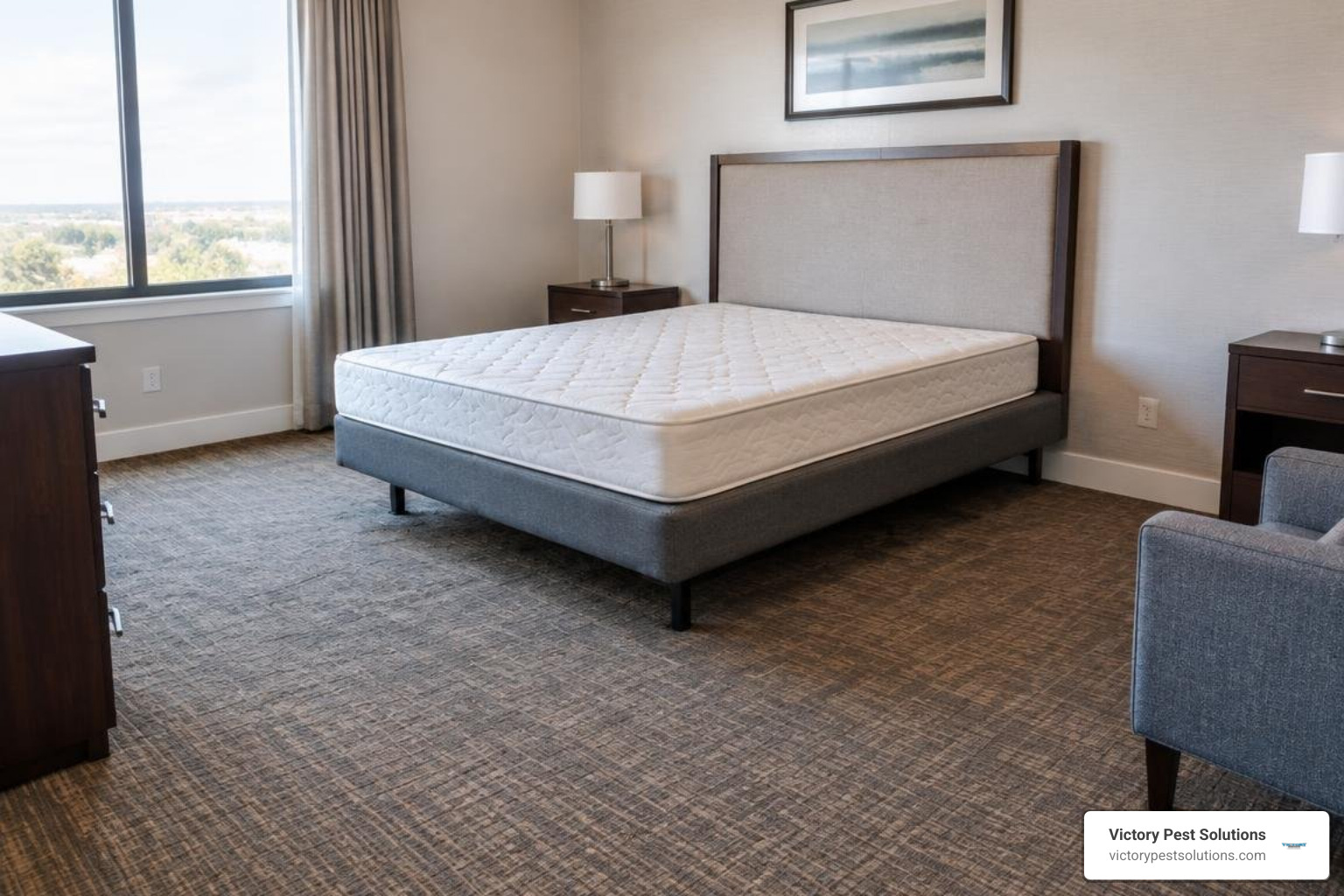
- Avoid Over-Clearing Clutter Prematurely: Do not move items, furniture, or storage bins from an infested room into adjacent hallways or unaffected rooms. Moving uninspected items spreads pests across the property.
- Launder Textiles with Heat: Bed linens, blankets, clothing, and curtains should be bagged directly within the room, sealed, and transferred directly to commercial dryers. Tumble dry on high heat (at least 120°F to 140°F) for a minimum of 30 to 45 minutes to destroy all life stages, including heat-resistant eggs.
- Never Use Total-Release Foggers: Over-the-counter insect foggers (“bug bombs”) fail to penetrate tight hiding crevices. Worse, their repellent pyrethroid propellants cause bed bug clusters to scatter into wall voids, adjoining guest rooms, and ceiling plenums.
- Provide Clear Perimeter Access: Move lightweight furniture at least two feet away from walls so technicians can easily inspect baseboards and electrical chases.
Key Tools and Interceptor Traps for Monitoring
Thorough inspections require specialized tools designed to reveal hidden pests in narrow crevices.
- High-Powered LED Inspection Lights: A flashlight delivering at least 500 to 1,000 lumens with an adjustable beam reveals tiny eggs and early-stage nymphs tucked inside deep seams.
- Precision Crevice Probes: Thin, flexible plastic cards or metal spatulas slide behind baseboards, under moldings, and through frame joints to flush out resting bugs.
- 10x Hand Lens / Magnifiers: Magnifying tools allow inspectors to confirm whether a tiny speck is a viable bed bug egg, shed skin, or ordinary room dust.
- Passive Pitfall Traps and Climb-Up Interceptors: Interceptor devices placed beneath bed legs and sofa feet exploit a bed bug’s poor climbing ability on slick surfaces. The outer textured surface allows pests to climb up, while the smooth-walled inner reservoir traps them.
- Active Chemical Lures: Carbon dioxide and synthetic aggregation pheromone monitors actively lure foraging nymphs and adults from wall recesses, making them useful tools for confirming clearance in unoccupied rooms.
| Monitoring & Detection Method | Detection Rate (Low-Level Infestations) | Primary Operational Use Case | Labor Intensity |
|---|---|---|---|
| Standard Visual Human Inspection | 50% – 75% | Immediate room assessments, active symptom tracing | High (Requires detailed mechanical searching) |
| Passive Pitfall Interceptors | 90% – 95% | Continuous post-treatment monitoring, early-stage detection | Low (Requires bi-weekly reservoir checking) |
| Active CO₂ / Lure Monitors | 85% – 95% | Vacant guest rooms, unrented commercial units | Moderate (Requires periodic lure/canister recharges) |
| Canine Scent Detection Teams | 80% – 95% (Variable) | Large-scale hotel sweeps, multi-story commercial audits | Low (Rapid room-by-room sweeps) |
Professional Bed Bug Inspection and Management
Relying solely on DIY pest control often proves frustrating and ineffective. Research shows widespread pyrethroid resistance in modern bed bug strains, rendering many off-the-shelf aerosol sprays useless.
Federal agencies like the U.S. Department of Housing and Urban Development (HUD) advocate structured Integrated Pest Management (IPM) rather than relying exclusively on routine chemical sprays. IPM combines thorough inspection, physical removal via HEPA vacuuming, targeted heat applications, mattress encasements, and non-repellent structural dusts (such as amorphous silica gel) inside wall voids.
When property managers need reliable commercial Bed Bug Extermination, partnering with licensed professionals helps ensure complete eradication while protecting brand reputation.
Inspection Verification and Limitations
While specialized tools and trained bed bug scent detection dogs help identify hidden activity, every detection method has practical limitations:
- Low-Density Infestations: When a space harbors only a few newly introduced nymphs, visual inspections can miss them. Even trained technicians face detection limits between 50% and 75% during a single visual sweep. Deploying passive interceptors bridges this gap by trapping bugs as they move.
- Canine Scent Detection Realities: While scent-detecting dogs can quickly check dozens of hotel rooms, false positives can occur if a canine alerts to historical scent traces, old dead bugs, or cast skins trapped behind walls. Professional handlers always visually verify canine alerts before initiating chemical or heat remediation.
- Two-Month Clearance Protocol: Eradicating an established population often takes weeks. Follow-up inspections should occur at two-week intervals. A unit should only be declared fully clear after two consecutive months with zero observed bugs, bites, or trap catches.
Commercial and Multi-Unit Bed Bug Inspections in NYC
Operating commercial real estate or hospitality venues across New York City requires following strict local property maintenance laws. The New York City Department of Housing Preservation and Development enforces Local Law 69 of 2017, which requires owners of multiple dwellings to file annual bed bug reports detailing pest activity and remediation measures.
In multi-story properties, pests frequently travel through electrical conduits, plumbing chases, and shared wall framing. If an active infestation is identified in a central unit, technicians must also inspect the adjoining apartments: directly to the left, directly to the right, directly above, and directly below.
Our specialized team provides comprehensive Bed Bug Inspection for Commercial Buildings NYC, ensuring facilities maintain complete regulatory compliance. For properties operating in high-density urban areas, securing experienced Manhattan Bed Bug Control provides fast, discreet resolutions before localized issues affect neighboring guests or tenants.
Frequently Asked Questions About Bed Bug Inspections
How often should hospitality and commercial properties conduct bed bug inspections?
High-turnover hospitality environments should integrate preliminary visual checks into daily housekeeping turns. Housekeeping staff should review mattress seams, headboard edges, and linen folds during routine room turnover.
In addition, commercial properties benefit from proactive professional inspections performed quarterly or semi-annually. Regularly scheduled audits help identify introduced pests before guests notice them, helping NYC Hotels Prevent Bed Bug Infestations from expanding across entire guest floors.
What legal responsibilities do NYC property owners have regarding bed bugs?
Under New York City administrative housing codes and municipal regulations, bed bugs are classified as Class “C” immediately hazardous violations. Property owners are legally required to eradicate infestations within specified timeframes using licensed extermination professionals.
Similar proactive frameworks exist in other major municipal jurisdictions, such as San Francisco’s Health Code ARTICLE 11A: BED BUG INFESTATION PREVENTION, TREATMENT, DISCLOSURE, AND REPORTING, which mandates specific reporting, tenant disclosures, and structured pest remediation timelines. NYC landlords must also distribute annual bed bug history notices to incoming tenants upon lease renewal and electronically submit their property’s annual bed bug filing with HPD every December.
What immediate actions should be taken if bed bugs are discovered?
If a guest, tenant, or staff member spots a suspected bed bug:
- Quarantine the Room Immediately: Take the room out of service right away. Do not move furniture, luggage, or bedding out of the room, as this spreads insects through common hallways.
- Collect and Preserve a Specimen: Secure the captured insect inside a sealed plastic container or transparent zip-top bag with a dab of rubbing alcohol. This allows a licensed exterminator or university extension agent to verify the species under magnification.
- Inspect Surrounding Units: Schedule immediate inspections for all horizontally and vertically adjacent spaces.
- Deploy Professional Remediation: Contact licensed pest professionals to implement a complete Integrated Pest Management plan. Refer to our Manhattan Hotel Bed Bugs Guide for comprehensive hospitality containment protocols.
Partnering with Victory Pest Solutions for Complete Bed Bug Eradication
Protecting your commercial building or hotel from bed bugs requires proactive management, rapid response times, and thorough, data-driven inspections. At Victory Pest Solutions, we deliver industry-leading commercial pest control tailored to hospitality venues, healthcare facilities, and multi-unit properties throughout New York.
Our expert technicians provide 24/7 emergency support, discrete and comprehensive inspections, and proven Integrated Pest Management strategies designed to eliminate infestations safely and efficiently. Whether you need immediate emergency response or a structured preventative monitoring program, our team has you covered.
Don’t let bed bugs compromise your guest experience, online reputation, or operational compliance. Contact our team today to schedule professional hotel bed bug identification and treatment and protect your property with proven commercial pest solutions.