
Who is actually responsible for pest control in a rental property
Who Pays for Pest Control in a Rental Property?
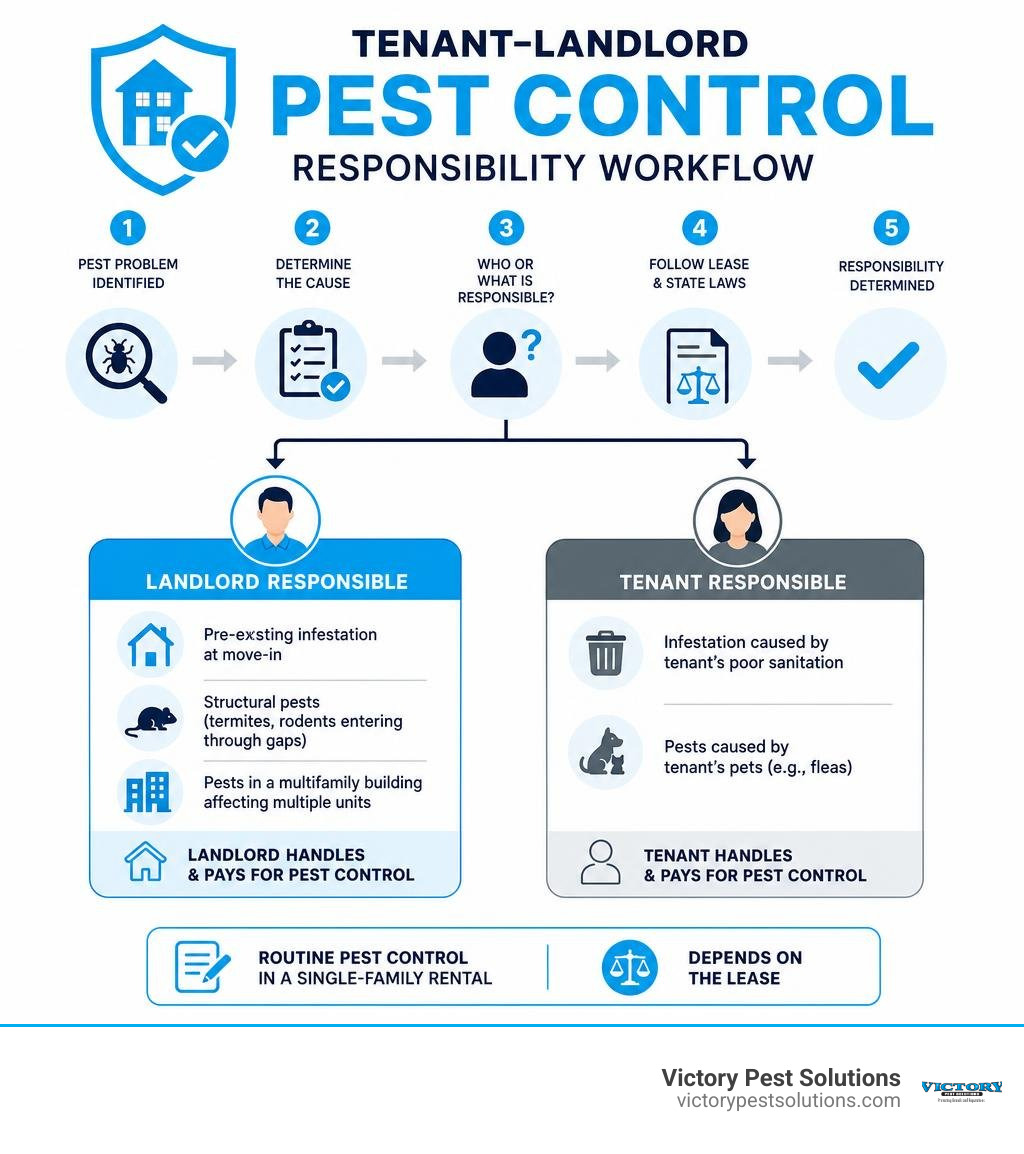
Landlord pest control responsibility in the U.S. follows a clear general rule — but with important exceptions.
Quick answer:
| Situation | Who Is Responsible |
|---|---|
| Pre-existing infestation at move-in | Landlord |
| Structural pests (termites, rodents entering through gaps) | Landlord |
| Pests in a multifamily building affecting multiple units | Landlord |
| Infestation caused by tenant’s poor sanitation | Tenant |
| Pests caused by tenant’s pets (e.g., fleas) | Tenant |
| Routine pest control in a single-family rental | Depends on the lease |
In most U.S. states, landlords are legally required to keep rental properties free from pest infestations under something called the implied warranty of habitability. This means if pests threaten a tenant’s health or safety, the landlord generally has to deal with it — and pay for it.
But not always. The rules shift depending on your state, your property type, your lease language, and — critically — whether the tenant’s own behavior caused the problem.
Pests aren’t just a nuisance. Cockroaches and rodents carry bacteria. Bed bugs cause painful bites. Termites silently destroy building structures. And a single unaddressed infestation can spread across an entire building fast. A female German cockroach, for example, can produce up to 400 offspring in her lifetime — turning a minor problem into a major one within weeks.
I’m Len Oppenberg, founder of Victory Pest Solutions, and I’ve spent over two decades in the pest control industry — including years specializing in high-stakes environments like healthcare facilities where landlord pest control failures have immediate, serious consequences. That background shapes everything we’ll cover in this guide.
The Implied Warranty of Habitability and Rental Pests
The legal foundation of the tenant-landlord relationship is the implied warranty of habitability. This is an unwritten, non-waivable guarantee in almost every lease agreement stating that the rental property is safe, clean, and fit for human occupation.
When a property suffers from a severe pest infestation, it directly violates this warranty. Pests are not just an aesthetic issue; they are a direct threat to public health.
According to the legal standards outlined in What Landlords Are Legally Required to Do About Pests, landlords are required to maintain the structural integrity of the property to prevent health and safety hazards. Rodents and insects carry pathogens, deposit feces that trigger asthma and allergies, and cause physical damage to the property itself.
To understand the full scope of what these pests can do to a building, it is helpful to look at What Damage Can Rodents Cause. From chewing through electrical wiring (which presents a major fire hazard) to destroying insulation, rodents can cause thousands of dollars in structural damage while rendering a home completely uninhabitable.
When is Landlord Pest Control Legally Required?
Under the implied warranty of habitability, landlord pest control is legally required whenever an infestation threatens the health and safety of the occupants, or when the pests are “structural” in nature.
Landlords are almost always responsible for:
- Pre-existing infestations: If pests were present before the tenant moved in, the landlord must eliminate them.
- Structural defects: If pests are entering the building because of cracks in the foundation, broken windows, damaged door sweeps, or leaking pipes, the landlord must make the necessary repairs and handle the extermination.
- Wood-destroying organisms: Termites and carpenter ants eat away at the structural timber of the building. Because these pests threaten the very structure of the property, the responsibility for their eradication always falls on the landlord. Across the U.S., termites alone cause an estimated $5 billion in property damage annually.
For a deeper dive into how these responsibilities are shared, The Landlord and Tenant Guide to Pest Management provides an excellent roadmap for maintaining a safe, pest-free environment through cooperative efforts.
Tenant Actions That Shift Responsibility
While the law defaults to holding the landlord responsible, tenants are not entirely off the hook. The tenant has a duty to maintain the rental unit in a clean and sanitary condition. If a tenant’s behavior directly causes or worsens a pest problem, the financial responsibility for extermination shifts to them.
Common tenant actions that shift pest control responsibility include:
- Poor Sanitation: Leaving dirty dishes in the sink for days, leaving open food containers on countertops, and failing to clean up grease spills will actively attract cockroaches, ants, and rodents.
- Improper Waste Management: Failing to take out the trash regularly or storing garbage in open, unsealed containers creates a feast for local pests.
- Pet-Related Pests: If a tenant’s dog or cat brings fleas or ticks into the property, the tenant is financially responsible for the treatment of the carpets and upholstery.
- Hoarding and Clutter: Extreme clutter provides endless hiding spots and nesting materials for pests, making it nearly impossible for a professional exterminator to treat the unit effectively.
Legal Frameworks and Landlord Pest Control Requirements
Understanding who pays for pest control requires looking at the specific type of pest and how the infestation started. Below is a quick-reference guide to how responsibilities are typically split.
Responsibility by Pest Type
| Pest Type | Primary Responsibility | Key Determining Factor |
|---|---|---|
| Termites | Landlord | Always a structural issue; can cause catastrophic property damage. |
| Bed Bugs | Landlord (usually) | Many states presume landlord responsibility unless tenant negligence is proven. |
| Mice & Rats | Landlord | Typically enter through structural gaps, though tenant food storage can attract them. |
| Cockroaches | Split | Landlord’s job in multi-unit buildings; tenant’s job if caused by poor cleaning. |
| Ants | Split | Landlord handles structural entries; tenant handles food-attracted sugar ants. |
| Fleas | Tenant | Almost always brought in by a tenant’s pet or a guest’s pet. |
State and Local Housing Codes
Pest control responsibility is heavily governed by state statutes and local municipal codes. Local health departments and code enforcement offices have the power to fine landlords who fail to address active infestations.
If a landlord refuses to act, tenants can report the issue to local code enforcement, which will inspect the property and issue formal violations if the landlord is found to be neglecting their duties.
NYC Specific Rules for Apartment Buildings
If you own or rent a property in New York City, the rules are incredibly strict and favor the tenant. Under the NYC Housing Maintenance Code, pest infestations are classified as Class B (hazardous) or Class C (immediately hazardous) violations.
Under the landmark Pest Control Law NYC (including Local Law 55), landlords are legally required to keep tenant units free of pests and mold. This law requires landlords of buildings with three or more units to use Integrated Pest Management (IPM) to address pest issues rather than simply spraying pesticides reactively.
For those managing residential buildings, Rat Control NYC Apartment Buildings is a constant, high-stakes battle. NYC landlords must take proactive measures, including sealing structural entry points and managing garbage storage, to prevent rodent populations from taking over.
This level of care is even higher in the Manhattan hospitality sector. NYC and Manhattan hotels must maintain impeccable, pest-free environments to comply with strict health codes and protect their reputations.
Differences Between Single-Family and Multifamily Properties
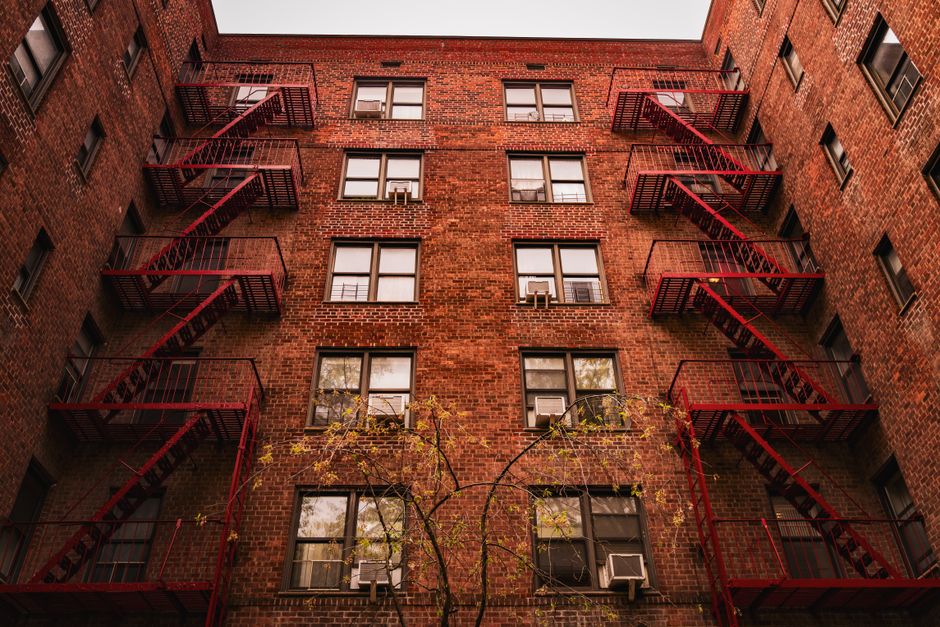
The physical structure of a rental property plays a massive role in determining who is responsible for pest control. The legal and practical realities of managing a single-family home are entirely different from managing an apartment building.
Shared Walls and Multi-Unit Infestations
In multifamily buildings, pests do not respect property lines. A cockroach or bed bug infestation in Unit 3B will quickly travel through shared walls, utility pipes, and electrical conduits to reach Units 3A and 3C. Because of this, courts and housing codes almost always place the responsibility for pest control in multifamily buildings on the landlord.
It is practically impossible to prove which tenant originally brought cockroaches or bed bugs into a shared building. Furthermore, treating a single unit in a multifamily building is rarely effective; the entire building, or at least the surrounding units, must be treated simultaneously.
For landlords dealing with rodent issues in these complex structures, utilizing professional services like NYC Rodent Control Mice Rat Exterminators is essential to ensure that pests do not simply migrate from one apartment to another during treatment.
Single-Family Home Lease Clauses
In a single-family rental home, there are no shared walls or neighboring tenants to blame. Because of this, many states allow landlords to assign routine pest control responsibilities to the tenant through the lease agreement.
If a tenant signs a lease stating they are responsible for general pest control (such as ants, spiders, or occasional crickets), that clause is legally binding. However, even in a single-family home, the landlord remains responsible for structural pests like termites or pre-existing infestations that were present at the start of the tenancy.
Operational Playbook: What to Do When Pests Are Reported

When a tenant reports a pest problem, both parties must act quickly to prevent a minor issue from becoming a full-blown infestation.
How Lease Agreements Define Landlord Pest Control
The best way to prevent disputes is to have a clear, legally compliant pest control clause in your lease agreement. This clause should specify:
- Who pays for routine pest control (e.g., quarterly preventive treatments).
- The tenant’s duty to report any pest sightings within 48 hours.
- The tenant’s responsibility to prepare their unit for extermination visits (e.g., clearing out cabinets, washing linens).
- Specific addendums for high-risk pests like bed bugs.
When to Hire a Licensed Professional Exterminator
While landlords might be tempted to save money by purchasing over-the-counter pest sprays, this is often a costly mistake. DIY pest control frequently fails because retail products do not have the residual strength of professional treatments, and untrained individuals rarely find the root cause of the infestation.
In many jurisdictions, including New York, landlords are legally prohibited from applying commercial-grade pesticides in tenant-occupied units unless they hold a commercial pesticide applicator license.
Instead of reactive spraying, professional companies use Integrated Pest Management (IPM). This method focuses on long-term prevention. For example, NYC Commercial Rodent Proofing Exclusion services focus on sealing physical entry points (like gaps around pipes and doors) to keep rodents out permanently, rather than relying solely on toxic baits.
Frequently Asked Questions about Rental Pest Control
Can a tenant withhold rent for a pest infestation?
In many states, yes — but only if they follow strict legal procedures. A tenant cannot simply stop paying rent because they saw a cockroach.
Generally, the tenant must:
- Provide the landlord with formal written notice of the infestation.
- Allow the landlord a reasonable timeframe (usually 14 days, though shorter for severe emergencies) to address the issue.
- If the landlord fails to act, the tenant must deposit their rent into a court-approved escrow account rather than keeping the money themselves. Withholding rent incorrectly can lead to eviction.
Who pays for bed bug treatment in a rental unit?
Bed bug treatment is incredibly expensive, often costing between $1,000 and $3,000 per unit for professional heat or chemical treatments. In multifamily buildings, outbreaks can easily exceed $10,000.
Because bed bugs are notoriously difficult to trace, many states (including New York) have passed specific laws that presume the landlord is financially responsible for bed bug treatment unless the landlord can prove the tenant brought them in — which is a very high legal bar to clear.
Can a landlord apply pesticides themselves?
No, in most cases involving multi-unit rental properties, landlords cannot apply pesticides themselves. Under New York State Environmental Conservation Law, anyone applying pesticides to a property they do not reside in, or in a building with multiple units, must be a certified commercial pesticide applicator. Applying pesticides illegally can lead to severe fines and civil liability if a tenant gets sick.
Next Steps for a Pest-Free Rental Property
Managing pest control in a rental property requires clear communication, a solid lease agreement, and a proactive approach. While tenants must do their part by keeping their living spaces clean, landlords bear the ultimate legal responsibility for maintaining a safe, habitable, and pest-free environment.
At Victory Pest Solutions, we understand the unique challenges that landlords, property managers, and hospitality businesses face. We provide commercial pest control services across New York City, Manhattan, Brooklyn, Queens, the Bronx, Staten Island, and the surrounding counties of Nassau, Westchester, Rockland, and Orange.
With our 24/7 support and proactive prevention programs, we help keep your properties compliant and your tenants happy. To protect your investment and ensure your property meets all local health codes, read more about our professional services on our Landlord Responsibilities Pest Control page and contact us today.